


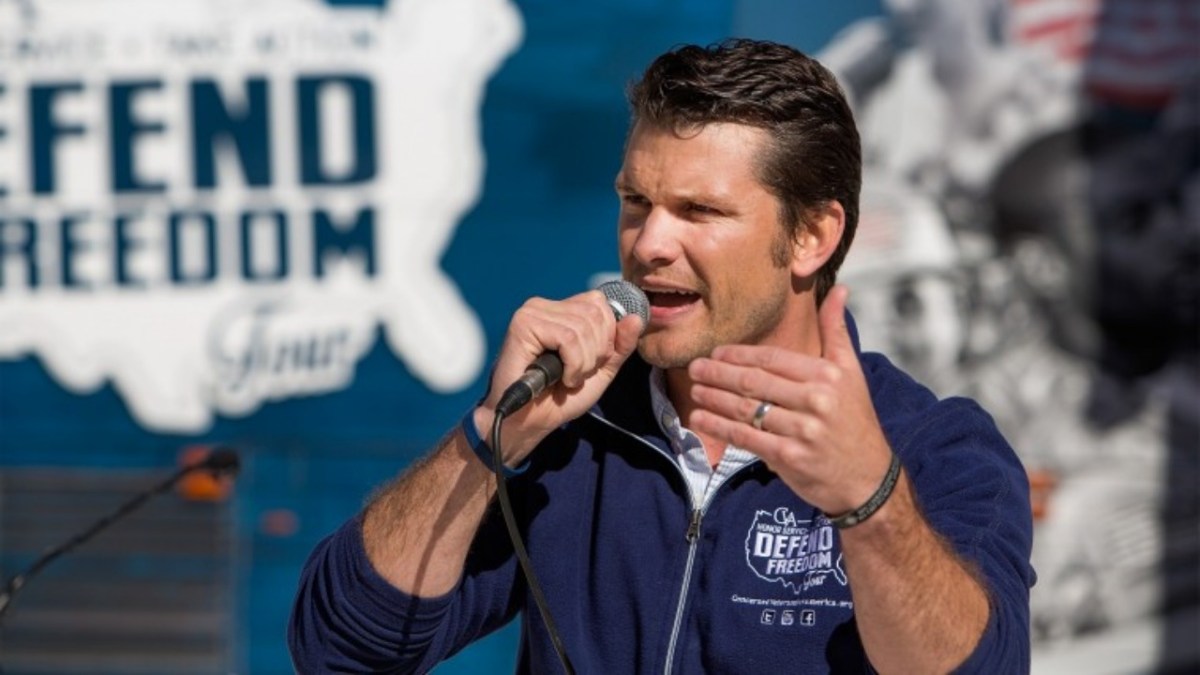

Defense Secretary Pete Hegseth ordered 33 changes to the professional military education system on Monday, The Hill reports. This move comes as he faces impeachment calls from Representative Thomas Massie, who plans to reintroduce articles of impeachment Monday afternoon due to Hegseth’s role in the Iran war.
Hegseth announced the reforms during a speech at the Naval War College. He argues that military education has stagnated by prioritizing theory and ideological distractions over combat readiness. He wants to return to the core purpose of preparing officers to win wars.
“When a commandant approves a curriculum, the essential question before them is not, ‘Is this intellectually fashionable?’ . . . The only question that matters to the American republic is this: Will it help us achieve victory?” Hegseth said.
The memo mandates that institutions refocus their mission statements toward achieving decisive military victory
It requires end-of-course wargames or exams to test mastery of warfighting material, which must be heavily weighted in final grades. Hegseth believes these changes are necessary because incremental adjustments will not achieve the transformation he seeks. “The fundamental purpose of the Armed Forces of the United States is to fight and win our Nation’s wars. There is no substitute for victory,” Hegseth writes.
He also plans to change the makeup of the faculty at these schools. The new directive requires that the majority of full-time faculty possess direct military or defense experience. Any new civilian faculty members will have three-year contracts based on performance and research. Additionally, every senior service college will now have a warfighter chair occupied by a high-performing colonel or lieutenant colonel with recent operational experience. This person will bring real-time combat lessons into the classroom.
“We will evaluate our educational institutions by a singular standard: ‘Does this program forge leaders who will win America’s wars?’” he later adds. “If an activity, course, or policy does not contribute directly to lethality, readiness, and strategic victory, it has no place in this Department.”
This overhaul is part of a wider effort by Hegseth to change military higher education. He has already frozen civilian appointments to tenured positions at service academies and banned hundreds of library books at the Naval Academy. He also canceled plans for military members to attend certain top-ranked colleges and universities.
The political pressure on Hegseth is mounting as the impeachment effort gains steam. House Minority Leader Hakeem Jeffries said on Sunday that he is a “hard yes” on the impeachment of the Pentagon chief. President Trump has supported Hegseth so far, though he has reportedly asked advisers about the defense secretary’s standing.
Hegseth has not stayed quiet about the impeachment threat. He posted a video to social media last week calling the articles of impeachment “sham articles of impeachment” and describing Massie as a “disgruntled, defeated congressman.”
These reforms apply to senior service colleges and intermediate-level education institutions. These schools are distinct from service academies and train high-ranking officers, Pentagon civilians, and international partners. They focus on strategy, joint operations, and national security. The directive is effective immediately.
Hegseth insists that these changes are necessary to keep the focus on the primary mission of the military.







Published: Nov 10, 2026 12:00 pm