


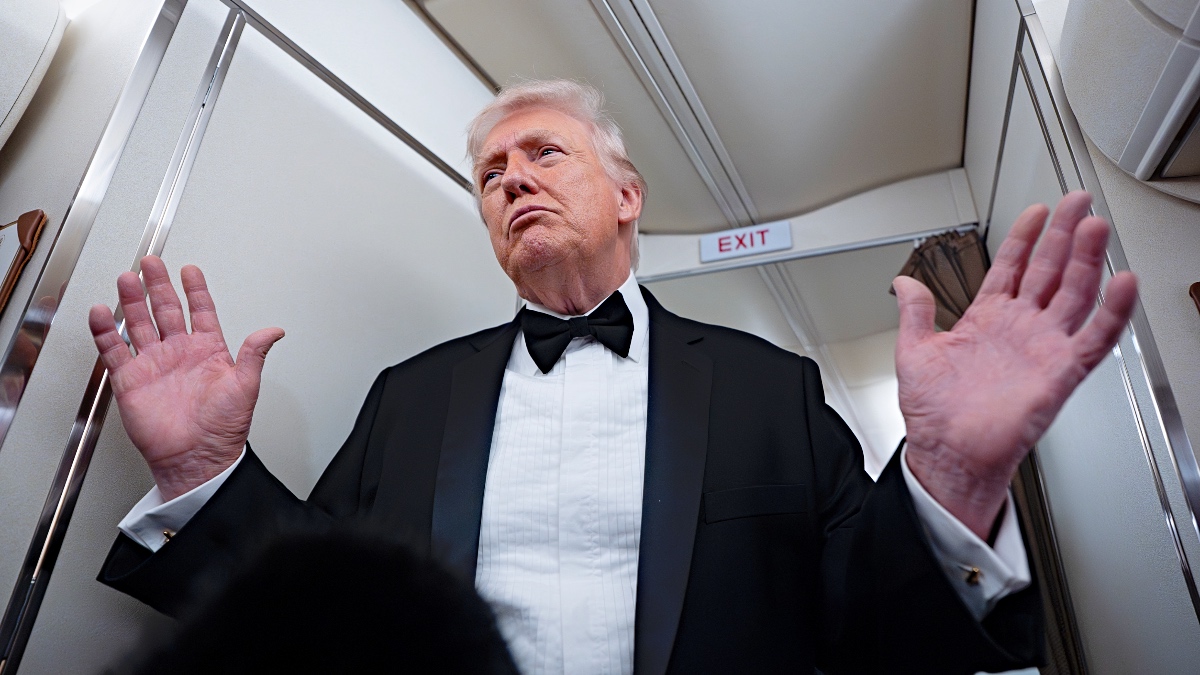

On Jan. 31, Donald Trump described negotiating a settlement with himself in the IRS lawsuit, then suggested he might donate the payout. Who wants to bet that money would go to one of his dozens of grifting charities?
On Jan. 30, 2026, Trump, his two eldest sons, and the Trump Organization filed a lawsuit in federal court in Miami against the Internal Revenue Service and U.S. Department of the Treasury seeking at least $10 billion in damages. The confusing part is, both the IRS and the Treasury are under Trump’s own oversight. But that’s exactly where he’s playing.
The complaint alleges that the agencies failed to properly safeguard Trump’s confidential tax returns. According to the lawsuit, they were leaked by a former IRS contractor, Charles E. Littlejohn, to media outlets such as The New York Times and ProPublica between 2018 and 2020. The documents revealed years of his tax information.
Trump’s lawsuit claims this leak caused reputational and financial harm and seeks damages that exceed his own net worth. But the lawsuit is unusual in another way. Trump is suing the government agencies he oversees as president, effectively putting himself on both sides of the legal fight. The lawsuit also raises conflict-of-interest questions since his own political appointees will be involved in the case.
But when asked about being in a practically Trump vs. Trump case, the president seemed overjoyed. On Jan. 31, a reporter aboard Air Force One asked Trump to explain what it’s like to be on both sides of the IRS lawsuit and how a settlement could work. Trump replied:
“I have to work out some kind of a settlement. I am supposed to work out a settlement with myself.”
Trump’s reference to a “settlement” with himself was also about his earlier legal fights with the federal government. In 2022, after the FBI searched his Mar-a-Lago estate, investigators seized thousands of documents. This included classified material, as part of a probe into his handling of presidential records.
Trump later filed a lawsuit seeking appointment of a special master to review the seized material. The request that was eventually dismissed by a federal appeals court for lack of jurisdiction. But he described the original Mar-a-Lago litigation as “a very good suit” that he had won.
He then laid out his plan to give money to charity. Trump even slyly suggested that it could be a “substantial amount,” and nobody would care. But one user on X rebutted his statement, saying:
“Actually we care quite a bit and last year our debt increased by 2.3 trillion. And we have to pay the tariffs bc of of him and MUCH MORE EXPENSIVE healthcare premiums. And now we have to pay him 10 billion for a leak that occurred when he was president and thus, in charge.”
Basically, Trump would negotiate a multibillion-dollar settlement with a federal agency he runs and then funnel the payout to charity, probably his own. The extreme self-interest underlying the legal maneuver is unmistakable. Trump frames it as generosity, but the optics are clearly transactional.
The executive, injured by his own government, seeks compensation from it, and then promises to donate that compensation back into causes of his choosing. When a president sues his own agencies and to give money back to himself, it’s not legal redress. It’s political self-enrichment in a legal gown. And Americans are going to be the one paying on both sides.







Published: Feb 2, 2026 10:29 am