


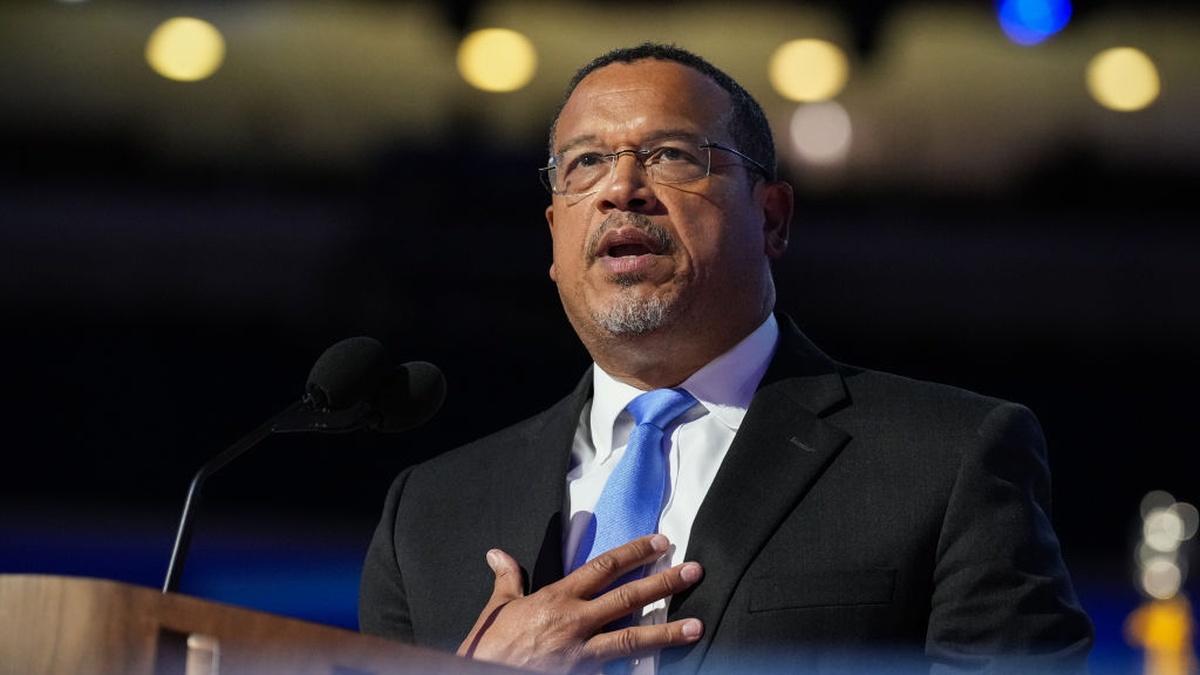

An Immigration and Customs Enforcement agent shot and killed Renee Good in Minneapolis on Wednesday. Shortly after, Minnesota Attorney General Keith Ellison noticed something strange. Federal agents refused to share their investigation files with state officials.
Ellison said it took about 24 hours before people started talking about it publicly. “We started hearing they’re not going to release it. They’re going to exclude state authorities from the bullets, the gun, the crime scene,” he said, according to HuffPost. But then federal agents changed their plans. They decided to keep the bullets, the gun, and the crime scene evidence away from state authorities.
Ellison tried to fix the situation. He has a good working relationship with federal law enforcement in Minnesota. He wanted to call someone and work things out. But when the news became public, he lost hope. He sent a letter to federal officials asking them to reconsider. He never got a response.
The order seems to come directly from the president
Ellison and the Hennepin County district attorney held a press conference. They said they would continue their own investigation and ask the public for more evidence. That’s when Ellison finally understood why his requests were ignored.
“This directive appears to be coming from Trump himself,” Ellison believes. The president made comments attacking Minnesota law enforcement on Friday. When a reporter asked if the FBI should share files with Minnesota investigators, Trump said he normally would. But he called them “crooked officials.”
This is the biggest case Ellison’s office has handled since successfully prosecuting Minneapolis police for killing George Floyd in 2020. One lesson from that case was clear: get all the evidence you can. Don’t promise too much and deliver too little.
Ellison said he’s doing everything possible to bring justice for Good. But he warned that more investigation is needed before deciding whether to charge ICE agent Jonathan Ross. He still hopes the federal government will change its decision. He said his office has the right to investigate.
Ellison dismissed Vice President J.D. Vance’s claim that Ross has “absolute immunity.” He said it only shows Vance’s ignorance. Ellison served in Congress for many years before becoming attorney general in 2018. He knows the political challenges he faces. The Trump administration pushed a fraud case involving mostly Somali people and sent thousands of federal agents to Minneapolis. Those agents outnumbered the city’s police force by more than two to one. The administration also tried to cut federal aid, which Ellison’s office sued to stop. Trump’s recent actions have drawn criticism, including his withdrawal from multiple U.N. agencies.
Ellison was confused when footage from Ross’s cell phone appeared on Alpha News, a right-wing outlet in Minnesota. He said this contradicts the administration’s reasons for keeping evidence from state officials.
If they won’t share the file, why give information to what he called a propaganda outlet with their own commentary? The leaked footage from Friday shows Ross’s view just before he shot Good. Ellison noted that Good wasn’t showing any hostility. She wasn’t threatening Ross or saying she wanted to hurt him. She said she wasn’t mad. After shooting her, Ross called Good a vulgar name on the video.
This connects to another lesson from the George Floyd case. When government units are involved in someone’s death, parts of the government often try to damage that person’s reputation. Ellison said that’s happening now with Good.
He wants her family to know that officials understand she wasn’t a domestic terrorist. She was a good person who had love in her heart when she died and showed no anger toward the person who killed her. Critics suggest Trump’s controversial decisions could lead to impeachment as his administration faces mounting scrutiny.


Published: Jan 12, 2026 04:52 pm