


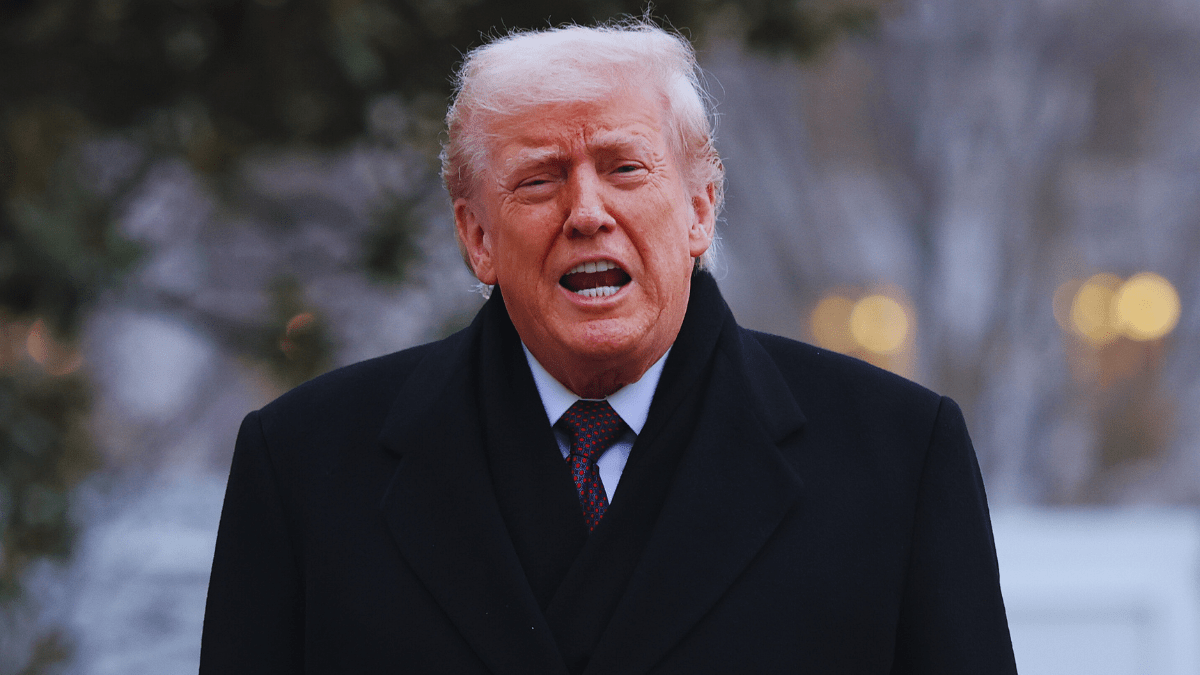

A report released this week revealed that the U.S. military struck two additional boats in the Pacific Ocean that allegedly were trafficking drugs, killing five people in the operation. It is now understood that since the Donald Trump administration began its so-called “war on drugs,” at least 104 people have been killed in extrajudicial airstrikes.
Trump is still making the media rounds, insisting that he deserves a Nobel Peace Prize — often by dragging Barack Obama’s win and questioning whether Obama even earned it. But the question is now turning back on Trump himself: does he deserve it? The last time Trump claimed to have “stopped” a war was when he invited regional leaders from East Africa to sign a treaty intended to end the DRC–Rwanda conflict — an agreement that was breached less than a week later.
While Trump oversees the signing of non-binding agreements and actively campaigns for accolades meant to cement his image as a “peace president,” whether real or manufactured, reporting from CNN paints a starkly different picture on the ground. On Monday, Dec. 15, three boats were struck in the Pacific Ocean during operations said to target drug trafficking. By Wednesday, four more people had been killed in another strike.
The campaign, now dubbed “Operation Southern Spear,” has been described by the administration as Trump’s decisive move to finally end narcotics trafficking from South America. But the operation has increasingly veered into political ambitions that appear to have little to do with drugs.
Trump initially framed the campaign around Venezuela, repeatedly alleging that its government is directly involved in narcotics trafficking — a claim he escalated by declaring illicit fentanyl a “weapon of mass destruction.” Now, however, the administration’s focus has shifted openly toward Venezuela’s vast oil reserves.
The Trump administration has imposed a heavy blockade on oil tankers entering and leaving Venezuela in an attempt to force President Nicolás Maduro from power and allow U.S. companies to seize control of oil production. Maduro — who faces credible accusations of overseeing some of the most egregious corruption of the 21st century — has repeatedly warned the international community that the U.S. is pursuing regime change. Those warnings have recently drawn the attention of Russia, opening the door to yet another geopolitical flashpoint involving nuclear powers.
Meanwhile, Congress is still debating whether Operation Southern Spear even meets the threshold of legality. Traditionally, alleged drug traffickers are apprehended, charged, and tried in court, with evidence presented and guilt established beyond a reasonable doubt. Destroying vessels and killing all occupants eliminates both suspects and evidence, leaving no public confirmation that drugs were present or that those killed were involved in trafficking at all.
That concern was underscored by controversy surrounding a Sept. 2 airstrike. Reports suggest Defense Secretary Pete Hegseth allegedly authorized the killing of all occupants on a boat believed to be carrying drugs, even after the vessel had already been disabled. Congress reviewed the full video behind closed doors but ultimately decided against releasing the unedited footage to the public.







Published: Dec 19, 2025 11:48 pm