


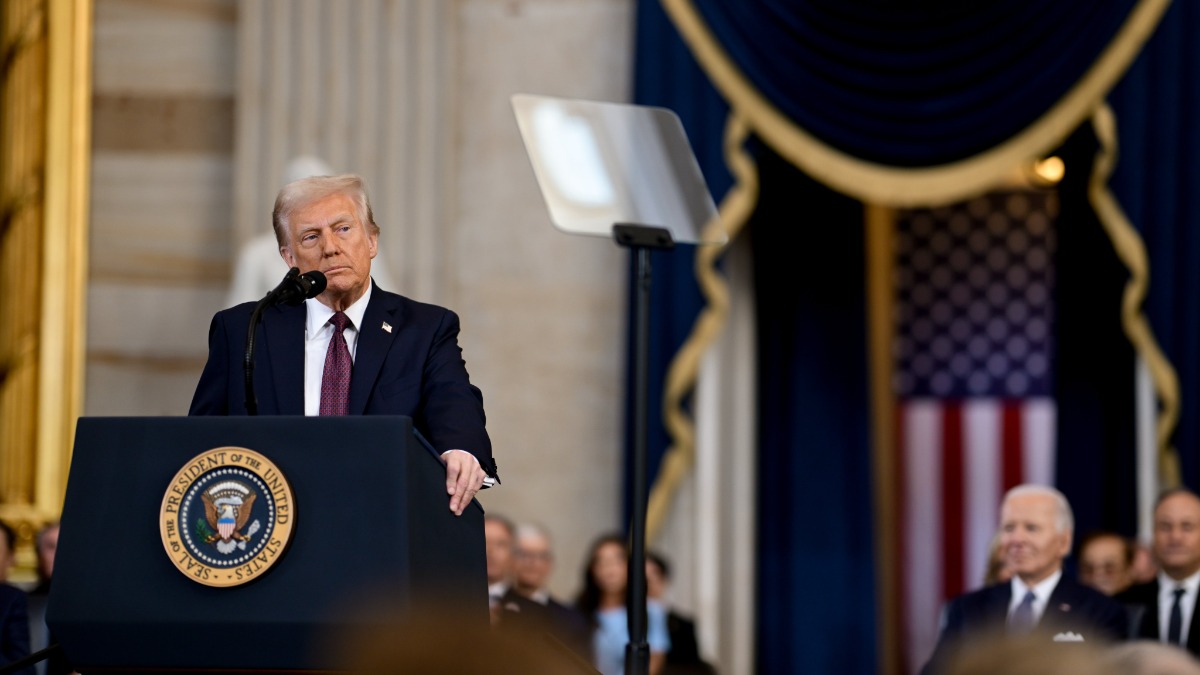

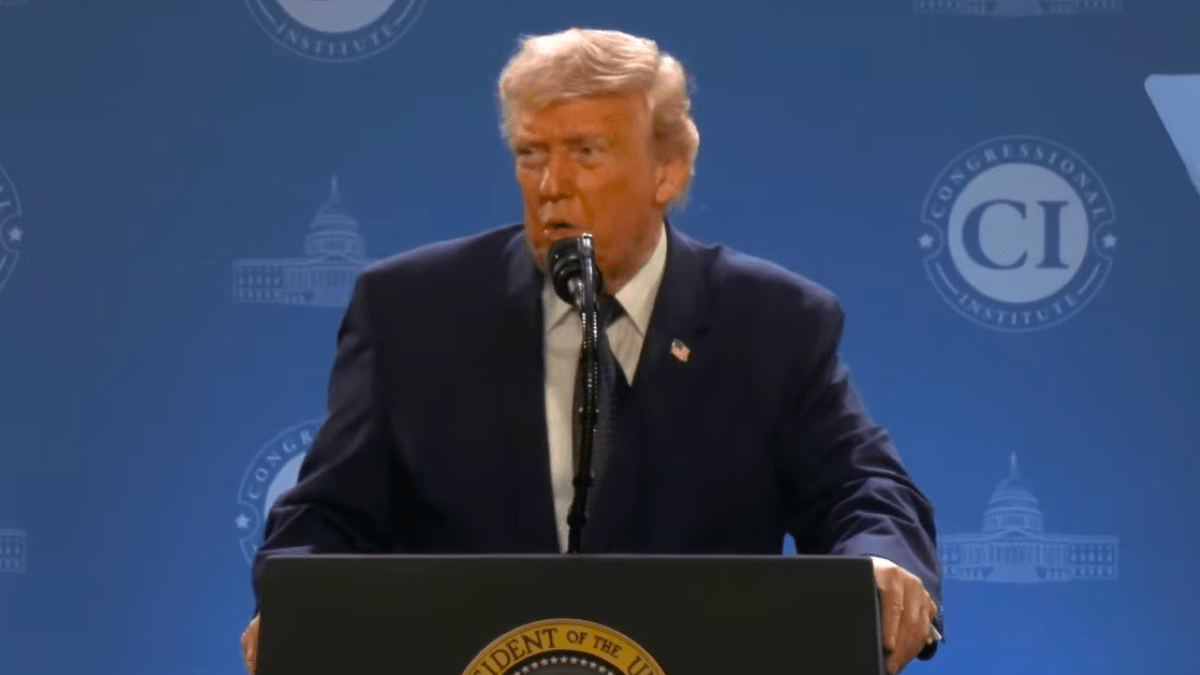
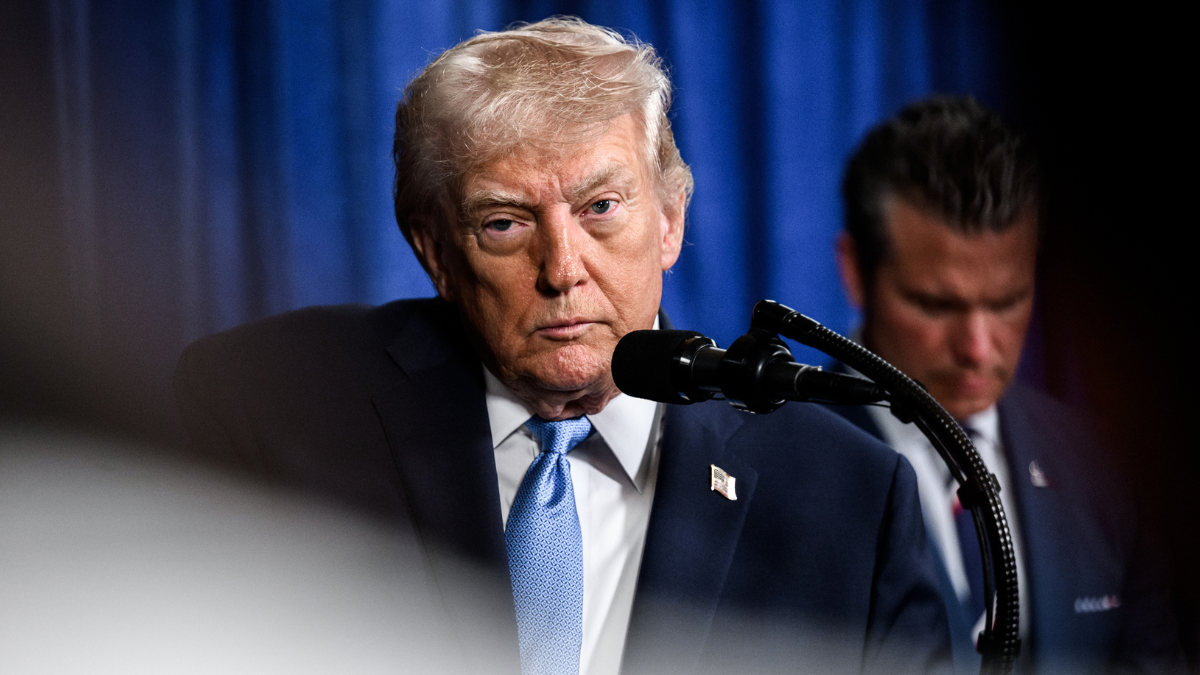
Donald Trump has given a conflicting take on the ongoing war in Iran, telling reporters that the conflict is “very complete, pretty much” while also admitting, “we haven’t won enough.” He made these comments ahead of a speech and press conference in Florida, apparently trying to reassure Republican allies that the US military campaign would be ending soon.
Trump said, “I think the war is very complete, pretty much. They have no navy, no communications, they’ve got no air force.” Speaking to Republicans, he said, “We took a little excursion because we felt we had to do that to get rid of some evil. I think you’ll see it’s going to be a short-term excursion.” He then walked that back, stating, “We’ve already won in many ways, but we haven’t won enough.”
Despite these statements, the conflict, now in its second week, is clearly escalating. US and Israeli warplanes launched new waves of strikes across Iran. In response, Iran fired fresh missile and drone attacks targeting Israel, US bases in the Middle East, and energy infrastructure in the Gulf. Drone strikes have also been reported in Bahrain, the UAE, and Saudi Arabia, and an Iranian missile was shot down over Turkey.
The appointment of a hardline new Iranian supreme leader signals the conflict could drag on for months
Mojtaba Khamenei has been formally announced as Iran’s new supreme leader, hours after his father, Ayatollah Ali Khamenei, was killed in an Israeli airstrike. Thousands gathered in Tehran’s Enghelab Square to pledge allegiance, chanting “Death to America, Death to Israel.”
Hosseinali Eshkevari, a member of Iran’s assembly of experts, confirmed the new leader would continue “the path of the martyred Imam Khamenei.” Trump dismissed the younger Khamenei as a “lightweight.” “I think they made a big mistake. I don’t know if it’s going to last. I think they made a mistake.” Israel has stated it will target the new supreme leader.
Analysts warn that Mojtaba Khamenei, seen as a hardliner with strong ties to the Revolutionary Guards, could keep the conflict going for weeks or months. Trump has also been facing domestic pressure, as his push to pass key legislative priorities has recently run into resistance from within his own party.
Economically, stock markets worldwide dropped sharply as oil prices surged. The Strait of Hormuz, a crucial shipping lane for a fifth of the world’s oil, has seen tanker traffic nearly completely halted. French President Emmanuel Macron said France and its allies are preparing a “defensive” mission in the Gulf to escort ships and gradually reopen the strait. France has already sent a dozen naval vessels, including an aircraft carrier strike group, to the region.
Iran’s security chief, Ali Larijani, posted on social media that safe passage through the Strait of Hormuz would not be restored “amid the fires ignited by the United States and Israel in the region.” Trump responded on social media, stating, “If Iran does anything that stops the flow of Oil within the Strait of Hormuz, they will be hit by the United States of America TWENTY TIMES HARDER than they have been hit thus far.”
The fuel price surge following an Israeli oil field strike had already put the Trump administration on the back foot economically before this latest threat. The human cost of the conflict is severe. At least 1,230 people have been killed in Iran, 397 in Lebanon, and 11 in Israel.




Published: Mar 10, 2026 10:55 am