


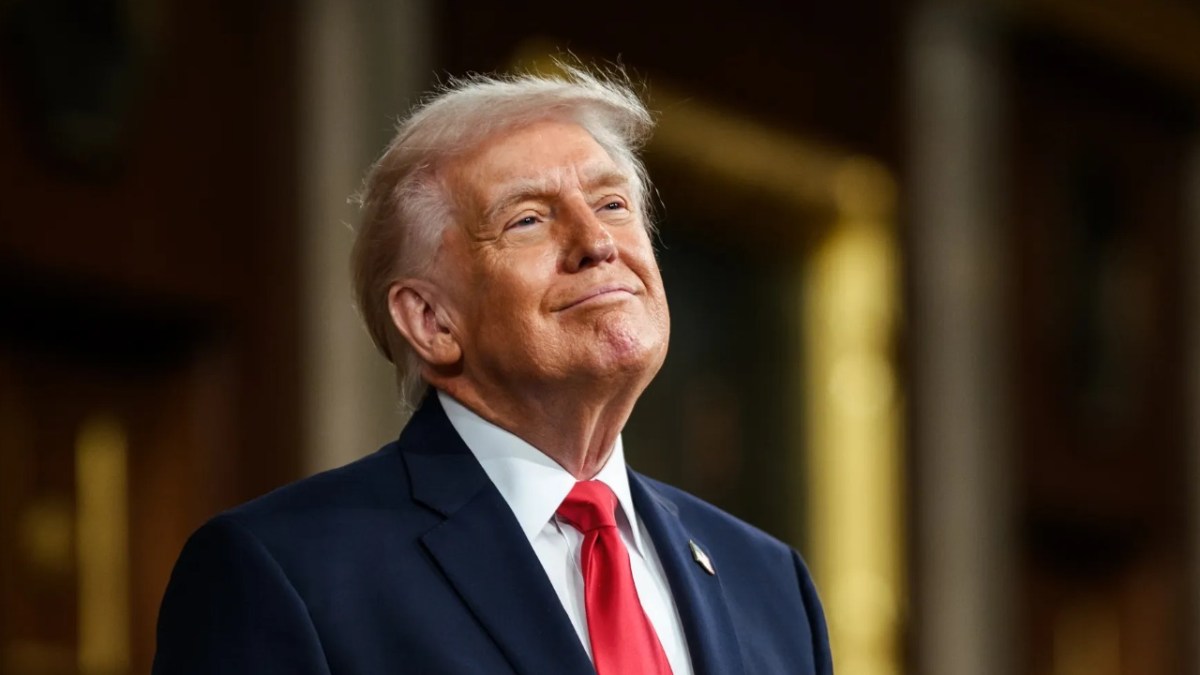

Donald Trump is preparing for a major overseas trip that could shape the remainder of his presidency, but his upcoming meeting with Chinese President Xi Jinping and Russian President Vladimir Putin is already raising concerns about what the three leaders might discuss behind closed doors, according to The Guardian. The trip comes after Republicans suffered significant losses in the midterm elections, leaving Trump facing a more difficult political landscape at home.
Trump will travel to Manila in the Philippines on Tuesday to attend the Association of Southeast Asian Nations (ASEAN) summit, scheduled from November 15 to 17 (per Al Jazeera), before heading to Shenzhen, China, for the Asia-Pacific Economic Cooperation (APEC) forum. Citing reports from the White House, the outlet reported that the visit will include the first trilateral summit involving Trump, Xi, and Putin, with the three leaders expected to discuss international security and relations between their countries.
During his time in Southeast Asia, Trump is also expected to sign a trade agreement with Thailand, pursue additional deals, and encourage regional leaders to favor American technology over Chinese alternatives in the artificial intelligence industry. He will also attend the first leaders’ meeting of the Quad partnership since returning to the White House in January 2025 (per a schedule shared by MLQ). The group includes the United States, Japan, India, and Australia.
There’s a lot to discuss
Trump will reportedly be accompanied by Elon Musk during the China leg of his trip. The Tesla and SpaceX chief executive spent nearly $500 million supporting Republican candidates ahead of the midterm elections, but his efforts did not prevent the party’s significant losses.
The upcoming summit is attracting particular attention because of the ongoing controversy surrounding Nvidia and its CEO, Jensen Huang. Trump is facing pressure to raise the matter with Xi, especially after Huang reportedly persuaded the administration to lift restrictions on selling Nvidia’s artificial intelligence chips to China.
Trump has indicated that he does not intend to bring up the controversy during his meeting with the Chinese president (per NPR). Administration officials have reportedly said the discussions will instead focus on implementing a trade agreement between the two countries.
The planned three-way meeting has also drawn comparisons to the 1945 Yalta Conference, where Winston Churchill, Franklin D. Roosevelt, and Joseph Stalin discussed the postwar order in Europe. Some analysts worry that a similar arrangement involving Trump, Xi, and Putin could leave smaller countries vulnerable to decisions made by more powerful governments, as reported by The Guardian.
Ukraine is particularly concerned about the possibility. Kyiv Independent reported that Putin initially suggested the trilateral meeting, and Kyiv fears the Russian leader could use the opportunity to persuade Trump and Xi to support a settlement that favors Moscow in its ongoing war against Ukraine.
Trump, however, has said Ukraine will not be discussed during the summit. Instead, he has identified ending the war involving the United States and Iran and pursuing nuclear arms limitations as the main subjects (per the Associated Press). China has been expanding its nuclear arsenal and has shown little willingness to negotiate reductions until its capabilities are closer to those of the United States and Russia.
Despite the attention surrounding the meeting, expectations of a major diplomatic breakthrough remain low. Lyle Goldstein, an international affairs fellow and China specialist at Brown University, predicted that the summit would not produce a substantial agreement, dismissing fears of a new Yalta-style arrangement.
Jonathan Czin of the Brookings Institution also suggested that Xi and Putin might be reluctant to negotiate long-term agreements with Trump because his political influence is weakening. Both leaders could instead seek short-term diplomatic advantages while the president’s remaining time in office runs down. “Both men know Trump’s time is expiring even more quickly than his leverage – and that he will be irrelevant in a mere 26 months [when his term expires],” he said.
Nevertheless, Goldstein believes Trump’s domestic political difficulties could push him to focus more heavily on foreign affairs. With Republicans facing a tougher political environment following the midterms, the president may have fewer opportunities to advance his domestic agenda. “The president has been badly damaged by the election and will have limited prospects for the next two years,” he reportedly said.








Published: Nov 16, 2026 02:45 pm