


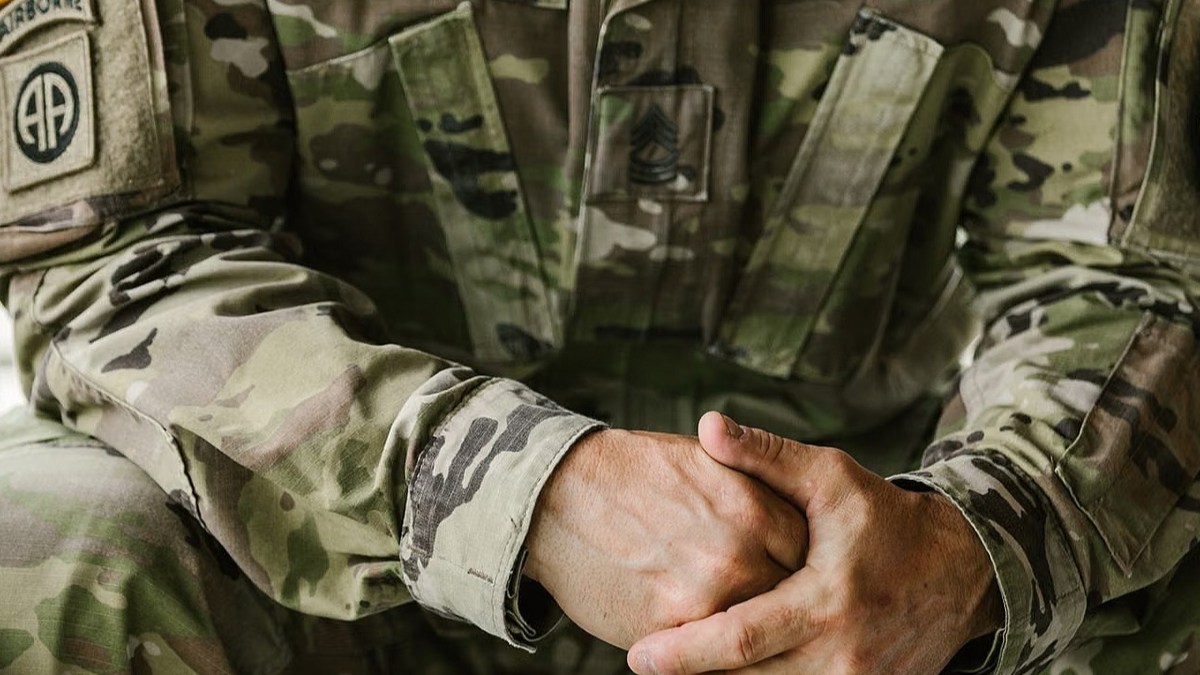

A woman is questioning her marriage after her husband reportedly decided to pursue a military career while she is 17 weeks pregnant with their second child. In a Reddit post, she claimed that she had helped bring her husband to the United States, only for him to start making plans to enlist just as their family was preparing to welcome another baby.
Her husband is reportedly 42 and recently learned that he could still join the military because the age cutoff is 43. She said he discovered the opportunity about a week earlier, but had already taken an exam and was waiting to complete his medical evaluation. She is now apparently worried that he could sign a contract and leave for basic training between January and March, right around their baby shower and just months before her expected April delivery.
She reportedly spent years raising their first child while her husband was overseas, and had to file paperwork to bring him to the U.S., and he only arrived when their daughter was four. Now, with another child expected on the way, she cannot understand why he would choose to pursue a commitment that could leave her handling the pregnancy and newborn stage largely on her own.
She is apparently well off
The woman also pushed back against her husband’s argument that military service would help him provide for their children. “To be honest, I’m very well off. So when he talks about these benefits, I’m just confused because this is not something you actually have to do,” she claimed.
She was particularly frustrated after asking what would happen if she gave birth while her husband was away at training. “I asked his recruiter what happens if I give birth, and his recruiter is telling me he could come home for 30 fucking days. Bro,” she asserted. The couple had also apparently discussed hiring a live-in nanny, but the idea of relying on someone she does not know during pregnancy and after childbirth did not reassure her.
The woman further accused her husband of making her feel responsible for his financial future, claiming he suggested that if he did not enlist, he would be unable to provide for the family. She wrote that “If I now say that oh I don’t want you to do the army he will blame me for not being able to provide.”
She acknowledged that she would have supported him if it was a long-held ambition, “If this was something that he truly wanted to do and it was on his spirit. I would support him in it, but you just found out this information a week ago, and now you’re rushing to do all these things.” She also said the alleged experience had made her question the marriage itself, adding that she was “thinking of a divorce” and “might be calling a divorce lawyer” soon. She was glad that the couple had reportedly signed a prenuptial agreement.
She also apparently questioned the future of her pregnancy. She claimed that she was even considering an abortion because she did not want to feel tied to a partner who allegedly was not considering her needs.
Research from Mass General Brigham examined how military deployment affects pregnant and postpartum women. The study included more than 1,000 women in Israel, including 429 whose partners were actively deployed.
It found that pregnant women with deployed partners were twice as likely to meet the criteria for probable depression, with rates reaching 44%. The study also found that postpartum mothers with deployed partners reported greater difficulties bonding with their babies, partly because of reduced emotional and practical support.








Published: Nov 12, 2026 01:15 pm