



A federal judge in Miami has officially reopened President Trump’s $10 billion lawsuit against the IRS, signaling she intends to investigate what she described as “grievous allegations.” Judge Kathleen M. Williams, an Obama appointee, also questioned whether the deal used to resolve the matter was “premised on deception.” This comes just days after the president voluntarily dismissed his suit. The reversal now puts the Justice Department on the defensive.
As a part of the settlement deal, a $1.8 billion fund was created, designed to compensate people who claimed they were victims of government “weaponization” by Democrats. The quick setup and roll-out of the fund has rubbed many the wrong way. The New York Times reported that Williams’s order was spurred by a filing from a bipartisan group of 35 former federal judges.
This group argued that the entire process showed a troubling lack of “candor toward the court and manipulation of the judicial system.” Williams made it clear in her order that she feels “empowered to investigate serious misconduct” in any case sitting on her docket. She has now ordered Trump’s legal team to explain by June 12 regarding whether the lawsuit should be formally reopened because “the court was the victim of a fraud.”
It isn’t just about a settlement
Willliams specifically wants to know if there was collusion between the president and his own government to settle the case in a way that avoids judicial scrutiny. She noted there was no “settlement of record” when she initially closed the case.
Additionally, the actual terms of the settlement are raising some red flags, according to CNBC. Settlement documents include a controversial provision that protects federal tax returns filed by Trump, his family, the Trump Organization, and “parties including trusts, parent, sister or related companies, affiliates, and subsidiaries” from potential IRS enforcement actions.
This protection covers any pending tax audits that the IRS would have been conducting at the time the deal was signed. It’s a massive Senator Ron Wyden, a critic, argues violates federal law, “that prohibits interference by executive branch officials in IRS audits.” Wyden has gone on record calling the directive “illegal” and suggesting that future administrations should treat it as invalid.
The Justice Department has defended the move, claiming it’s standard practice to include waivers in settlements to prevent either side from seeking further adverse claims. A spokeswoman told CNBC that the agreement “is only with respect to existing [IRS] audits, not future.”
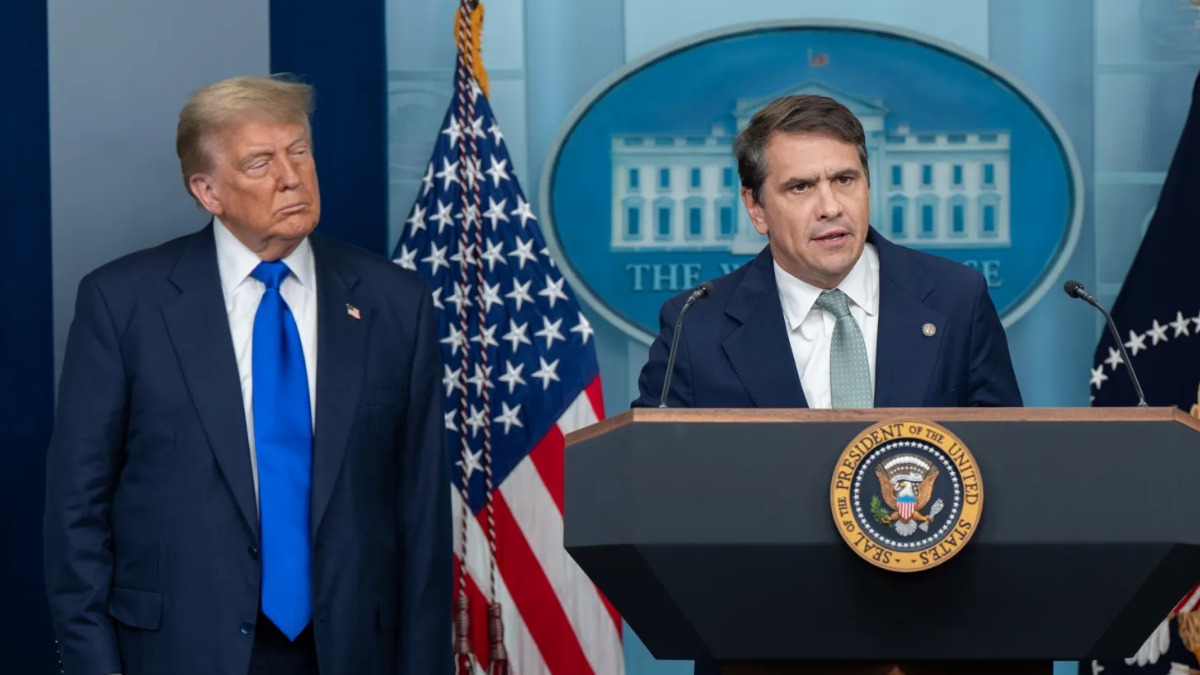
The optics are difficult to defend, though, when you consider that the settlement was signed by Acting Attorney General Todd Blanche, who happens to be the president’s former criminal defense lawyer.
The $1.8 billion fund itself is also facing major hurdles. Per the NY Times, it has already been temporarily blocked by a federal judge in the Eastern District of Virginia. Additionally, lawmakers, even Republicans on Capitol Hill, are sounding the alarm and uniting against the fund.
Some, like Rep James Raskin, are even calling it a “slush fund” for allies of the president, including those who were convicted for their roles in the January 6, 2021, riot. During a recent hearing, CNBC pointed out that Blanche wouldn’t even rule out the possibility of people convicted of assaulting police officers during that event receiving compensation from the fund.
It’s also worth noting that the IRS had actually prepared a 25-page memo outlining defenses against the lawsuit, which, per the NY Times, the Justice Department completely ignored. The government’s decision not to contest the suit or have any lawyer appear in court raises questions about whether the settlement’s primary focus was resolving the legal dispute or securing broader benefits.
In her order, Williams even pointed out in a footnote that the audit protection might be outside the scope of what is legally allowed in a settlement. With the case now back on her desk, the coming weeks will likely bring even more scrutiny to the officials who pushed this deal through.







Published: Jun 2, 2026 06:00 am