


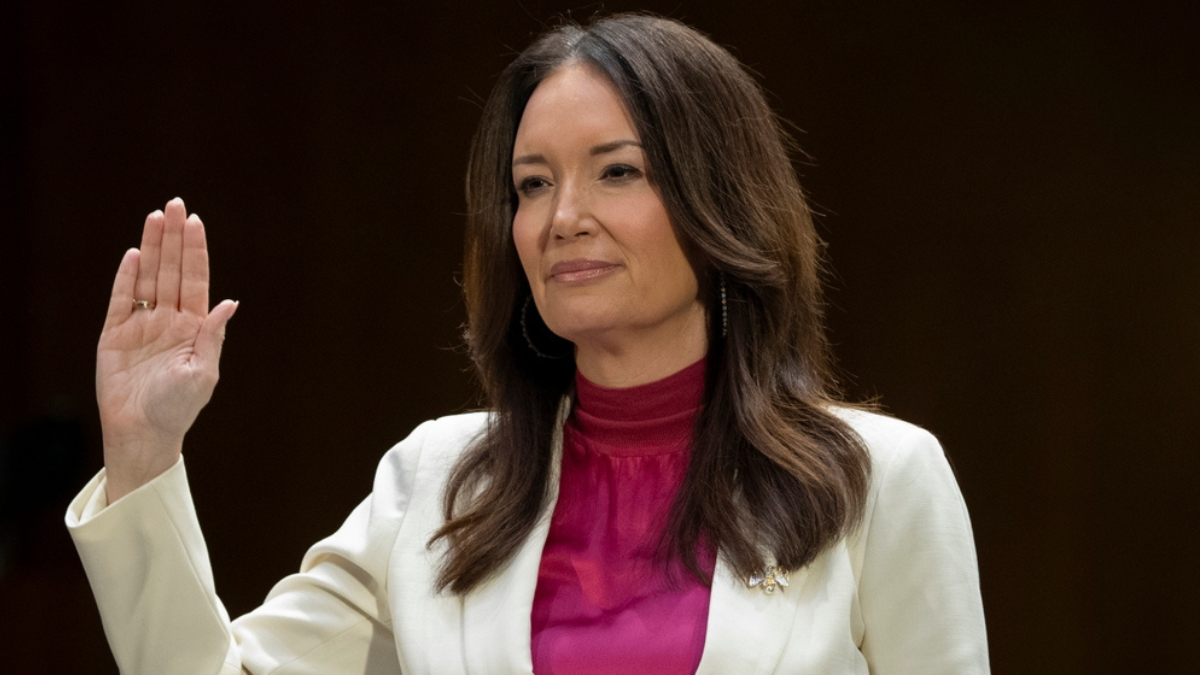

The Donald Trump administration has just announced that the Supplemental Nutrition Assistance Program (SNAP) has seen a 4.3 million drop in participants. While Agriculture Secretary Brooke Rollins has suggested that it’s because the economy is doing better and some people just don’t need food stamps anymore, some have already started pushing back on this notion.
According to ABC7, Secretary Rollins said that a lot of people who were on the program shouldn’t have been receiving SNAP benefits in the first place. The Trump administration has recently been running a “war on fraud” in a bid to balance the budget. And this was Rollins doing her bit in championing the administration because, according to her, a lot of the people on SNAP benefits were also fraudulent.
Keep in mind that the below is a tweet that has its own opinion, not reflective of this site’s opinion.
Trump claims preposterously that if Vance does a good enough job rooting out fraud, "we'll have a balanced budget without having to do anything. This is the kind of money they stole. I hope Todd is gonna do a real job." pic.twitter.com/c7M00TaEm2
— Aaron Rupar (@atrupar) May 27, 2026
The SNAP situation is complicated
Rollins added that people are also leaving the program because the economy is soaring. Rollins said, “And a lot of it is just a better economy. We’ve had wage growth that has outpaced inflation for the first time since early 2021. This is a really big day. So people don’t need food stamps.”
According to K8 News, Wall Street analysts are calling the current American economy “a split-screen economy.” This is better known as a K-shaped economy, whereby different geographic locations or industries have vastly divergent financial outcomes during an economic downturn.
The Wall Street Journal reports that goods and services broadly went up in price by about 1.6% from January through March 2026. The same report also revealed that in 2024, the economy was growing at 2.8%. In 2025, that rate fell to 2.1% growth. Another report by The Guardian also revealed that this is the fastest rise in U.S. inflation rates in the last three years.
According to CNBC, however, the S&P 500 is starting off June at a record high, largely thanks to the tech industry. So when Rollins says the economy is “better,” she is right about the stock market specifically. But according to an assistant professor at Cornell University, Roger Figueroa, the economy’s improvement has little to do with millions of people no longer being on SNAP. Figueroa said, “What we’ve seen in terms of the data is that the trend in participation declines seems to be related to the program being harder to access.”
The available data on fraud suggests that fraud within SNAP is low. In 2023, the number of people who were disqualified from SNAP for fraud was 41,476. Out of the 42,176,946 total people who relied on SNAP benefits at the time, this represented only a tiny fraction of the entire program.
Other experts in the report pointed to the drop in people using SNAP benefits as a result of the “One Big Beautiful Bill Act.” The bill removed an exemption under which certain adults in the program didn’t need to meet work requirements. According to ABC7, these adults are subject to those requirements.
Participants must now meet the requirements of working or participating in a work program for at least 80 hours a month. They don’t have earn income from these programs. Another change in the rules is that able-bodied adults up to age 54 were previously exempt from work requirements; now that age has been raised to 64.
Former foster children, homeless people, and even veterans were once excluded from such requirements. That is no longer the case for any of these groups.



Published: Jun 3, 2026 12:45 pm