


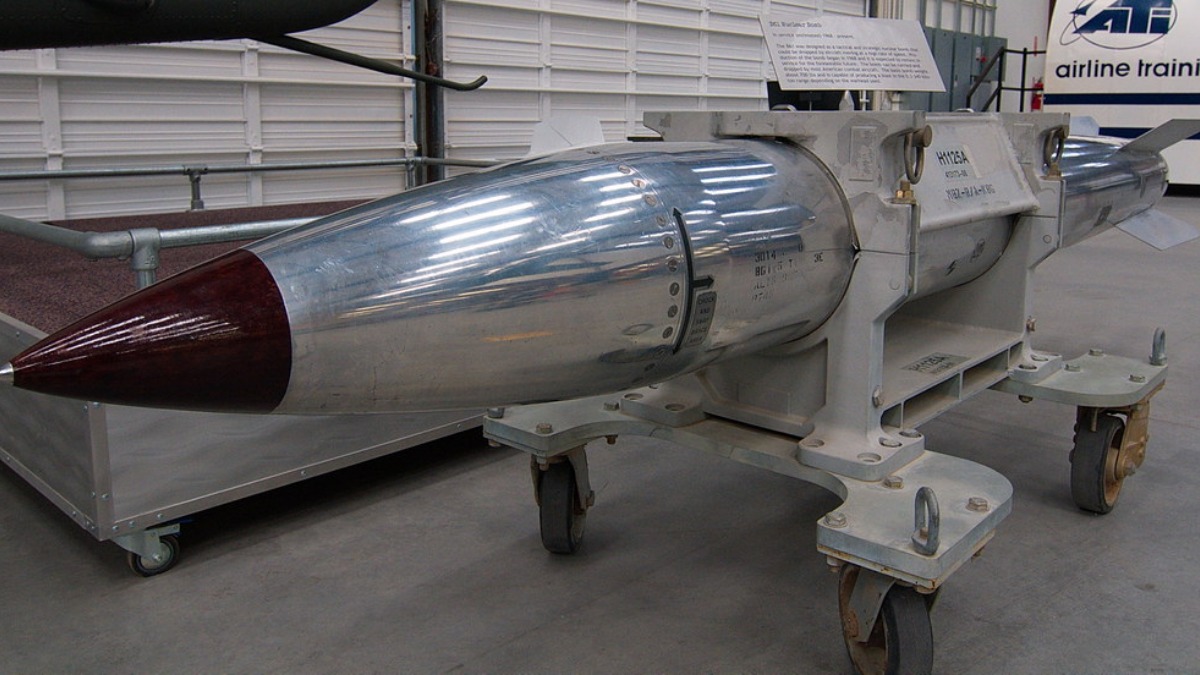

A Saudi geopolitical researcher has revealed that if Saudi Arabia joins the ongoing war with Iran, the kingdom plans to activate a mutual defense pact with Pakistan, potentially drawing on Pakistan’s nuclear arsenal.
According to The Middle East Eye, Salman al-Ansari shared these details in an interview, saying that if Saudi Arabia entered the conflict with full force, Iran would be the biggest loser. Al-Ansari claimed there is “literally a nuclear umbrella over Saudi Arabia.”
Saudi Arabia and Pakistan signed this mutual defense agreement last year, following an Israeli attack on Hamas negotiators in Doha, Qatar. The agreement is structured similarly to NATO’s Article 5, which covers collective defense obligations. Both governments officially describe the pact as stating that “any aggression against either country shall be considered an aggression against both.”
Pakistan is walking a careful diplomatic line between Saudi Arabia and Iran
Iran has already launched ballistic missiles and drones at Saudi Arabia, targeting the US embassy in Riyadh, Prince Sultan Air Base, and the kingdom’s energy infrastructure. These attacks have affected Saudi oil exports. Iran’s control of the Strait of Hormuz has been a major factor, though Saudi Arabia’s East-West pipeline has allowed roughly four million barrels per day to reach markets, down from around seven million before the war.
Initially, Saudi Arabia and other Gulf states urged President Trump not to join the war against Iran. But as Iranian attacks have grown more frequent and intense, there is a growing debate within Riyadh about how much support to offer the US for offensive operations, and whether to join the attacks directly. Trump himself has given a surprisingly vague timeline for when the Iran war might end.
Pakistan has so far played a mediating role. Pakistani Foreign Minister Ishaq Dar confirmed earlier this month that he raised the defense pact directly with Iranian Foreign Minister Abbas Araghchi. Dar stated plainly, “We have a defence pact with Saudi Arabia, and I conveyed this to the Iranian side.” Iran responded by seeking assurances that Saudi territory would not be used as a base for attacks against it.
Beyond defense ties, Pakistan depends on the Gulf for its crude oil and natural gas supplies. It is worth noting that senior White House officials quietly opposing the Iran war adds another layer of uncertainty to how this conflict develops. This week, a Pakistan-flagged ship called the Karachi, also known as the Lorax, became the first vessel carrying non-Iranian crude to pass through the Strait of Hormuz with its Automatic Identification System tracking turned on.
The vessel belongs to Pakistan’s state-owned National Shipping Corporation and was carrying oil from the UAE. Analysts believe Pakistan likely negotiated this transit directly with the Iranian government.
This series of moves shows that Pakistan is carefully balancing its defense commitments to Saudi Arabia while maintaining working relations with Iran, a difficult position as tensions in the region continue to rise.




Published: Mar 19, 2026 10:51 am