


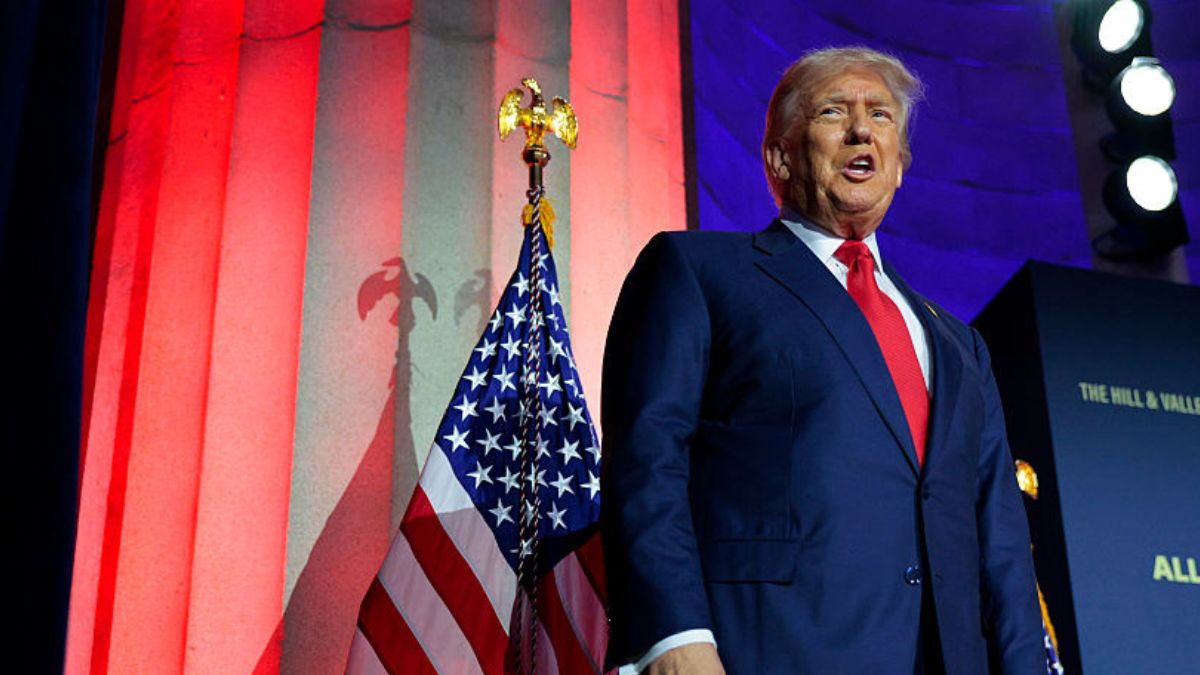

President Donald Trump’s new trade deal with Japan has created tension among American automakers who now worry they are at a disadvantage compared to their foreign competitors.
According to Politico, the preliminary agreement shows Trump will lower tariffs for Japanese auto manufacturers from 25 percent to 15 percent, while his broader tariff policy continues to impact various goods. This reduction applies to both Japanese cars and auto parts, while U.S. companies still face higher duties for using parts from Mexico and Canada.
“American Automakers still need to review the details of the U.S.-Japan agreement, but any deal that charges a lower tariff for Japanese imports with virtually no U.S. content than it does North American-built vehicles with high U.S. content is a bad deal for the U.S. industry and U.S. auto workers,” said Matt Blunt, president of the American Automotive Policy Council.
U.S. car companies report major losses as tariffs continue to hurt profits
The impact of these tariffs is already showing in American companies’ financial reports. General Motors saw a $1 billion drop in second-quarter profits, while Stellantis expects to lose $2.7 billion in the first half of 2025, reflecting the broader economic challenges of Trump’s trade policies. Even Tesla reported lower profits due to increased tariff costs.
The situation becomes more complicated because U.S. automakers depend heavily on parts from Mexico and Canada to build their vehicles. While the White House has created a rebate system to help ease some costs over the next two years, car manufacturers are still struggling to manage the financial impact.
The Japan deal has also sparked hope among other major car-producing nations. The European Union and South Korea are now in talks with the U.S. about similar arrangements. Japanese car company stocks, including Toyota and Honda, have already seen increases following the announcement.
This development goes against earlier promises made by the Trump administration to American automakers. Initially, they were assured that auto tariffs would not become bargaining chips in trade negotiations with other countries. The only exception was meant to be a deal with the UK, which allowed reduced duties for a limited number of vehicles.






Published: Jul 24, 2025 07:12 am