


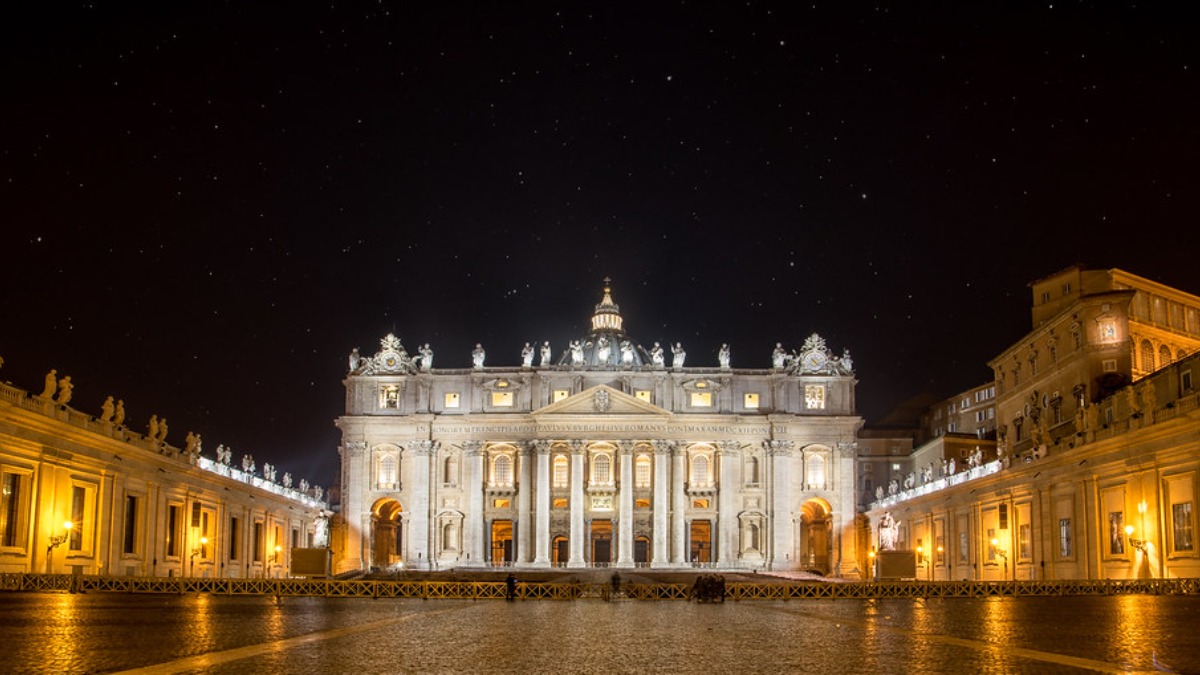

In the wake of President Donald Trump’s military attack on Iran, Pope Leo XIV initially offered a carefully worded plea for peace. He expressed his “heartfelt” wish that “diplomacy” would regain “its proper role,” deliberately avoiding blame for the escalating tensions. He later asked, without naming anyone, whether Christian leaders who go to war “have the humility and courage to seriously examine their conscience and undergo confession?”
A closer look, however, reveals a coordinated strategy where other prominent Catholic leaders are issuing much sharper condemnations. According to the Washington Post, Cardinal Pietro Parolin, the Vatican’s secretary of state, immediately warned that America’s rationale for preemptive strikes risked setting “the whole world … ablaze.”
Cardinal Robert McElroy, the church’s top authority in Washington, flat-out called the war neither “morally legitimate” nor “just.” Cardinal Blase J. Cupich, the archbishop of Chicago, even dubbed the White House’s “Hollywoodesque” war posture “sickening.”
I was one of those people who was disappointed by his measured words
Vatican officials say Leo, the first U.S.-born pope, is trying to navigate a tricky situation, especially with the Trump administration projecting American nativism at home and deadly force abroad. He wants to avoid “partisan politics” and not “promote polarization in the Church,” preferring to remain a unifier and bridge builder.
This approach involves letting allies in the Holy See and U.S. cardinals and bishops take the lead in directly challenging the administration. This also marks a departure from his predecessor, Pope Francis, who was known for his direct and often controversial interjections.
Pope Leo’s brother made it clear that he wasn’t happy with what was going on in the country and wasn’t going to stay silent. Leo previously described the crackdown on migrants in the United States as “inhuman” and criticized war talk at a meeting of military leaders. However, he is also embracing symbolic gestures as a way to make a statement.
On July Fourth, the 250th anniversary of U.S. independence, he’s opting to visit Lampedusa, an Italian island known as an arrival point for migrants. This trip will create a visual contrast to Trump’s “grandest displays of patriotism,” subtly highlighting the plight of desperate migrants. Vatican officials insist his Lampedusa trip isn’t anti-U.S. government messaging but rather “another way of being American,” showing someone “unafraid of the world.”
The U.S. Conference of Catholic Bishops has repeatedly spoken out on Trump’s policies. Last fall, the conference, comprising both conservative and liberal bishops, overwhelmingly approved a communal statement opposing “indiscriminate mass deportation and dehumanizing rhetoric.” They also challenged the administration’s plan on mass detention centers, drawing a comparison to the internment camps for Japanese Americans in the 1940s.
Cardinal Cupich, a confidant of Leo’s, confirmed that U.S. bishops aren’t “getting directions from the Holy Father in some secret way.” Instead, he said, Leo is broadly directing them to “take responsibility for what’s happening in their country.” Following that, Cupich wrote a strong statement against the White House’s “Justice the American Way” video.


Published: Mar 16, 2026 06:01 am