


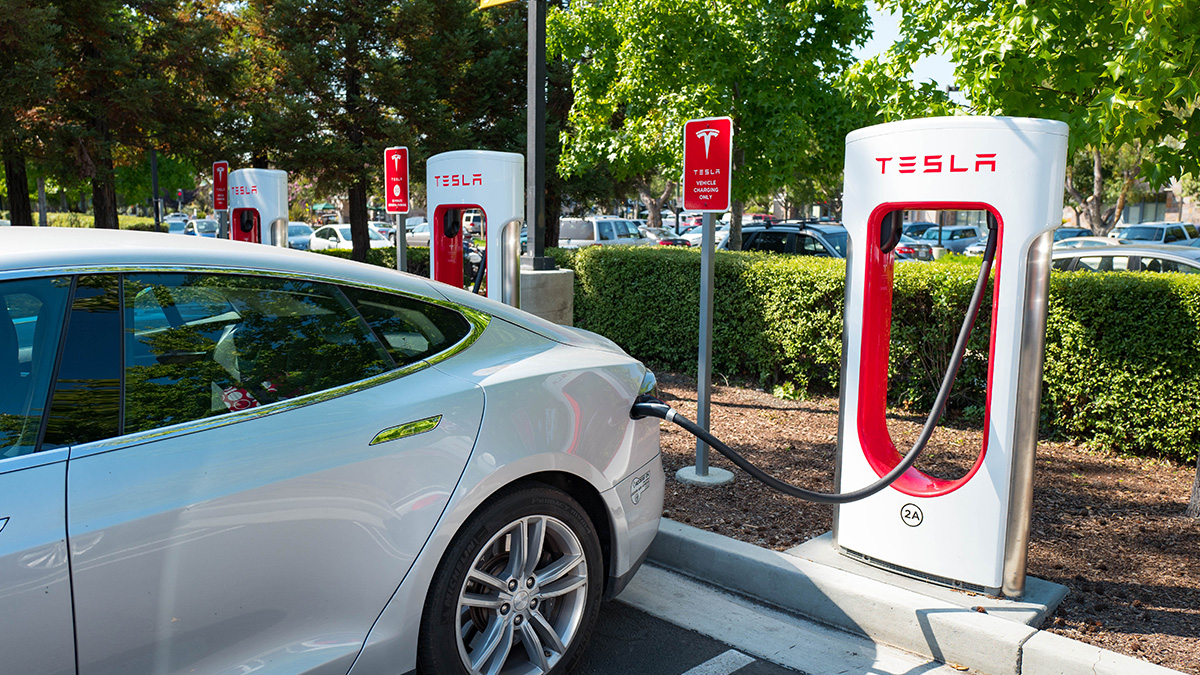

Automakers are caught in a serious legal battle between President Trump’s administration and California over vehicle emissions rules. According to Reuters, this isn’t just a minor disagreement. It’s a head-on collision that could force companies from Tesla to traditional car manufacturers to navigate two opposite regulatory systems, creating what some are calling an “unachievable regulatory wormhole.”
For decades, California has had the unique authority to set its own, tougher auto-pollution rules. This special waiver was granted by Congress way back in 1967. California’s goal is ambitious: they want to require automakers to sell 100% electric vehicles (EVs) or other zero-emission vehicles by 2035. Eleven other states have adopted California’s rules, meaning these regulations collectively cover about 29% of all new vehicle sales in the United States.
President Trump’s administration, however, is taking a very different approach. They’ve been actively dismantling federal EV support and regulations. They’ve killed the $7,500-per-EV subsidy and eliminated penalties on fuel-efficiency standards. The Environmental Protection Agency (EPA) even overturned an Obama-era scientific finding that greenhouse gas emissions are a danger to human health. A sadly true-to-form action by the current administration.
It isn’t the first time they have ignored science, especially if it comes in the way of eliminating a rule they want to nix
The administration’s latest move, and the one at the heart of this lawsuit, is to try to kill California’s long-standing waiver through the Congressional Review Act (CRA). California argues that President Trump’s EPA and Congress are using a legal “sleight-of-hand” by reclassifying these waivers as administrative “rules,” which would then make them subject to reversal under the CRA.
This is a huge deal because for decades, the EPA itself has stated that the waiver is “not a rule” and the CRA “does not apply.” The Government Accountability Office (GAO), an independent agency, even backed California on this last March, concluding that waivers are “case-specific, individual determination[s],” not broad rules. Congressional Republicans, however, chose to disregard the GAO’s conclusion.
California Attorney General Rob Bonta said that this case highlights the Trump administration’s “contempt for the law” and their use of “fringe” legal theories. White House spokeswoman Taylor Rogers rebutted by claiming President Trump “canceled unpopular green-energy subsidies that wasted Americans’ hard-earned tax dollars.” The EPA echoed this, saying California’s rules would have “crippled American industry” and driven up consumer prices.
If the Trump administration wins, traditional automakers would feel less pressure to sell EVs, which are currently money-losing propositions for some. For EV manufacturers like Tesla, this could mean losing critical revenue from selling regulatory credits to other automakers. If California wins, automakers could be forced to develop different model lineups to comply with the different regulatory schemes.
For now, automakers are stuck in limbo. Many industry observers believe automakers will ultimately compromise with California regulators since they know that Trump’s rollback on pollution standards may not last beyond his administration. Additionally, internationally, regulations are tightening.



Published: Feb 20, 2026 11:54 am