


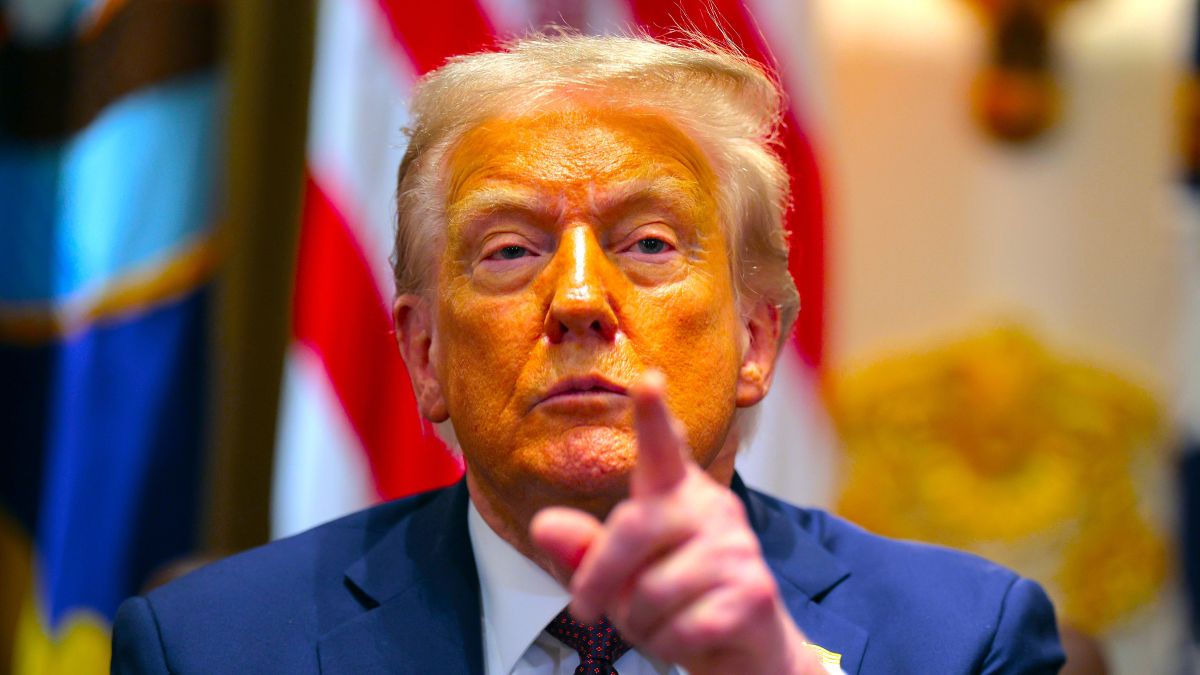

The Donald Trump administration is asking the Supreme Court to step in and freeze foreign aid spending to the tune of $12 billion that was meant for global HIV/AIDS relief.
Trump’s decimation of USAID has had its fair share of unintended victims, so HIV/AIDS patients being collateral damage for his questionable agenda of cutting funding to the former agency is not necessarily surprising. Just recently, the Trump administration was revealed to be looking into burning contraceptives it had stored in Belgium instead of delivering them to women overseas, because family planning does not align with the prevalent political ideologies of the current administration.
However, with this particular case, the Trump administration has made it clear that the only concern is about the amount that is going to be spent. In the Justice Department’s emergency appeal to the Supreme Court, the unusual situation is now being framed as one that could cause “irreparable diplomatic costs.”
Earlier on in the deliberations of this issue, a court granted the Trump administration an appeal against the grantees who sued them for trying to freeze grants awarded by Congress. However, the appeals court did not stop a lower court decision that ostensibly allowed the grantees to still have access to the aid funds.
CNN reports that the appeal was granted on the basis that the court concluded only the legislative branch can sue the executive for changing congressionally approved spending. The case was also appealed again, and that case is still ongoing in the DC Circuit. In the meantime, the grantees can still access the funds until Sep. 30, when the appeal is to be heard.
The Trump administration is now appealing to the Supreme Court to freeze the spending by Sep. 2. The administration claims that this will help prevent what it describes as “extensive preliminary steps that themselves inflict irreparable harm on the United States.”
Trump’s reputation at the Supreme Court has been trending downwards lately, so he might not exactly get what he intends. Just recently, the court notified the Justice Department that it might not be so lenient with Trump’s onslaught on DEI going forward. That also includes conservatives’ attempt to reverse Obergefell v. Hodges, which the justices are reportedly not even willing to consider overturning. But nobody can truly know how the court will rule on this particular case.
The Supreme Court had already rejected a request by the administration in March to freeze the funds meant for the grantees before the case is officially concluded, so there is precedent for Trump not getting his way. Regardless, it is a dicey situation because HIV/AIDS medication is often lifesaving, and that makes it harder for the courts to freeze funding while the appeals in the case are still ongoing. Whether that will ultimately play a part in the Supreme Court justices’ decision-making is anyone’s guess.
If the cuts in the Health Department have shown anything of importance, it is that some of these health programs are not suitable for abrupt starts and stops.



Published: Aug 29, 2025 03:00 am