


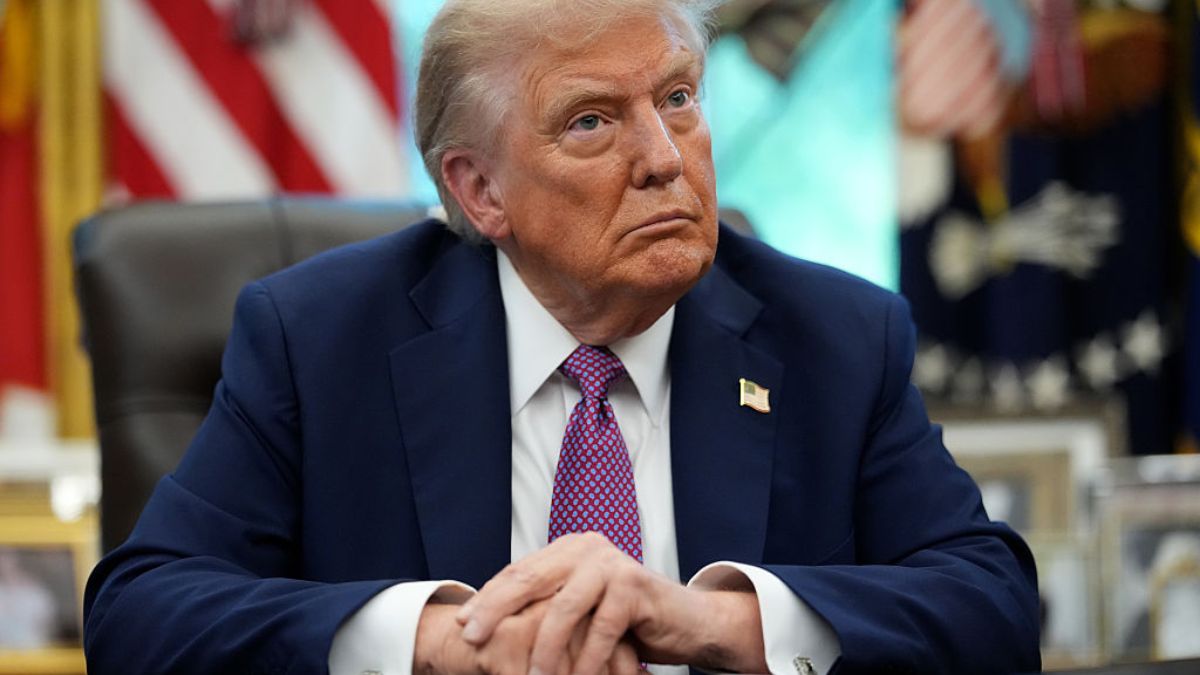

President Donald Trump has called for the quick trial and execution of the man accused of fatally stabbing a Ukrainian refugee on a Charlotte, North Carolina transit train. The attack, which occurred on August 22, 2025, has sparked renewed debate about public safety on mass transit systems and highlighted the administration’s aggressive stance on federal capital punishment.
Iryna Zarutska, a 23-year-old Ukrainian woman who fled her war-torn homeland with her family in 2022, was killed while riding the Charlotte Area Transit System’s Blue Line train after finishing her shift at Zepeddie’s Pizzeria. The unprovoked attack was captured on surveillance video, showing the suspect pulling out a knife and stabbing Zarutska multiple times, including at least once in the throat, before walking to another part of the train.
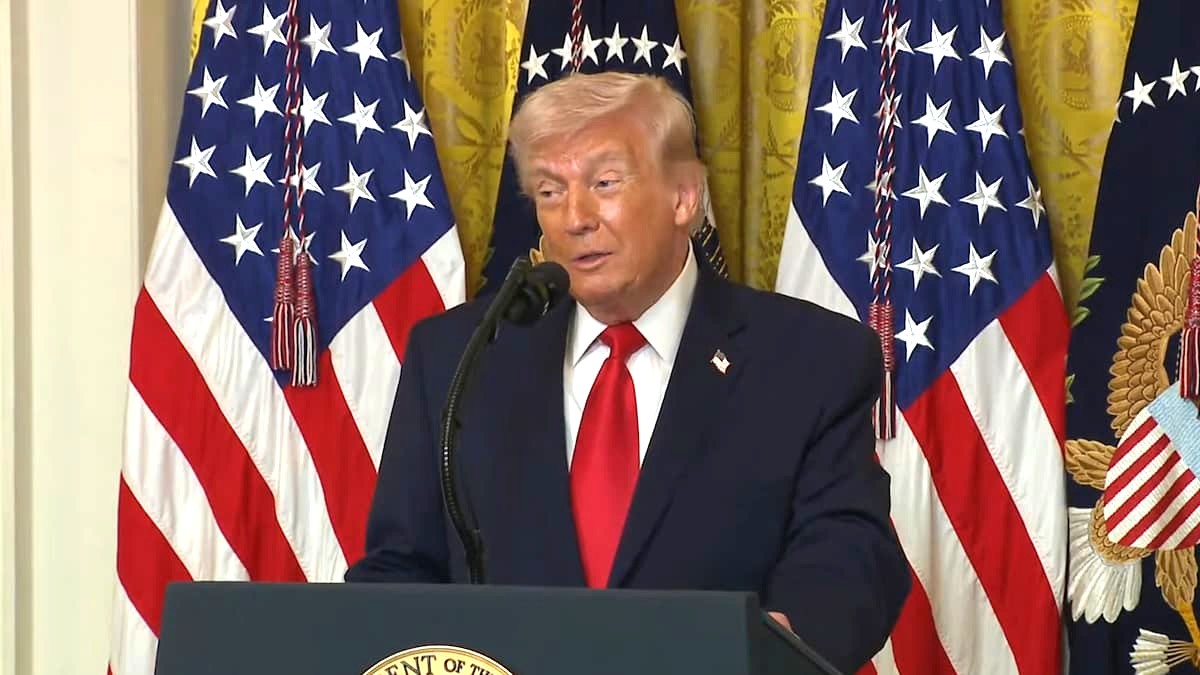
Trump took to Truth Social to express his outrage over the killing, writing that the suspect should receive a quick trial and only get “awarded THE DEATH PENALTY.” He described the accused as an “ANIMAL” and said that there can be no other option in terms of punishment. The president’s comments came just one day after the Justice Department announced federal charges against the suspect.
Federal charges and death penalty eligibility
Decarlos Brown Jr., 34, faces both state and federal charges in connection with Zarutska’s death. The U.S. Attorney’s Office in the Western District of North Carolina charged him with committing an act causing death on a mass transportation system, a federal crime that carries the possibility of the death penalty. Brown was initially charged with first-degree murder in North Carolina state court.
The federal charges represent a significant escalation in the case. U.S. Attorney Dena Iverson described the incident as a “terroristic act” during a press conference, while holding back tears as she spoke about meeting with Zarutska’s family. The federal involvement allows prosecutors to pursue capital punishment under federal law, even if state authorities might not seek the death penalty.
Brown has an extensive criminal history spanning more than a decade, including convictions for armed robbery, felony larceny, and breaking and entering. He served more than five years in prison for robbery with a dangerous weapon and had been charged 14 times previously, according to court records. At the time of the attack, Brown was homeless and had been staying at a local shelter.
Background on suspect’s mental health struggles
Family members have revealed that Brown struggled with significant mental health issues. His sister told CNN that he had attacked her in 2022, biting her and breaking a door, but she chose not to press charges due to concerns about his mental condition. Brown’s mother had attempted to get him placed in a long-term psychiatric facility but was unsuccessful because she was not his legal guardian.
Court documents show that earlier in 2025, Brown had called police to investigate what he claimed was a “man-made” material that controlled when he ate, walked, and talked. His sister reported that he frequently told her the government had implanted a chip in him and that he later claimed he attacked Zarutska because she was “reading his mind.” The case has highlighted ongoing challenges in the mental health system and the difficulty families face in getting help for relatives with severe psychiatric conditions.
The Charlotte case fits into Trump’s broader push to expand federal use of capital punishment. On his first day in office in January 2025, Trump signed an executive order restoring the federal death penalty and directing the Attorney General to pursue death sentences for specific categories of crimes, including murders committed by undocumented immigrants and killings of law enforcement officers.
During his first term, Trump oversaw 13 federal executions in the final six months of his presidency, more than any president in over a century. This represented a dramatic increase from the three federal executions that had occurred in the previous 60 years. The Biden administration had imposed a moratorium on federal executions in 2021, but Trump’s return to office has signaled a renewed emphasis on capital punishment as a tool for addressing violent crime.







Published: Sep 11, 2025 07:30 am