


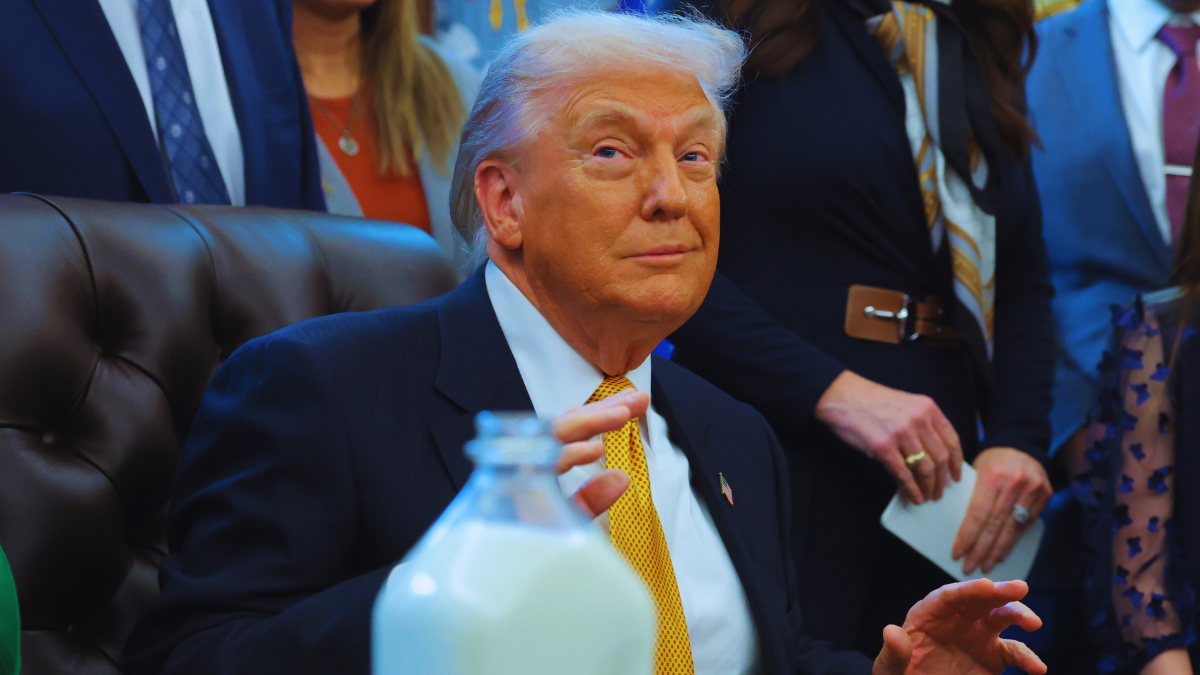

The Donald Trump administration finally responded to skepticism about its new healthcare plan. On Jan. 15, White House press secretary Karoline Leavitt doubled down on those plans and announced that the administration is planning to send healthcare funds directly to Americans.
On the campaign trail, when Trump was asked about his healthcare plans, he infamously said he had “concepts of a plan.” After the “One Big Beautiful Bill” passed, Medicaid premiums were guaranteed to hike — but Trump did promise that a resolution was coming to quell his critics’ concerns.
The administration finally released a short document titled The Great Healthcare Plan. In the document, the administration promised to lower prescription prices, hold insurance companies accountable, and push insurers and medical providers to provide more transparency in their pricing models.
At the time, there was concern about the lack of actual detail in the document. There was no mention of what the path forward would be with regard to the ACA — or whether it would be scrapped or not. According to The Guardian, public policy expert Prof. Edwin Park said, “The ‘plan’ includes absolutely no detail even though the president and the administration have been promising a credible health plan within two weeks for many, many years. Instead, as in the past, this plan is more about increasing the number of uninsured, on top of the 10 million who will already lose coverage under HR1, the budget reconciliation law from last summer.”
At a recent White House press conference, a member of the press asked Leavitt directly about an aspect of the grand plan in which Trump said he plans on sending money directly to Americans. According to Newsweek, Leavitt responded, “This plan, once it is passed by Congress and sent to the president, will stop sending big insurance companies billions in extra taxpayer-funded subsidy payments and instead send that money directly to eligible Americans to allow them to buy health insurance.”
In Trump’s proposed plan, his administration would redirect ACA subsidies from insurers to consumers, but that money would ultimately still flow back to insurance companies. Just because the money now comes through individuals does not mean underlying premium prices will automatically drop.
In most cases, individual insurance buyers actually face higher rates than group-negotiated prices. And for lower-income individuals, direct payments may ultimately not be able to cover full costs, especially with recent premium spikes. For the Trump administration, however, this is the best way it has found to frame a pro-consumer healthcare plan that is also not “corporate warfare.” But the fact remains: there is no framework in this “concept of a plan” that would lower the price of medical cover in the US.
The plan is ambitious in rhetoric but light on the finer details that made the “One Big Beautiful Bill” so effective for the industry titans it so clearly favored. The plan is facing major pushback from the opposition, and while it is still better than no plan whatsoever, Republicans will have to do more explaining if they hope to pass it through Congress before the midterms.




Published: Jan 16, 2026 12:44 pm