


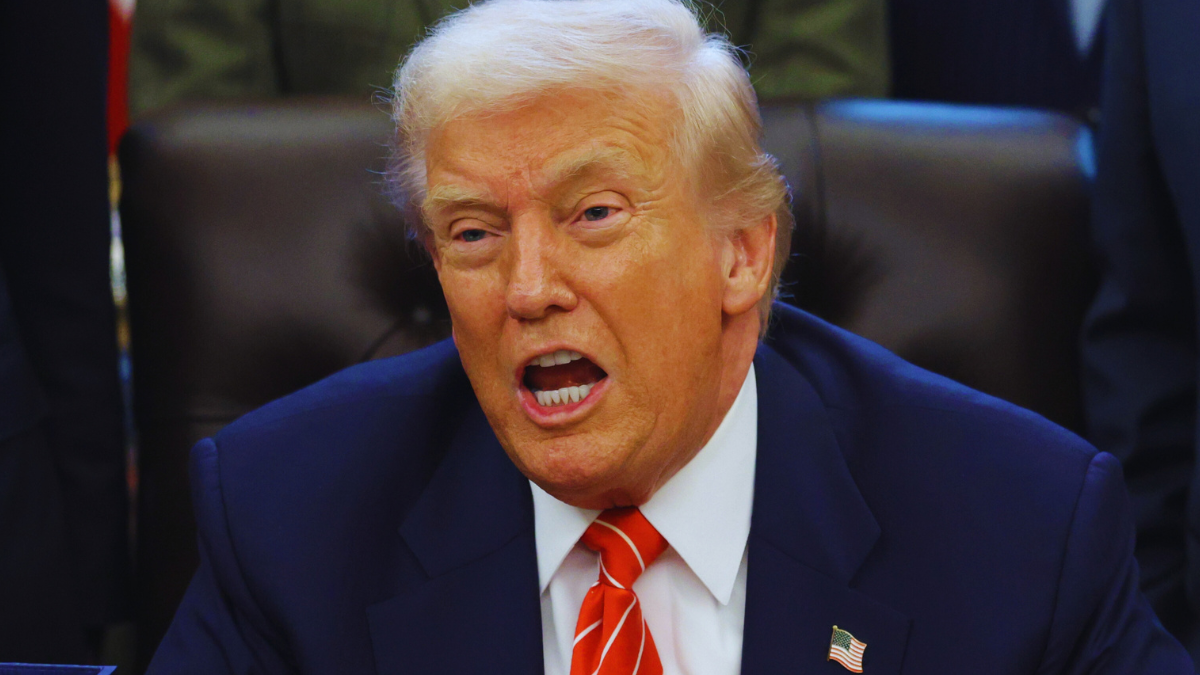

President Donald Trump sat for an interview with Tom Llamas, covering a wide range of topics that have been plaguing his second term in office. When the inevitable topic arose — the actions of U.S. Immigration and Customs Enforcement agents that led to the deaths of two Americans — Trump bizarrely tried to pivot to boat strikes in the Caribbean Sea and the Pacific Ocean.
Trump told the NBC reporter, “I hate even talking about ICE. Two people out of tens of thousands and you get bad publicity.” When Llamas pushed back, noting that the two were Americans — the very people Trump took an oath to serve and protect — the president retorted, “We have the smallest trucks. We’ve been very tough on the waters.” The comment left Llamas baffled. Trump then reiterated, “The waters where we knock out boats.”
The deaths of Alex Pretti and Renee Good were initially treated with the same fervor and disrespect Trump has long shown toward Americans who protest his administration. But as more information and video footage surrounding their deaths entered the news cycle, it became apparent — even to Trump — that insulting their memory would only intensify protests against his administration. That was when he announced that, moving forward, he would apply a softer touch in negotiation.
Yet in the NBC interview, Trump unwittingly demonstrated that he has not mastered the fine art of diplomacy. Faced with an opportunity to explain to the nation why the acts of violence were not pre-planned — and to recognize the moment for what it was, a chance to express empathy toward grieving families — Trump instead pointed to the “good” violence he would rather the press focus on.
The boats Trump is celebrating “knocking out” were not a bloodless affair. The Trump administration’s official death toll from that operation stands at 126 lives. Human rights groups have described the strikes as “unlawful extrajudicial killings,” and at least one lawsuit has been filed against the administration. The most prominent is a wrongful death suit brought by two Trinidadian families.
The federal filing cites the Death on the High Seas Act and the Alien Tort Statute, which, if claims are filed within three years of an incident, can offer a path to justice for the bereaved. Trump’s attempt to pivot away from accountability for the calamity in Minneapolis reveals that, to him, violence remains a viable route to political gain —internationally or domestically.
When the interview started making the rounds on X, one user commented, “Jesus Christ. Waking up every day with this man in charge of the country is like feeding your mental health into a woodchipper.” Another added, “Trump knows talking points. When he can’t answer a question, he just pulls the next talking point—in this case, blowing Venezuelan fishing boats out of the water.”
Jesus Christ. Waking up everyday with this man in charge of the country is like feeding your mental health into a woodchipper.
— Dj Omega Mvp (@DjOmegaMVP) February 5, 2026
Trump knows talking points. When he can't answer a question, he just pulls the next talking point, in this case, blowing Venezuela fishing boats out of the water.
— Linda Stevens 🌎 (@Linda__Stevens) February 5, 2026
Recently, podcasts that endorsed Trump’s 2024 presidential run have begun distancing themselves from his latest moves. Warnings circulated before he took office that, behind the scenes, he praised Hitler’s generals and showed little respect for the Constitution. With each passing day, those fears are being reinforced — not only by his actions, but by the justifications he offers afterward.
This has always been consistent with Trump’s interview style. He avoids accountability by amplifying his achievements. But it becomes deeply concerning when the mistakes begin to resemble the achievements.



Published: Feb 5, 2026 07:53 am