


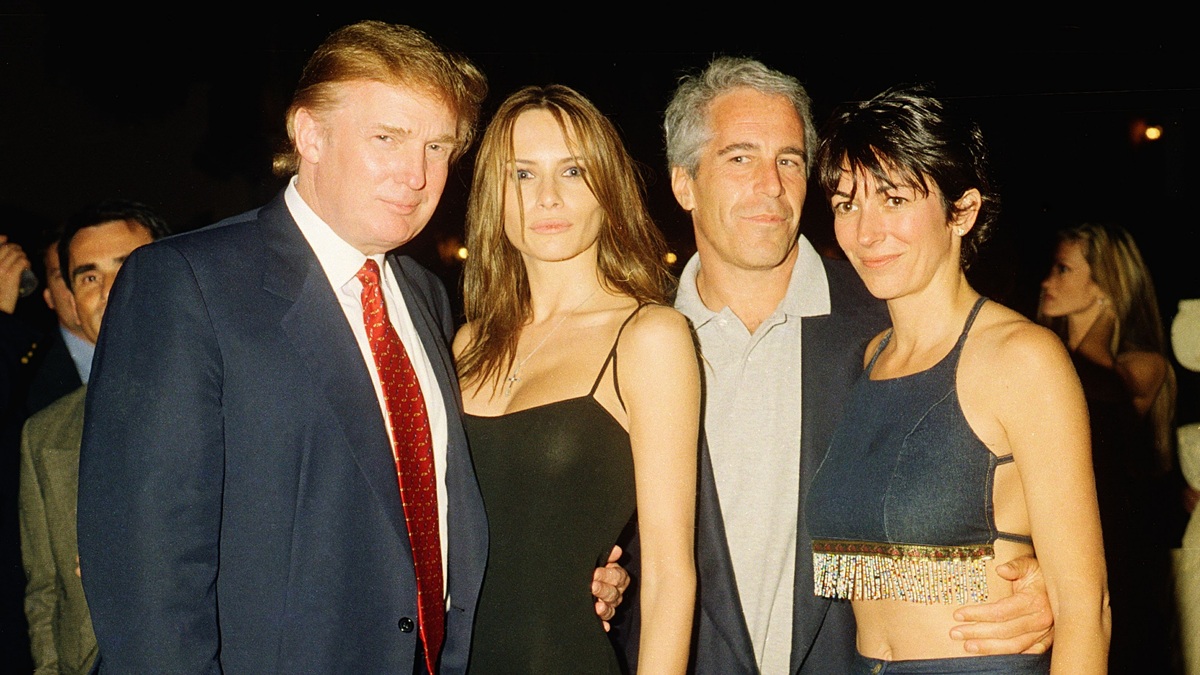

After months of flip-flopping like he’s training to write The Art of the Dodge, Donald Trump finally released the Jeffrey Epstein files on Friday, December 19, 2025. Well, “released” might be too generous a word for what the Department of Justice actually delivered after a bipartisan congressional revolt forced their hand: thousands upon thousands of pages so heavily redacted they read less like an exposé and more like a classified coloring book waiting for someone to fill in the blanks.
This came exactly 30 days after Trump signed the Epstein Files Transparency Act, legislation he’d spent months fighting tooth and nail before eventually caving to bipartisan pressure. And this from the man who spent his entire 2024 campaign promising to blow the lid off Jeffrey Epstein’s secrets. Remember when he even posted a caption promising, in signature all-caps, to “DECLASSIFY the 9/11 Files, JFK Files, and Epstein Files”?
Well, fast-forward to actually being president again, and suddenly the president began to call the whole thing a “Democrat hoax” designed to steal attention away from his burgeoning second administration’s enormous success. He even dismissed his own supporters like Marjorie Taylor Greene and insisted that Epstein was “somebody that nobody cares about.” That somebody being the guy Trump rubbed shoulders with throughout the ’90s.
Lawmakers Ro Khanna and Thomas Massie, the bipartisan duo who authored the bill, aren’t buying what the DOJ is selling. They declared the release “incomplete” and announced they’re “exploring all options,” including impeachment again, if the administration doesn’t cough up the rest of the files. Deputy Attorney General Todd Blanche has promised that more documents will be released in the coming weeks, even though the law requires that “all unclassified records” be released within 30 days.
That essentially means the administration is playing fast and loose with a law it was forced to sign in the first place — withholding documents it’s legally obligated to release while pinky-promising the rest will show up eventually. “Trust us, bro” isn’t exactly the transparency standard Congress, or the rest of the nation, for that matter, had in mind.
So what’s actually in these files? If you scrolled social media on Friday night, you’d think this was all about the 42nd president. The released documents focus heavily on Clinton, showing the former POTUS in a pool with a redacted figure. There’s also an image of Trump’s alleged check to Epstein, framed with the cryptic caption “once in a blue moon” all around the frame, suggesting that Epstein “sold” Trump a woman, per Axios.
There’s a slew of other stuff, too. Flight logs. Business records. Redacted pages. Did I mention redacted pages? Because there are a lot of redacted pages. One document labeled “Masseuse List” is completely blacked out, all 119 pages of it. Senate Minority Leader Chuck Schumer slammed the release as “just a fraction of the whole body of evidence,” noting that “simply releasing a mountain of blacked-out pages violates the spirit of transparency and the letter of the law.”
As you can see below, there are entire blacked-out pages that make it seem like the DOJ just released a bunch of “black rectangles.”
Only 26 percent of Americans are satisfied with Trump’s handling of the Epstein files, according to a survey from Quinnipiac (via Newsweek), and despite Trump’s pivoting to demand investigations into “Epstein’s Democrat friends” like Bill Clinton and Larry Summers, observers can’t help but notice how convenient it is that the files most likely to implicate powerful people are the ones buried under the heaviest redactions.
White House spokesperson Abigail Jackson has said in a statement that the release of the files — what’s not redacted in them anyway — proves “the Trump Administration is the most transparent in history.” If this is transparency, one shudders to imagine what this administration’s idea of stonewalling looks like.







Published: Dec 20, 2025 09:55 am