


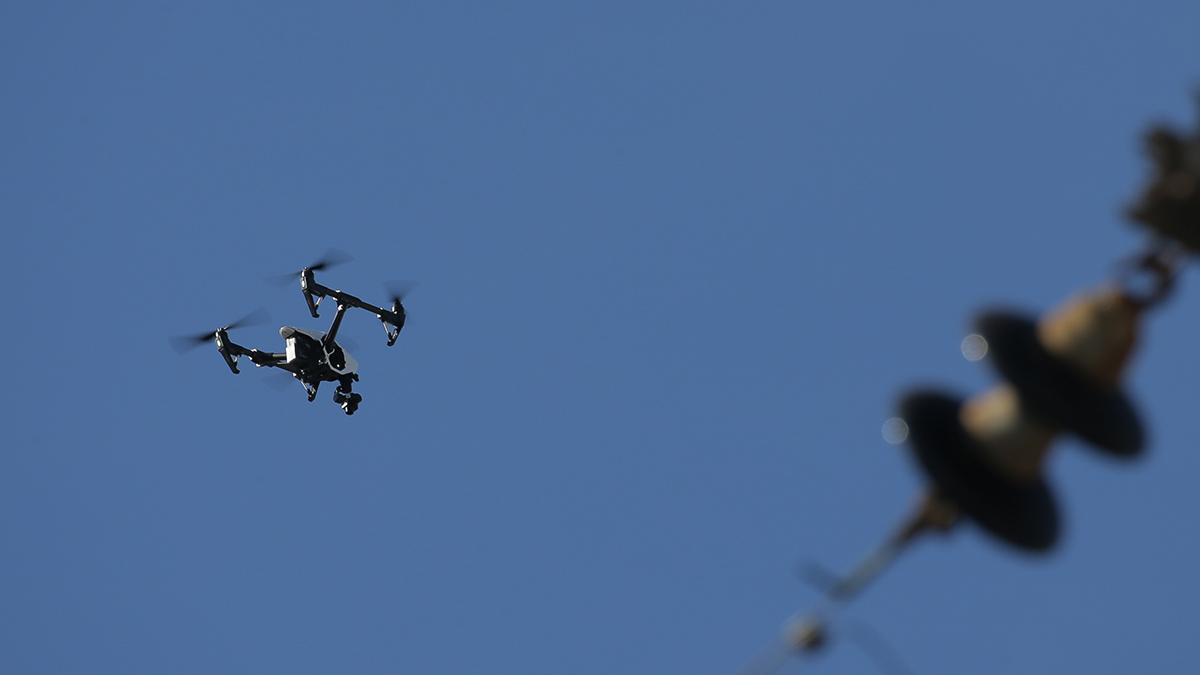

The Federal Aviation Administration has just issued a new nationwide security notice that is a massive shift in how the FAA handles restricted airspace. The notice, officially called NOTAM FDC 6/4375, prohibits unmanned aircraft systems from operating within a huge radius of Department of Homeland Security facilities and mobile assets. We’re talking 3,000 feet laterally, which is over half a mile, and 1,000 feet vertically.
Here’s the concern: the restriction isn’t tied to fixed locations or specific times, and can turn legal public airspace illegal in a moment. According to the Aero Time report, it applies continuously and moves with DHS assets, including ground vehicle convoys. Since ICE operates under DHS and routinely conducts enforcement actions with mobile convoys in public areas, this essentially means a massive, invisible no-fly zone is moving right along with it.
These dynamic exclusion zones are completely impossible to track in real time. Unlike traditional Temporary Flight Restrictions, this NOTAM doesn’t provide geographic coordinates or activation times. The FAA doesn’t publish public tracking of DHS or ICE movements, and the notice offers no way for a pilot to determine if covered assets are nearby.
Since ICE does a lot of ‘undercover’ operations, there would be no way to avoid them
You could be flying your drone legally in a public park, following all the rules, and suddenly, an ICE convoy passes within that 3,000-foot radius. You would unknowingly enter restricted airspace. The FAA simply advises operators to “exercise caution,” which is utterly useless guidance when enforcement activity isn’t publicly disclosed. It feels like an attempt to prevent civilians from capturing footage of concerning ICE activity that can refute their claims.
The FAA isn’t messing around either. They’re classifying this newly restricted airspace as “national defense airspace,” citing serious federal security statutes. If you violate this rule, you could face criminal prosecution, civil penalties, administrative enforcement actions, or the revocation of your FAA operating privileges. Even worse, the notice explicitly states that drones deemed a credible security threat may be intercepted, seized, damaged, or outright destroyed.
This updated rule replaces an earlier security notice, FDC 5/6378, which covered similar agencies but was much less clear about mobile operations. The inclusion of convoys is why civil liberties groups and drone pilots are paying such close attention. It creates dynamic, invisible exclusion zones wherever enforcement units choose to operate. This rule has also come at a time when leaders are asking the public to record everything to uphold justice.
There are some limited exceptions. Drone operations conducted in direct support of national defense, law enforcement, firefighting, search and rescue, or disaster response missions may be authorized. However, you need advance approval from DHS or the FAA’s System Operations Support Center.





Published: Jan 26, 2026 10:55 am