


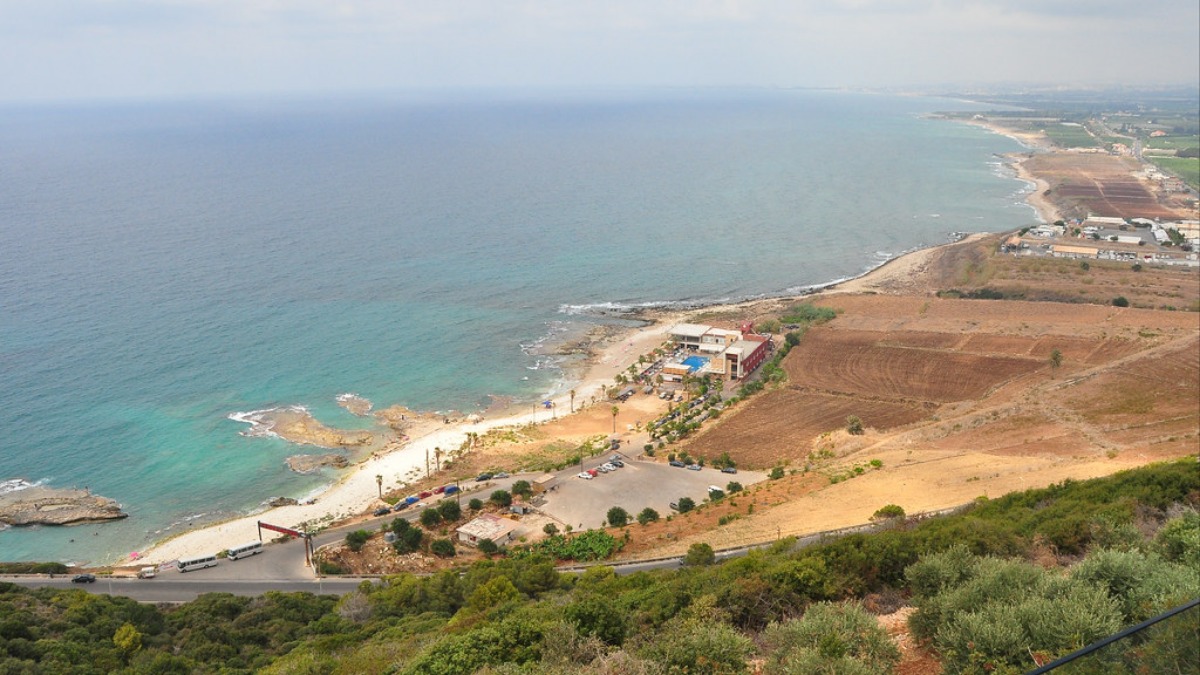

The Israeli military is currently conducting a campaign of mass demolition across villages in south Lebanon, utilizing remote detonations to raze entire residential areas and villages to the ground. This systematic destruction has targeted border locations such as Taybeh, Naqoura, and Deir Seryan, leaving once-thriving communities in ruins.
According to The Guardian, the military asserts that these actions are necessary to dismantle Hezbollah infrastructure, including tunnels and facilities they claim are embedded within civilian housing. However, the scale of the damage has raised alarms among rights groups and displaced residents alike.
This destructive strategy mirrors the approach previously deployed in Gaza, where Israel’s minister of defence, Israel Katz, explicitly advocated for the destruction of all houses in border villages. In one village, Rafah, the military destroyed 90% of all homes. Academics have identified this pattern as domicide- the systematic destruction of civilian housing and infrastructure to render entire regions uninhabitable.
Uninhabitable… just think about that
For the people who called these villages home, the impact is devastating. Ahmad Abu Taam, a 56-year-old shop owner from Taybeh, watched in horror as footage of his village being blown up circulated online. He described the moment he saw his town square and his own business turned into rubble.
For him, the destruction of his shop wasn’t just a loss of property, but an erasure of his life’s work and memories. After having been displaced in the 2024 war, he had returned to rebuild with optimism, only to have his progress wiped out entirely. He noted, “From that moment, I felt that I had become a refugee. I feel like I have no home.”
This sentiment is shared by many who viewed these villages as anchors for their families, even for those living in the diaspora across Europe, Africa, and Australia. These border towns were places where families would gather during the spring and summer, with many investing significant savings into homes they occupied for only brief periods each year. Now, that sense of permanence has been obliterated.
The Israeli military has maintained that it intends to occupy large portions of south Lebanon to establish a security zone extending to the Litani River. They have indicated that displaced individuals will not be permitted to return until the safety of northern Israeli cities is guaranteed, a stance that experts fear will lead to long-term, if not permanent, displacement.
Rights organizations, including Human Rights Watch, have criticized these actions as potential war crimes. Ramzi Kaiss, a researcher for the group, stated that even if Hezbollah uses civilian structures for military purposes, such a reality does not justify the wide-scale destruction of entire villages. International humanitarian law generally prohibits the deliberate destruction of civilian property unless there is a clear, unavoidable military necessity.
The broader context of this destruction is highlighted by a recent UN report on domicide, which documents how the mass demolition of housing has become a recurring feature in modern conflicts, including in Gaza, Sudan, Myanmar, and Ukraine. The report emphasizes that such actions are not merely collateral damage but often function as a deliberate method of warfare designed to exert control over territory and sever populations from their land.
By rendering areas uninhabitable, the strategy effectively prevents the return of residents and fundamentally alters the landscape of the region. As the conflict continues, the residents of south Lebanon are left to grapple with the loss of their homes, their history, and the hope that they might one day return to the places that defined their lives.
The thing is, if you pay attention, you learn very quickly that it isn’t about Hezbollah. It’s about control. Just take a look at what the government allows settlers to do in Gaza. Consider that this is against the backdrop of a ceasefire, and that Lebanon was supposedly a part of it till Nethanayhu called Trump.
I visited Israel, a long time ago. As a history buff, I should remember the churches. You know what I do remember, being controlled so that we couldn’t talk to any Palestinians, I remember gouges in the ground around Bethlehem, where they pushed concrete barriers to hem in the village. I remember a villager telling us they had no power or water but couldn’t leave. Because if they did, they wouldn’t be let back into their ancestral homes. So please, pay attention.









Published: Apr 12, 2026 01:29 pm