


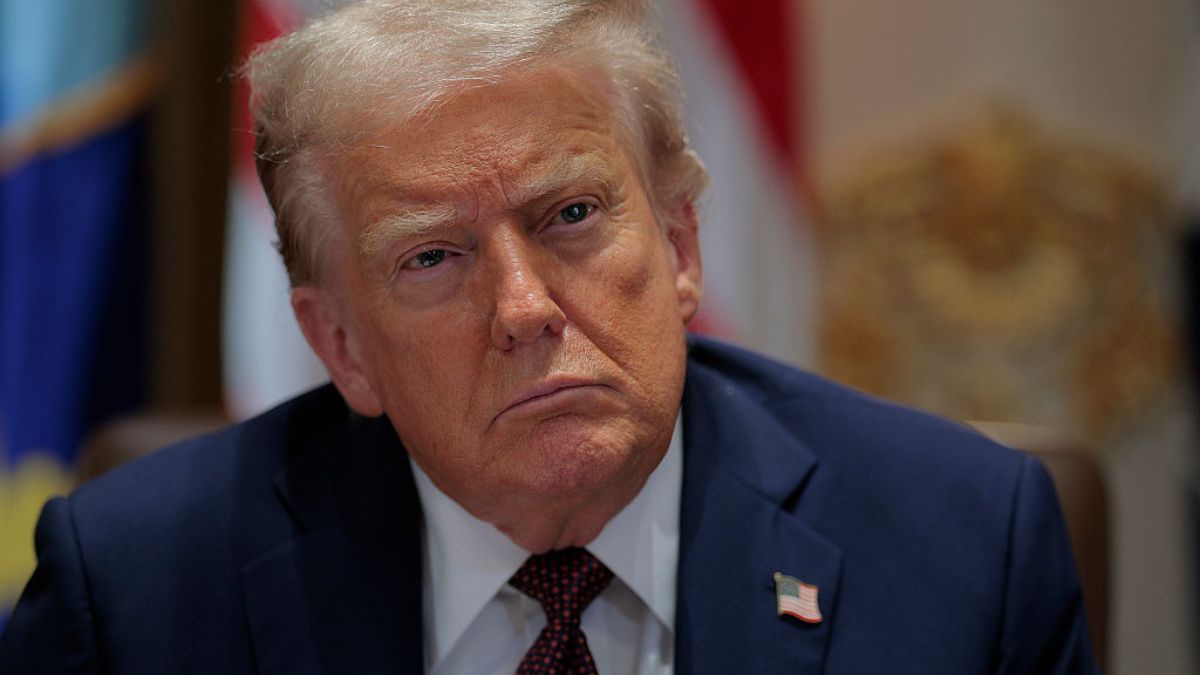

President Donald Trump is transforming America’s relationship between government and business in ways that have no parallel in modern history. His administration has taken control of private companies through unprecedented methods that critics say look more like China’s state capitalism than traditional American free markets.
Critics warn that Trump’s demands for business leaders to step down, and for the government to take a cut of sales, threaten American-style capitalism. The president has forced major companies to give the U.S. government ownership stakes, demanded cuts of their revenue, and threatened executives who don’t follow his orders. These actions mark a dramatic shift from decades of market-based policies.
Trump himself has embraced this aggressive approach to business control. According to The New York Times, he has compared the United States to a “giant department store,” with him as the manager. “I own the store and I set the prices, and I’ll say, ‘If you want to shop here, this is what you have to pay,'” he told Time magazine in April. This philosophy has guided his administration’s treatment of America’s largest corporations.
Trump forces government ownership in major companies
The most dramatic example came when Trump forced Intel to give the U.S. government a 10% stake worth $8.9 billion. Speaking with reporters on Friday, Mr. Trump said the deal came out of a meeting last week with Intel CEO Lip-Bu Tan, which came days after the president called for Tan to resign over his past ties to China. “I said, I think it would be good having the United States as your partner,” Mr. Trump said. “He agreed, and they’ve agreed to do it.”
This deal was just the beginning. “I will make deals like that for our Country all day long,” the president posted on Truth Social. White House economic advisor Kevin Hassett confirmed that more companies would face similar treatment, saying the Intel move is part of building a sovereign wealth fund that could include other businesses.
Trump has also demanded revenue-sharing agreements from other tech giants. Earlier this month, both Nvidia and Advanced Micro Devices agreed to pay 15% of their China revenues to the U.S. government for export licenses to sell certain chips there. Meanwhile, his approval of Nippon Steel’s purchase of U.S. Steel came with a “golden share” that gives Trump veto power over major corporate decisions including factory closures and salary cuts.
The president has also attempted to fire Federal Reserve Governor Lisa Cook, claiming authority that legal experts say he doesn’t have. Cook, the first Black woman to serve on the Fed’s board, said that Trump has no authority fire her and her lawyer said that they would file a lawsuit challenging “this illegal action.” The move represents an unprecedented attack on the independence of America’s central bank.
The administration has even created scorecards to track corporate loyalty. According to Axios, the White House has created a scorecard that rated 553 companies and trade associations based on their support for Mr. Trump’s signature tax and spending package, suggesting that companies that were insufficiently supportive could suffer retribution. This systematic approach to monitoring business support has raised serious concerns about government overreach and corporate freedom.
Trump’s tariff policies have also become tools of control rather than traditional trade policy. He has used tariffs to pressure companies and extract concessions, while simultaneously claiming these taxes won’t hurt American consumers. However, economists warn that these policies are already driving up prices for everyday goods from groceries to electronics.
The consequences of Trump’s approach are becoming clear as corporate America struggles to navigate this new reality. Companies must now consider not just market forces and consumer demand, but also the political preferences of the president when making business decisions. This represents a fundamental shift away from the free market principles that have traditionally guided American capitalism toward a system where government control over private business has become the norm.







Published: Aug 29, 2025 05:27 am