


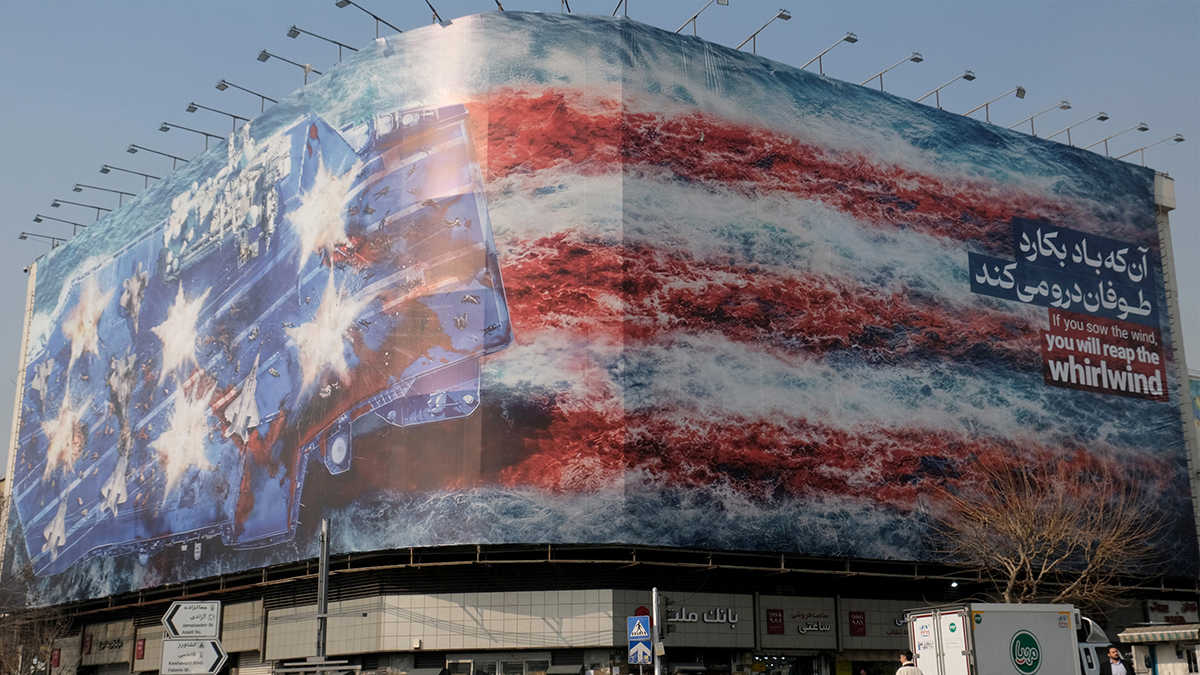

Iran has issued a warning to the United States, promising a military response “never seen before” if President Trump pushes for further conflict. This massive counter-threat comes just as the US has significantly ramped up its military presence in the Middle East.
President Trump has been vocal about the need for Iran to agree to a nuclear deal quickly, seemingly considering the option of launching new attacks to force the issue. Speaking earlier this week in Iowa, the president commented that “There is another beautiful armada floating beautifully to Iran right now, so we will see.”
UNILAD reported that “beautiful armada” includes the USS Abraham Lincoln and its accompanying warships. President Trump also took to Truth Social to reiterate the urgency of the situation and the core American demands. He posted that he hopes Iran will quickly “Come to the Table” to negotiate a fair and equitable deal, one that mandates “NO NUCLEAR WEAPONS.” He pointed out that time is genuinely running out and is truly of the essence.
All this posturing is keeping the real conversations from happening
Iran, however, isn’t backing down. In a post on X, the official account of the Iranian Mission to the UN addressed President Trump’s posts, reminding everyone of the steep price of previous conflicts. They pointed out that the last time the US “blundered into wars in Afghanistan and Iraq,” it cost the country over $7 trillion and resulted in the loss of more than 7,000 American lives.
The mission made it clear that while Tehran is ready for dialogue based on mutual respect, the situation changes dramatically if they feel threatened. They issued a firm warning: “Iran stands ready for dialogue based on mutual respect and interests—BUT IF PUSHED, IT WILL DEFEND ITSELF AND RESPOND LIKE NEVER BEFORE!”
This is just a continuation of Iran’s strong response to comments made by President Trump over the past few weeks, which included them putting up a Billboard in Tehran. It is a response that has been consistent, unlike the changing statements made by President Trump.
Adding to this aggressive rhetoric, Foreign Minister Abbas Araghchi has stated that Tehran has its “fingers on the trigger” and is ready to respond to any aggression “immediately and powerfully.” The minister noted that the country learned significant lessons from its 12-Day War with Israel last June and are prepared to respond quickly and aggressively in the future.
Despite the military threats and counter-threats, the Foreign Minister did state that Iran is committed to establishing a deal for its country and, fundamentally, doesn’t want nuclear weapons. He emphasized that Iran wants a deal that ensures Iran’s rights to peaceful technology while stating that they “NEVER sought to acquire” nuclear weapons.







Published: Jan 30, 2026 12:10 pm