


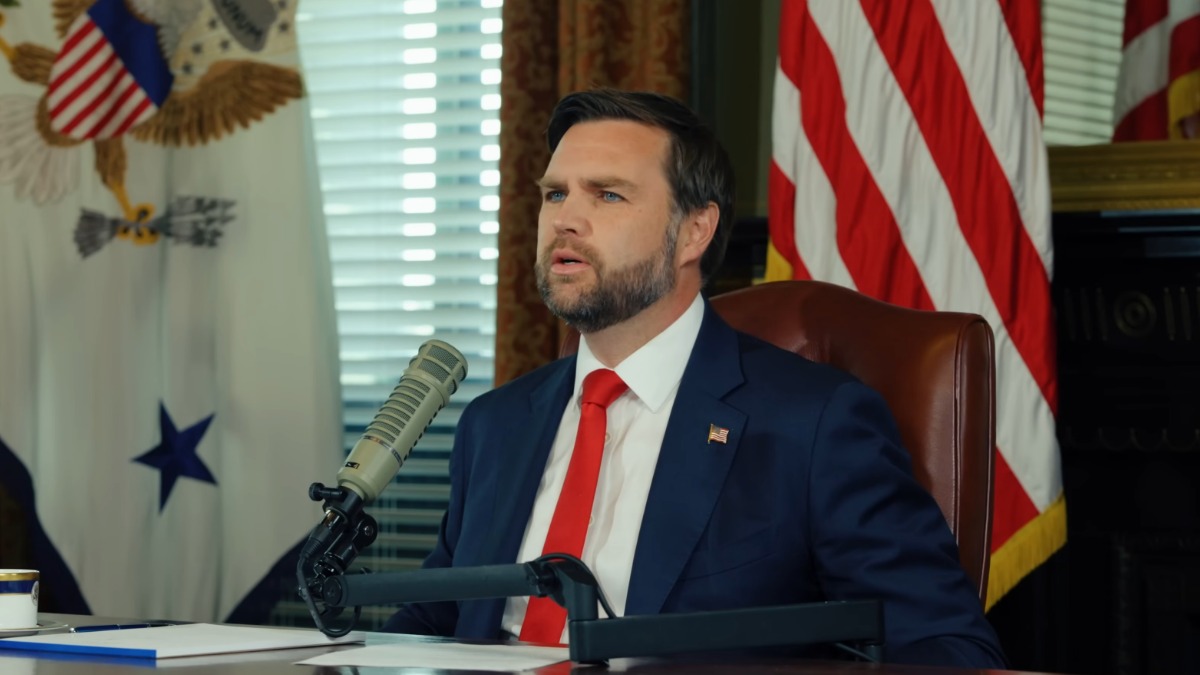

JD Vance went to Pakistan to end a stupid war that Donald Trump started on February 28. And after more than 20 hours of marathon negotiations, he emerged Sunday morning with the diplomatic equivalent of a shrug.
The vice president announced no deal, and certainly no timeline. And the worst part is that there’s no clear indication of what happens when the two-week ceasefire Trump announced expires.
“I think that’s bad news for Iran much more than it’s bad news for the United States of America,” Vance told reporters before boarding Air Force Two, which is exactly the kind of thing you say when you need to sound unbothered by the fact that your final and best offer just got rejected.
The U.S. had presented a 15-point framework, reportedly including demands that Iran give up uranium enrichment entirely, hand its existing stockpile to the IAEA, rein in its regional proxies, and reopen the Strait of Hormuz.
Iran, for its part, showed up with its own list: control of the strait, war reparations, frozen assets released, and a regional ceasefire that would include Lebanon, where Israeli strikes have now killed hundreds of people despite the ceasefire. At the end, neither side backed down from their demands, and the negotiations came to a fruitless close.
The ceasefire is still technically on
The fragile two-week pause Trump announced is still nominally in effect, but “fragile” is doing a lot of work in that sentence.
Iran has continued blocking most commercial shipping through the Strait of Hormuz — the choke point through which roughly a fifth of the world’s oil supply flows. Two U.S. Navy destroyers transited the strait for the first time since the war began, conducting mine-sweeping operations. Iran’s state media denied the American account of the transit.
So even the basic facts of what’s happening in the strait are currently in dispute between the two sides technically observing a ceasefire. Trump has announced that the U.S. Navy will put a blockade on all Iranian ships coming in and out of the strait, but what that will accomplish beyond angering China, who is the main importer of Iran’s oil, is anyone’s guess.
The war is now in its seventh week. Thousands have died across the Middle East. The flow of oil is still disrupted. And the man who was sent to end it just landed back in Washington with a warning that Iran will regret saying no.
They might. But so far, nobody’s explained what happens if they don’t. So the question the entire world is asking right now is: What now?







Published: Apr 12, 2026 07:28 pm