


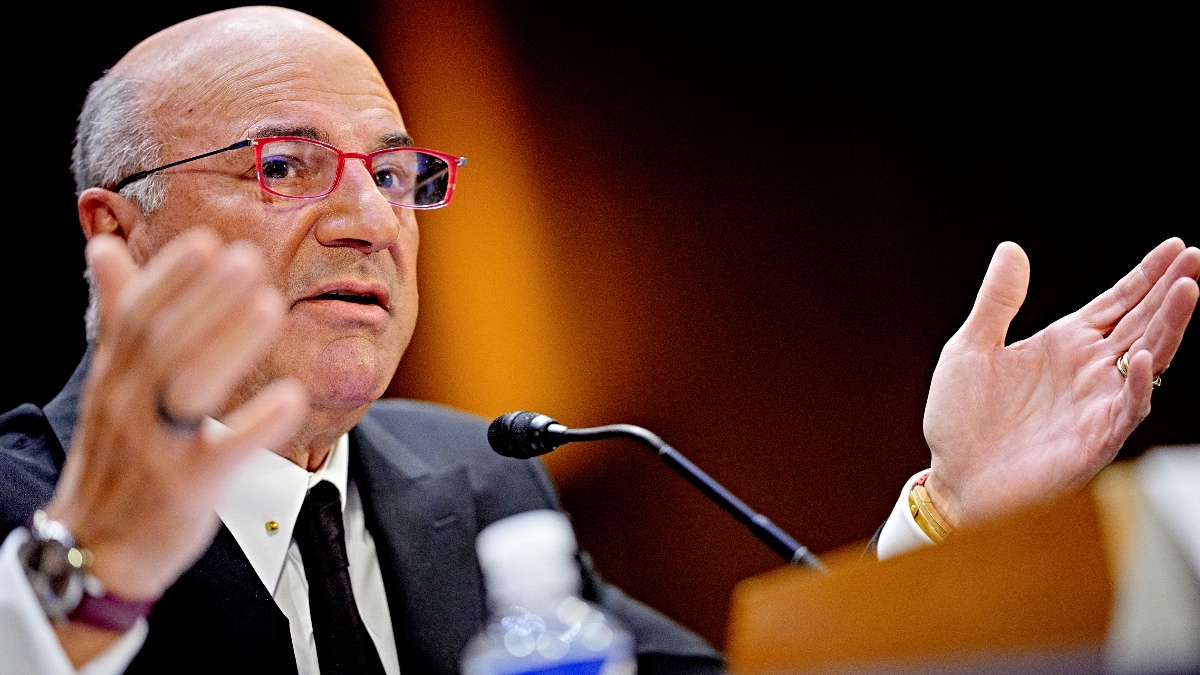

Kevin O’Leary suggested the fastest way to make the Epstein scandal disappear a year ago, and it’s resurfacing now. In July 2025, O’Leary conveniently claimed that working Americans don’t care about Epstein, and everyone should and move on.
On July 22, 2025, Kevin O’Leary appeared on CNN during a panel discussion about the renewed focus on Jeffrey Epstein. This was following the initial release of documents and fresh debate over accountability. The conversation centered on whether the Epstein case and the people connected to it still mattered to the public. And O’Leary’s answer was blunt.
“The average person at the kitchen table is not worrying about Epstein,” he said. “They don’t give a damn. They want to provide for their family and they are America’s working person.” He dismissed the continued scrutiny of Epstein by saying, “Nobody gives a damn about Epstein ’cause he’s still dead.” In essence, O’Leary framed the entire issue as a media obsession detached from real life.
The context O’Leary rejected
The exchange took place amid renewed outrage over how Epstein’s crimes were handled, why he avoided accountability for so long. The panel also discussed how many powerful figures associated with him have never been meaningfully scrutinized.
Survivors and advocates have repeatedly argued that Epstein’s story isn’t just about one man. It is about a system that protected him and minimized victims. But O’Leary brushed that aside. When challenged by other panelists about the seriousness of the allegations and the harm to survivors, he doubled down.
Instead of siding with Epstein survivors, he suggested that most Americans care far more about economic survival than about revisiting Epstein’s crimes. At one point, he infamously added, “Maybe they were raped, maybe they weren’t.”
Understandably, that line intensified backlash and drew immediate condemnation.
O’Leary wanted to weaponize “working Americans,” but failed terribly
O’Leary’s rhetorical move was simple and calculated. He invoked “the average person at the kitchen table” as a shield against moral accountability. If working Americans don’t care, the argument goes, then neither should anyone else. Justice becomes a luxury item, secondary to groceries, rent, and gas prices.
But survivors of abuse are not some elite class detached from “working America.” Many are working Americans, have families, and have spent years trying to be heard. But they were repeatedly told by prosecutors, institutions, and now television commentators that their pain is inconvenient.
So, reducing the Epstein case to a distraction from economic issues doesn’t elevate working people. It erases them.
The backlash was immediate, and still echoes
People across the political spectrum accused O’Leary of minimizing sexual abuse and normalizing elite impunity. Interestingly, O’Leary forgot that Epstein continued his crimes for decades precisely because of powerful people dismissing the harm as someone else’s problem.
What angered people wasn’t just the substance of O’Leary’s claim, but the confidence with which he made it. He didn’t argue that accountability is difficult. He argued that it’s irrelevant. That the public doesn’t “give a damn.”
Who gets to decide what matters?
By declaring Epstein unimportant to “the average American,” O’Leary positioned himself, and people like him, as arbiters of moral attention. By his logic, if something doesn’t move markets or polling numbers, it’s not worth addressing.
That logic is convenient for the powerful. In fact, Epstein’s crimes were enabled by wealth, access, and indifference. Suggesting that revisiting them is a distraction is a continuation of the same culture that allowed those crimes to persist.
The reality O’Leary skipped
What O’Leary needs to realize is, it is possible to care about feeding your family and about abusers facing consequences. The two are not mutually exclusive. Even though O’Leary framed his argument as realism, it sounded like resignation in practice.
His statement was essentially an acceptance that some crimes are simply too inconvenient to confront. Especially if enough time has passed and enough powerful names are involved. But when O’Leary says Americans don’t “give a damn” about Epstein, what he’s really saying is that he thinks they shouldn’t. And that distinction between describing reality and prescribing indifference is exactly why his comments struck such a nerve.






Published: Feb 8, 2026 04:11 pm