


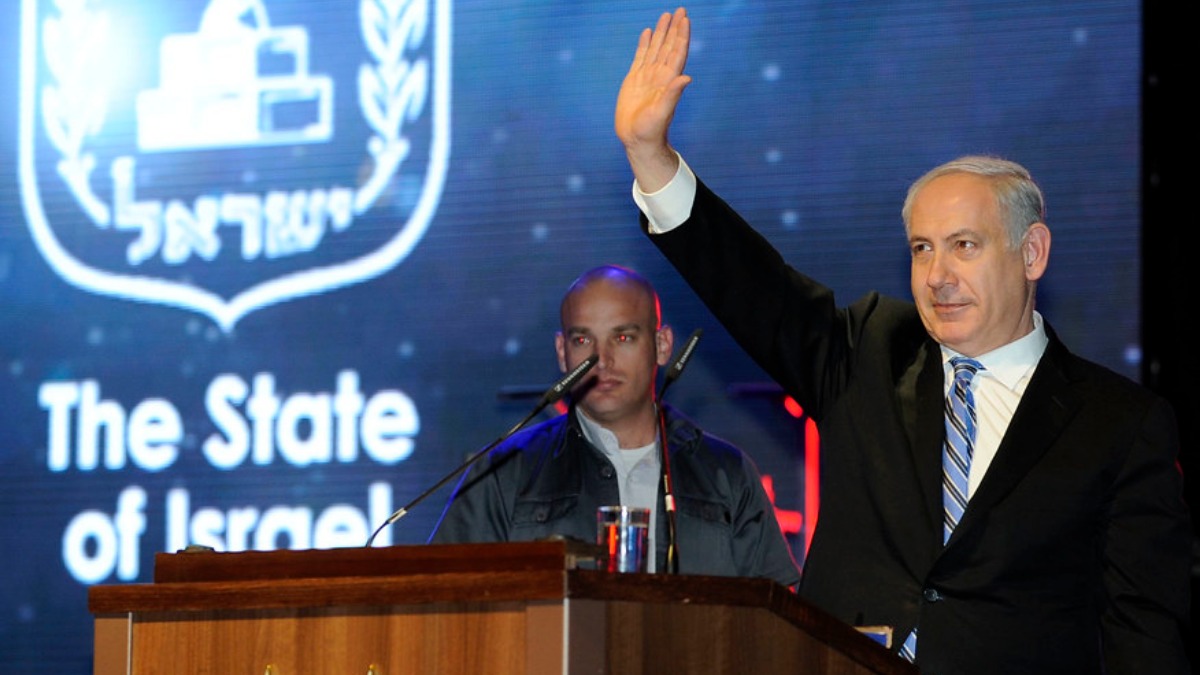

Benjamin Netanyahu has officially barred Spain from participating in a critical coordination center tasked with overseeing the ceasefire in Gaza. This move follows a series of escalating tensions, with the Israeli leader declaring on Friday that Spain will pay an immediate price for its ongoing diplomatic stance against Israel.
In a video statement shared on X, Netanyahu emphasized that Israel would not remain silent while facing those he perceives as attackers. He had one specific complaint:
“Spain has defamed our heroes, the soldiers of the IDF [Israeli army], the soldiers of the most moral army in the world. Therefore, I have instructed today to remove Spain’s representatives from the coordination centre in Kiryat Gat, after Spain has chosen repeatedly to stand against Israel.”
Per Al Jazeera, the Civil-Military Coordination Centre is a US-led hub established to manage security and humanitarian logistics. It is a key component of the 20-point plan intended to manage the ceasefire and aid flow into the Gaza enclave.
There is a lot to unpack here, specifically, who this affects. Palestinians
Foreign Minister Gideon Saar backed Netanyahu, slamming Spanish Prime Minister Pedro Sanchez for his government’s rhetoric. Saar argued that the current administration in Madrid has leveled blood libels against Israel and its military forces.
According to Saar, the anti-Israel bias under Sanchez has become so severe that Spain has effectively lost the ability to play a constructive role in implementing the peace plan supported by the United States.
Relations between the two nations have been on a downward trajectory ever since the war in Gaza began in October 2023. The friction intensified significantly the following year when Spain formally recognized the state of Palestine. Sanchez’s left-wing government has been vocal in its criticism of the treatment of Palestinians in the occupied territories. Recently, Spain took a firm stance against the US-Israel war, even closing its airspace to US warplanes.
The situation is further complicated by recent incidents in Lebanon. A few days ago, Israeli forces detained a Spanish UN peacekeeper after blocking a logistics convoy. While the United Nations mission reported that the peacekeeper was released in less than an hour, the organization stated that any detention of its personnel constitutes a blatant violation of international law.
The Spanish government reacted to this detention by summoning Dana Elrich, the Israeli chargé d’affaires in Madrid, to protest what it labeled an unjustifiable action. This diplomatic channel is one of the few remaining, as Israel previously withdrew its ambassador from Madrid, a move that was reciprocated by the Spanish government last month.
Italy has also found itself at odds with Israeli operations. Italian Defense Minister Guido Crosetto demanded full respect for UNIFIL after Italian peacekeepers were subjected to warning shots fired by the Israeli army. Foreign Minister Antonio Tajani expressed solidarity with Lebanon, calling the attacks occurring there unjustified and unacceptable. Italy even went so far as to summon the Israeli ambassador to express extreme dissatisfaction with the situation.
Sanchez has been particularly outspoken, describing the current Israeli operations as an intolerable display of contempt for life and international law. He has called for the European Union to suspend its Association Agreement with Israel.
He has also advocated for Lebanon to be included in the broader ceasefire agreement between Iran, the United States, and Israel. These sentiments are echoed by other officials, including European Commissioner Hadja Lahbib.
Even traditional allies of Israel have expressed growing concern. In March, German Chancellor Friedrich Merz noted that annexation measures in the occupied West Bank would be a significant mistake.
Despite the ongoing ceasefire, the situation on the ground remains volatile. Israel continues to conduct near-daily attacks in Gaza, and significant limitations on the delivery of vital humanitarian aid persist. As European governments monitor the battlefield, there is a clear fear that the ongoing military activities in Lebanon could jeopardize the fragile ceasefire between the United States and Iran, potentially leading to further economic instability across Europe.
For now, the rift between Madrid and Jerusalem shows no signs of closing, as both sides remain entrenched in their respective positions.




Published: Apr 13, 2026 05:24 am