


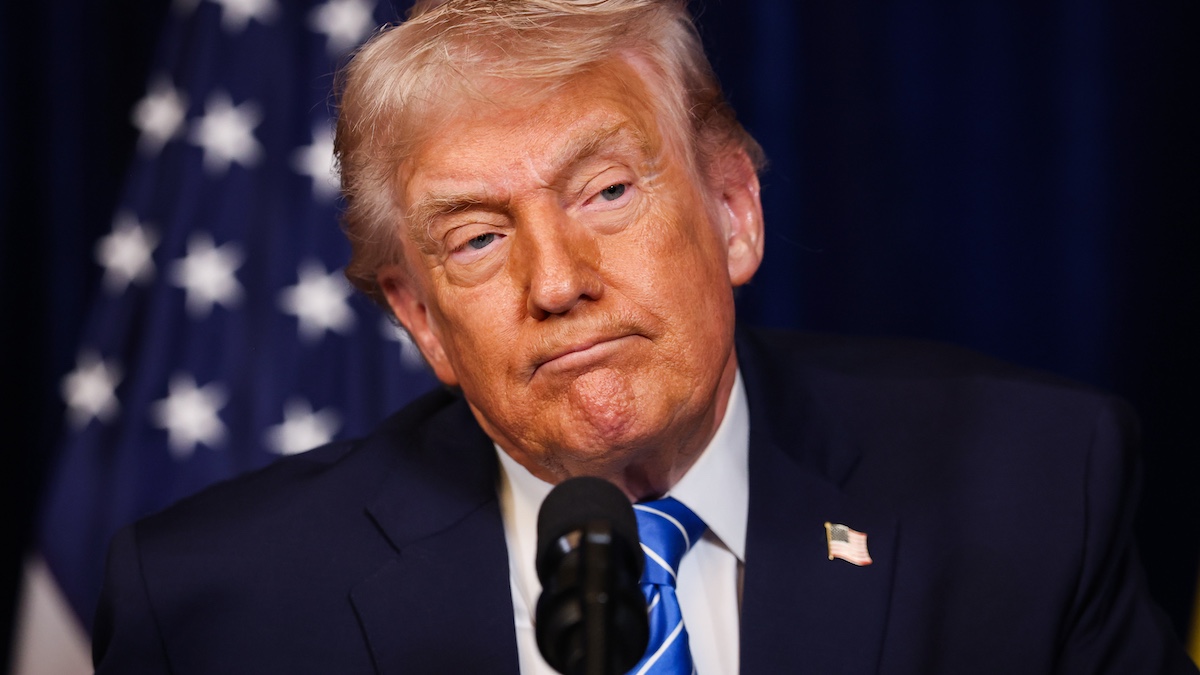

Appearing on a January 6, 2026, episode of Call to Activism with Joe Gallina, Oregon Senator Jeff Merkley broke down President Donald Trump’s Venezuela policy, warning that the United States is destabilizing the global order to secure oil that is costly, difficult to refine, and of inferior quality, while China continues to consolidate control over far more valuable resources.
“This heavy, tar-ish oil that comes out of Venezuela — it is not very good stuff,” Merkley said during the podcast appearance. “There’s only a few refineries — one in Texas, in China — that refine it; they have to be built specially for it. It’s expensive to take out of the ground, it’s expensive to pipe — you have to reheat it to move it around. It is a mess.”
Merkley argued, “If we’re saying, ‘Hey, if China gets to keep all the critical minerals in their sphere,’ while we get this tar,’” he added, “that’s not a good deal.”
Trump and Venezuela
Merkley’s remarks come as the Trump administration has dramatically escalated U.S. involvement in Venezuela, moving beyond sanctions enforcement into aggressive action against the country.
Venezuelan President Nicolás Maduro was removed from power in an early January U.S. operation, captured by U.S. forces in Caracas, and brought to the United States to face federal narcotics and related charges in a Manhattan court, where he has pleaded not guilty and insists he remains Venezuela’s legitimate president despite his detention; he is currently held in U.S. custody pending further proceedings.
Venezuela holds the world’s largest proven oil reserves, but much of that crude is extra-heavy, requiring specialized refineries and significant investment to process. As Merkley noted, only a limited number of facilities globally can handle the oil efficiently, making it far less valuable than lighter grades produced elsewhere.
China and Venezuelan oil
Before the latest U.S. actions, China was Venezuela’s primary oil customer, taking the majority of its exports as part of broader energy and infrastructure agreements. Beijing has sharply criticized U.S. seizures of tankers and restrictions on Venezuelan oil, accusing Washington of violating international law and interfering with sovereign trade.
At the same time, analysts note that China continues to dominate global supply chains for critical minerals such as lithium, cobalt, and rare earth elements, essential for electric vehicles, renewable energy systems, and advanced defense technologies.
The administration’s enforcement campaign has included the seizure of multiple oil tankers accused of violating U.S. sanctions, some of which were reportedly en route to or linked with Chinese buyers.
U.S. officials have framed the seizures as lawful actions consistent with sanctions enforcement, but maritime experts warn they risk escalating tensions and disrupting global shipping norms.
Reporting by Reuters has detailed U.S. efforts to block Venezuelan oil exports and seize vessels tied to sanctioned trade, while coverage from The Wall Street Journal has highlighted the unprecedented scope of recent tanker interdictions and their geopolitical implications.





Published: Jan 8, 2026 08:32 am