


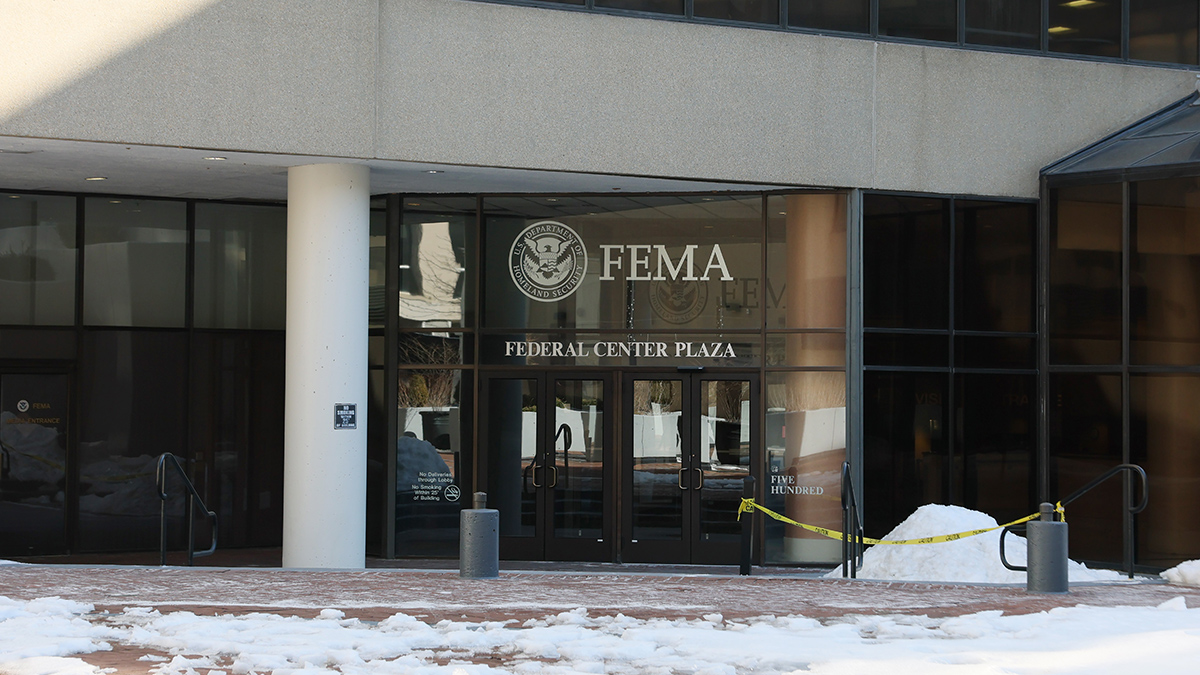

Get ready for some potentially frustrating news, folks, because the Trump administration has hit the brakes on disaster aid for long-term rebuilding projects, effective this past Sunday. This move comes as the partial government shutdown rolls into its second week, and it’s definitely going to add a layer of uncertainty for states trying to recover from past catastrophes.
Homeland Security Secretary Kristi Noem made it clear in a statement, saying the Federal Emergency Management Agency (FEMA), “is scaling back to bare-minimum, life-saving operations only.” According to Politico, she went on to explain that “All non-emergency recovery work is paused.” This means if you’re a state counting on federal help for rebuilding after a disaster, you’re going to have to wait.
It’s a pretty strong signal that the political drama surrounding President Trump’s immigration policies is now directly impacting FEMA. Remember, FEMA is part of the Department of Homeland Security, which also houses Immigration and Customs Enforcement (ICE). Congressional Democrats have been blocking a DHS spending bill, largely because they’re not happy with ICE’s aggressive tactics.
DHS has the funding, even if it is for ICE. So this is manipulation
This isn’t the first time FEMA has suspended funding for long-term projects due to budget constraints. In fact, it’s the 11th time since 2003. However, historically, FEMA usually waits until its disaster fund dips to around $3 billion before it starts restricting spending. Right now, the agency had $7.1 billion available in its disaster fund as of January. So, the timing of this restriction, with a seemingly healthy fund balance, is definitely a head-scratcher.
Noem, on Sunday, explained that DHS “must take emergency measures to preserve limited funds and personnel.” She was quick to point the finger at Democrats for the shutdown, stating that their actions forced her to halt the FEMA funding. Noem also made waves over the weekend by suspending two DHS airport programs that usually help travelers skip long lines at security checkpoints and customs.
Noem said these actions were necessary to “refocus Department personnel on the majority of travelers” and reflected “the reality of operating without appropriations.” It led some Democrats to call out the administration for politicizing DHS programs. Representative Bennie Thompson, of the House Homeland Security Committee, called the administration “nitwits” and argued that the airport programs actually “REDUCE airport lines and ease the burden on DHS.”
While this funding restriction won’t immediately affect operations at the 44 active disaster sites across the country, including areas in a dozen Southern states recovering from a massive winter storm in late January, it’s certainly a big deal for future work, especially with needed long-term rebuilding projects.








Published: Feb 24, 2026 04:25 pm