


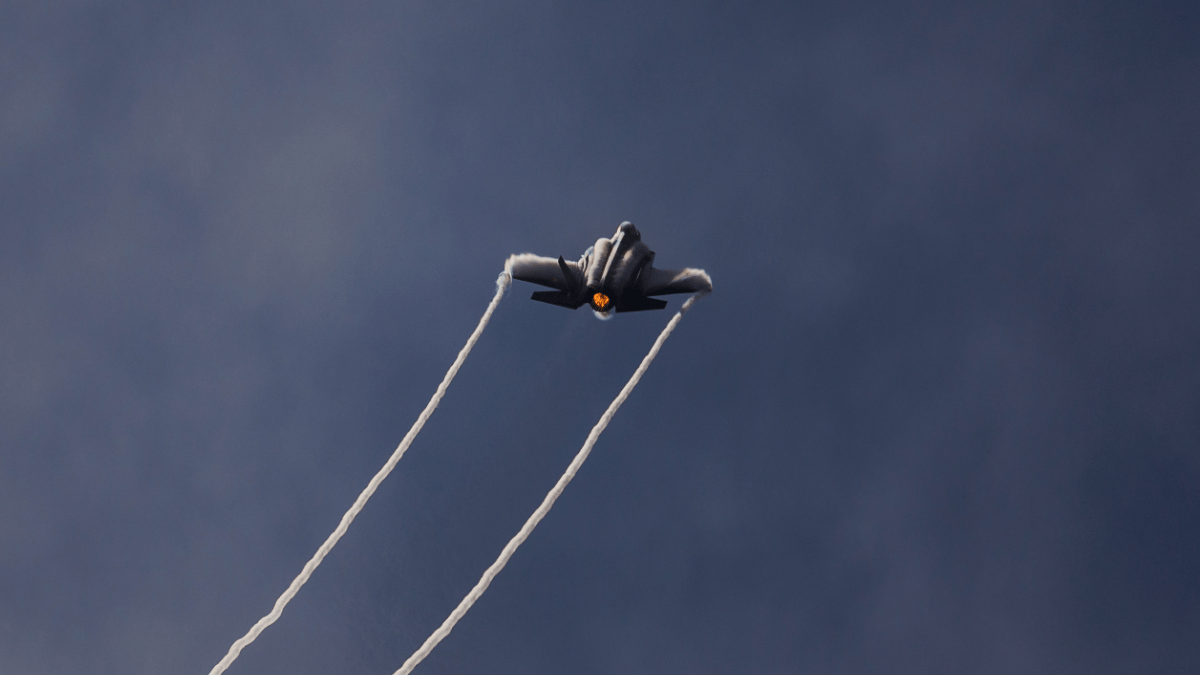

The Netherlands‘ defense secretary, Gijs Tuinman, recently made a startling admission, suggesting that the advanced F-35 fighter jet could be “jailbroken” just like an iPhone. This claim raises some serious questions about the security of highly complex military technology.
If you’ve ever delved into the world of tech, you’re probably familiar with jailbreaking or modding. It’s a technique that lets you unlock consumer products like iPhones, Xbox consoles, or PlayStations, giving you more control over the device and letting you run software not approved by the manufacturer.
Tuinman, speaking on the BNR’s Boekestijn en De Wijk podcast, said that the F-35 fighter jet, in its current form, might be susceptible to a similar kind of bypass. According to The Register, he highlighted that the F-35 is a “shared product,” with components coming from both the United States and Great Britain. Even with that mutual dependency, Tuinman still considers the F-35 a superior aircraft compared to other fighter types, even if software updates aren’t always immediate or easy to come by.
F-35 can be used however the buyers want with the right method
He went on to say that if you wanted to upgrade the F-35 despite everything, you could “jailbreak” it just like an iPhone. It’s a pretty wild statement, especially coming from a defense secretary. It really makes you think about the underlying software architectures in these incredibly sophisticated machines. We rely on these jets for critical defense, and the idea of them being open to unauthorized modification is certainly unsettling.
However, an expert in aircraft technology, Ken Munro, has weighed in on the possibility. He said that while the concept might exist, a public jailbreak of an F-35 becoming widely known is “highly unlikely.” Munro explained that the barrier to entry for something like this is simply too high.
This makes a lot of sense, as these aren’t consumer gadgets but highly specialized military assets with layers of security and proprietary systems. It’s also used in operations against narco terrorists, so it wouldn’t be simple to do.
Even if the likelihood is low, the very mention of such a vulnerability in a cutting-edge fighter jet like the F-35 is something to consider. We’ve seen these used against Russian drones during the Ukraine war. It underscores the challenges of securing complex, interconnected systems, especially when they’re developed across multiple nations and suppliers.
It also makes you wonder about the long-term implications for software maintenance and updates on these critical pieces of hardware.









Published: Feb 20, 2026 09:07 am