


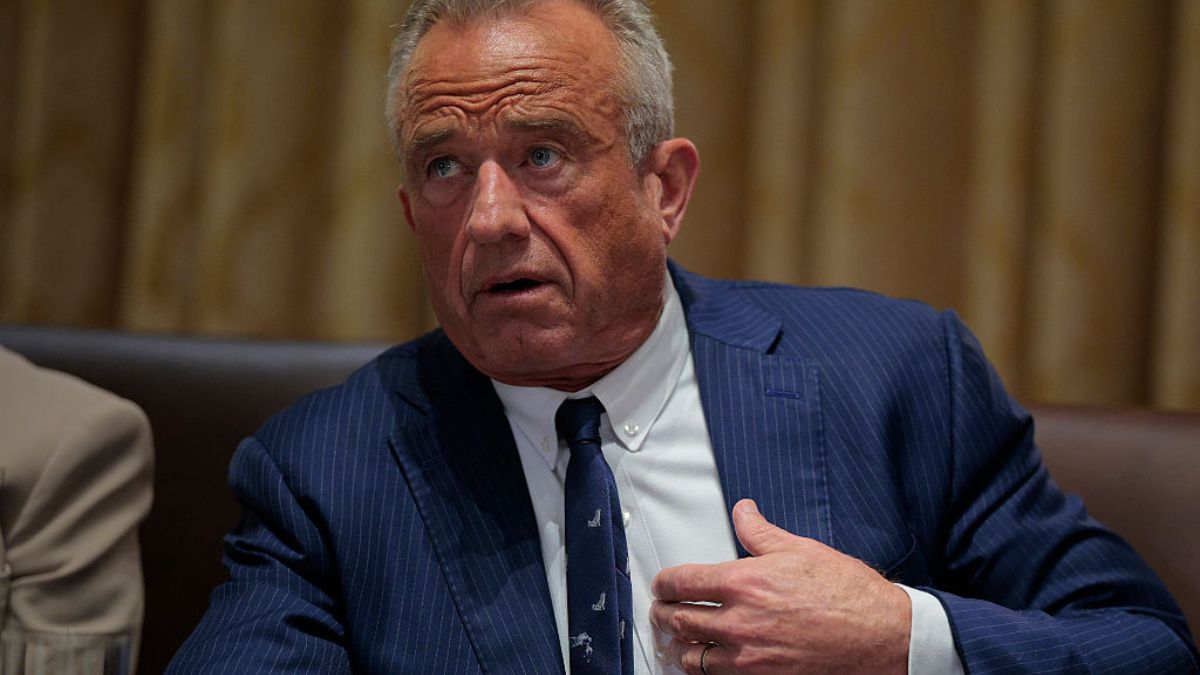

Health and Human Services Secretary Robert F. Kennedy Jr. is facing sharp criticism after claiming he can identify children with serious health problems just by looking at them in public places. The comments were made during a Make America Healthy Again event in Texas on Wednesday, where Governor Greg Abbott signed several health-related bills into law.
Kennedy’s remarks have sparked outrage from medical experts and former government officials who say such visual diagnoses are unscientific and potentially harmful. Former White House COVID-19 response coordinator Ashish Jha, who served under President Biden, called the comments “wacky, flat-earth, voodoo stuff” in a post on social media platform X.
According to The Hill, speaking at the Texas event, Kennedy said he could spot unhealthy children based on their appearance. “I know what a healthy child is supposed to look like. I’m looking at kids as I walk through the airports today, as I walk down the street, and I see these kids that are just overburdened with mitochondrial challenges, with inflammation,” Kennedy stated. “You can tell from their faces, from their body movements, and from their lack of social connection, and I know that that’s not how our children are supposed to look.”
CDC director fired as health agency faces major upheaval
The controversial comments came on the same day that Kennedy fired CDC Director Susan Monarez after less than a month in office. Monarez had refused to resign despite pressure from Kennedy to change vaccine policies and fire veteran CDC leaders. Her lawyers said she was targeted for “protecting the public over serving a political agenda.”
At least four top CDC officials resigned in protest following Monarez’s firing. Dr. Demetre Daskalakis, director of the National Center for Immunization and Respiratory Diseases, wrote in his resignation email that he was “not able to serve in this role any longer because of the ongoing weaponizing of public health.” The mass resignations have left the CDC without key leadership during a time of increasing public health challenges.
Medical professionals have been critical of Kennedy’s approach to health policy since he took office. The health secretary, who does not have a medical degree, has a long history of promoting anti-vaccine views and questioning established medical practices. Kennedy has previously made similar claims about being able to spot children with health problems, including comments about mitochondrial challenges made in April.
Kennedy has championed the Make America Healthy Again movement, which aims to focus on preventive health and wellness. However, his tenure has been marked by significant policy changes that have concerned medical experts. He has cut $500 million in contracts for developing mRNA vaccines and has limited access to COVID-19 vaccines. The health secretary has also described measles vaccination as a “personal choice” during the worst measles outbreak in 30 years.
Critics point out that mitochondrial disorders are complex genetic conditions that require extensive medical testing to diagnose. These disorders affect the body’s ability to produce energy and can impact multiple organs. Symptoms can vary widely and require blood tests, genetic studies, and sometimes muscle biopsies for proper diagnosis. The idea that such conditions could be identified through casual observation has been widely rejected by medical professionals.





Published: Aug 29, 2025 08:32 am