


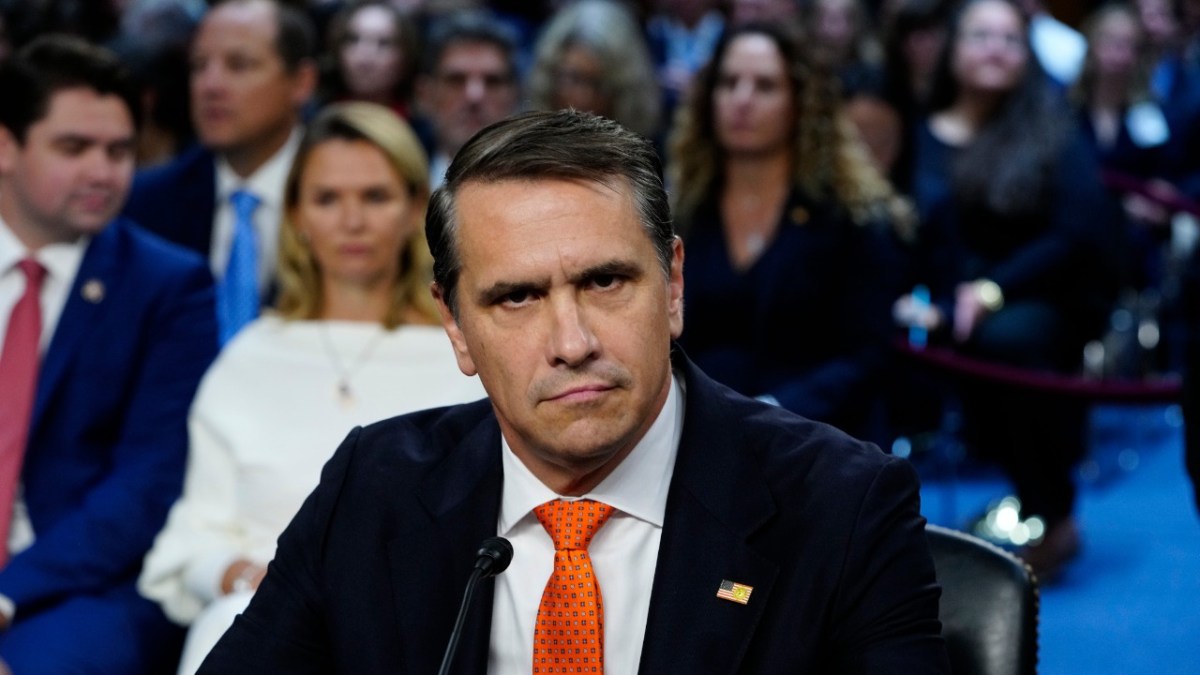

The sharpest moment on ABC’s This Week on Sunday came when Attorney General Todd Blanche interrupted Martha Raddatz. She had asked whether he was saying people would be screened before they boarded a flight or entered the White House. Blanche answered that he had not said that.
“I did not say that! No, no, I did not say that! You don’t get to put words in my mouth!” Blanche said. Raddatz told him he had a right to defend himself. He replied, “I’m not defending myself! You said I said something that I didn’t say!”
Mediaite pointed out that the clash took place during a discussion of President Donald Trump’s ban on CNN, MS NOW, and Politico. A federal judge paused that ban on Wednesday. The outlets had sued over the revocation of their White House hard passes.
Ongoing court fight frames how Blanche answers questions about the ban
Raddatz noted that Blanche clearly thought the government had a strong case, but a temporary restraining order was still granted. She said Trump-appointed Judge Timothy Kelly was skeptical of the Department of Justice argument that the ban was grounded in national security.
She quoted the judge as writing that nothing in the record from before the lawsuit suggested the revocation of the plaintiffs’ hard passes was motivated by national security concerns.
She said that was not what President Trump said when he announced the ban. She added that the president instead focused on the alleged lack of truthfulness and negativity of the plaintiffs’ reporting. This dispute over the president’s stated reasons for the ban echoes a broader legal argument, as the DOJ has contended the ban was over national security concerns even though he never mentioned that in his original post.
Blanche said he would not get into what the judge said because the litigation is ongoing. He said the government’s position had been clear from the beginning. “What they say is exactly the issue when it comes to national security,” he stated.
Raddatz asked him to give an example. Blanche answered, “I’m sorry, wait, give you an example of when CNN doesn’t report accurately?! You cannot be asking me that!” He said they do not even disagree. He said there is not even a real dispute that the information coming out of CNN and some of these other networks is wholly and completely, almost 100 percent negative toward the president.
Raddatz said the judge decided this was not based on national security. Blanche said he would not talk about the specifics of what the judge said and that doing so would not be right. He said he was talking about the government’s position and what the Department of Justice said in court.
He said that position is the same thing President Trump has said repeatedly, which is that at some point the complete misinformation and the inaccuracy and the one-sided news out of certain organizations does become a national security issue. He added that it is not right for the people of the United States to have to put up with it.
Raddatz later asked what he thinks the job of the press is and what the First Amendment means to him. The debate over press access continues, as a judge temporarily restored White House press access. Blanche said what it means to him is not the issue. He said the law allows the free press to report whatever they want. “Of course they can,” he said.
He said that when it comes to the White House, it is the people’s house and that it is a privilege and not a right to be there. He said every American should expect that when they are told something at work, or when they read something in the paper, it even has a whiff of impartiality and a whiff of accuracy about what is actually happening.
If that is not happening, Blanche said, it is absolutely the president’s duty to make sure the American people are hearing accurate news. He said it does not have to be good for the president and does not have to be positive about what is happening in the administration.
Raddatz said the president had said, “They want to try and diminish the Republicans and a Republican administration,” and that those comments were not talking about impartiality. Blanche said she had just picked out seven words the president said.
He said the president talks about his concerns with a lot of these mainstream media outlets and that there are hours and hours and hours of quotes and statements about that. He said picking out seven words and treating them as what the president means is extraordinarily disingenuous. “Everybody knows exactly what the President’s concern is,” he said.


Published: Sep 28, 2026 07:00 am