


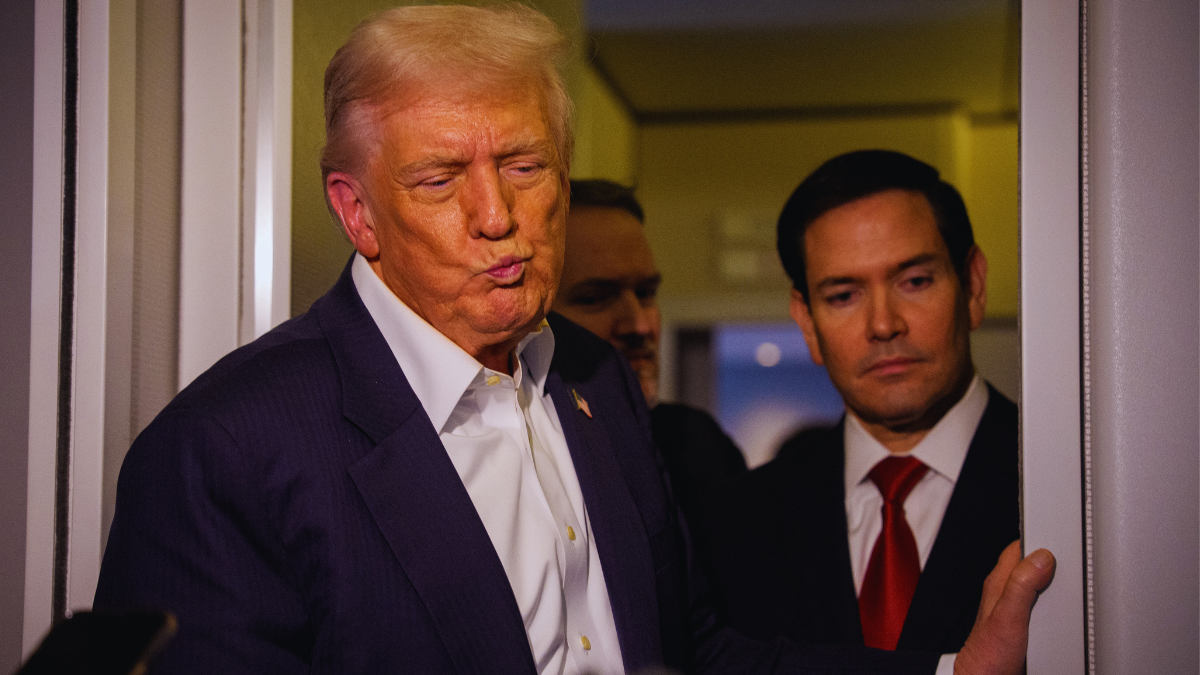

When Donald Trump was inaugurated for his second term just over a year ago, he promised to clamp down on narcotic deaths resulting from fentanyl. His most prominent target soon shifted to Venezuela, despite it being better known as a trafficking route for cocaine.
Now, after the administration admitted that its primary goal is oil extraction, Secretary of State Marco Rubio has informed the Senate Foreign Relations Committee that “force” remains an option to get the job done.
This administration has faced heavy criticism over its foreign policy decisions. From blanket tariffs, to the abduction of Nicolás Maduro, to the proposed annexation of Greenland — all undertaken without congressional approval — the list continues to grow.
But the Maduro abduction remains the one action the administration cannot simply walk back. Democrats have described the raid as an illegal act of war carried out without congressional authorization, warning that it could entangle the U.S. in another rebuilding effort far more complex than the administration is willing to acknowledge.
“Maximum cooperation”
Rubio did little to ease lawmakers’ concerns when he responded:
“We are prepared to use force to ensure maximum cooperation if other methods fail. It is our hope that this will not prove necessary, but we will never shy away from our duty to the American people and our mission in this Hemisphere.”
Rubio also assured senators that Venezuela’s interim president, Delcy Rodríguez, has no objections to the administration’s plans to exploit at least 50 million barrels of oil from the Latin American petrostate.
According to Rubio, Rodríguez has committed to opening Venezuela to U.S. energy companies and providing preferential access for American goods within its economy. To be clear, this would mean U.S. companies extracting oil alongside Venezuela, while much of the revenue Venezuela earns from its own oil would be spent almost exclusively on American products.
In theory, the administration’s plan appears to check all the boxes of American self-interest and aligns with Trump’s long-held complaint that the U.S. tends to leave wars empty-handed. But according to Bloomberg, Rodríguez is struggling to see what, exactly, is in this deal for Venezuelans. She reportedly said the country has had enough of “U.S. interference,” a sentiment that suggests the administration may ultimately have to consider military options.
Of course, the administration does have alternatives, including backing a different leader altogether. The leading option is Nobel Prize laureate María Corina Machado. Unlike Rodríguez, Machado has never worked with Maduro’s regime and has openly opposed it, while also signaling to the Trump administration that she would accept their proposed deal if she were in power.
Still, Trump has expressed doubts about whether Machado commands enough respect at home for a smooth transfer of power. Although he has since warmed to her — particularly after she handed her Nobel award to him — that does not necessarily mean his initial assessment, reportedly informed by military intelligence, was wrong. The Venezuelan public may yet reject her leadership.
Rubio is reportedly scheduled to meet with Machado later this week.

Published: Jan 28, 2026 08:12 am