



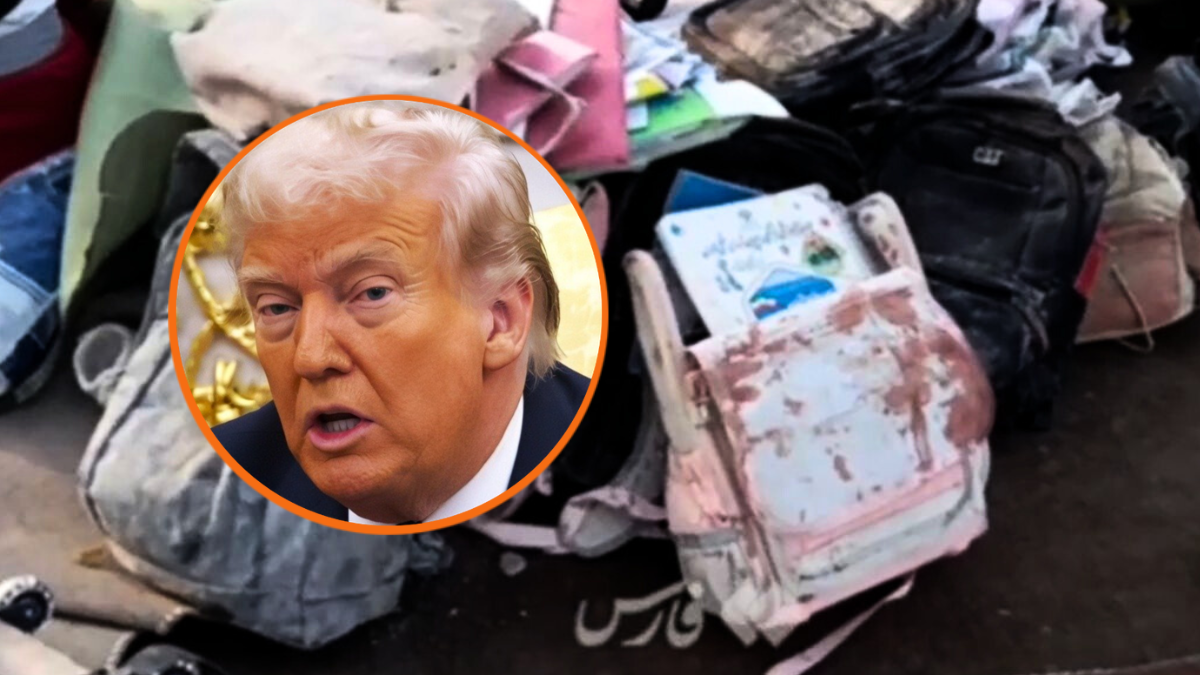
Donald Trump still can’t provide definitive end date or even a shared vision of what a victory in Iran looks. One aspect of this war, however, still grips public attention: a catastrophic missile attack on an elementary school that killed around 165 little girls.
After all, one of the main points many have used to support this new war has been the fact that Iran has an oppressive regime that has been particularly tyrannical toward women. Liberating young girls from this is supposed to be one of the objectives.
Trump has even tried to use Iranian internal strife as a pathway to end this war early, repeatedly urging Iranians to use the conflict to enact regime change. But in the midst of all this chaos, the Shajareh Tayyebeh girls’ elementary school in Minab, Hormozgan province, southern Iran, was hit, and approximately 180 people lost their lives. There is a strong likelihood that the strike came from a Tomahawk missile operated by the United States.
The lies begin
At Trump’s latest press conference, a reporter directly asked who was to blame, making it clear that many reporters covering the war believe it was in fact a U.S. operation. Trump responded:
“I will say that the Tomahawk is sold and used by other countries. And whether it’s Iran, who also has some Tomahawks — they wish they had more — but whether it’s Iran or somebody else, a Tomahawk is very generic. That’s being investigated.”
Reporter: A video appears to show a tomahawk missile likely destroyed that Iranian girls school. Will the US accept any responsibility?
— Acyn (@Acyn) March 9, 2026
Trump: I will say that the tomahawk is sold and used by other countries. And whether it's Iran who also has some tomahawks, they wish they had… pic.twitter.com/wwRIjDmuAP
The only problem with that claim is that Tomahawks are’t just sold to anyone. Only a few countries are known to possess them: the United Kingdom, Australia, the Netherlands, and Japan. None of these countries is currently involved in the conflict in Iran. When asked about the shaky nature of his claim, Trump shrugged it off, saying, “I don’t know enough about it.”
Q: "You just suggested that Iran somehow got its hands on a Tomahawk and bombed its own elementary school…but you're the only person in your government saying this…Why are you the only person saying this?"
— The Bulwark (@BulwarkOnline) March 9, 2026
Trump: "Because I just don't know enough about it." pic.twitter.com/dNshJCXRqo
Experts affiliated with the United Nations were among the first to issue strong condemnations of the strike. The global body called it shocking, adding that there is “no excuse for killing girls in a classroom.”
It is a difficult argument for Trump to make that Iranians should take to the streets and usurp their government in favor of a leader he himself would endorse when this incident hangs over his head. Under international law, this would quite literally constitute a war crime. Trump and his top aides are still pushing the narrative that, unlike the Iranian regime — which they say is targeting civilians in the Gulf — U.S.–Israeli forces are only striking military installations. That not only risks appearing hypocritical, but in times of war it may also suggest the spread of wartime propaganda.
If the evidence ultimately points to U.S. responsibility, as various preliminary reports suggest, then at the very least an admission — followed by an explanation — should come from Trump himself. He is the commander in chief, after all. He must explain why all this bloodshed was necessary.


Published: Mar 10, 2026 08:19 am