


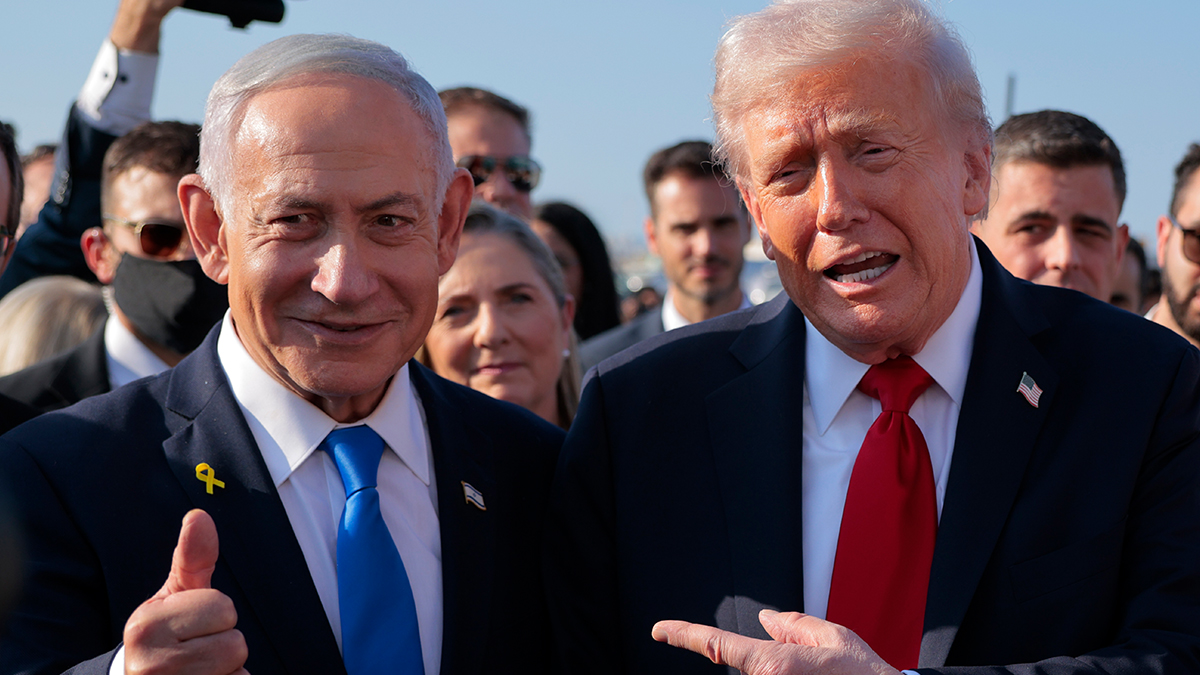

We’ve got some massive news on the international relations front. Israel has officially joined President Trump’s controversial new foreign policy initiative, the Board of Peace. The group announced Israel’s inclusion late Wednesday in a post on its official X account, welcoming them as a founding member of the growing international organization.
The Board of Peace is one of the most high-profile and highly debated elements of the president’s evolving foreign policy agenda. Trump, who serves as the board’s chairman, has repeatedly stated that the Board of Peace is central to his vision for achieving what he calls “world peace.” However, Jared Kushner’s description of the initiative reads like a business plan that benefits others rather than the Palestinians.
Newsweek reported that the Board of Peace is actually part of a much wider structure unveiled by the White House. That architecture includes the National Committee for the Administration of Gaza, which is intended to advance the next phase of the U.S. peace plan. Initially, the BOP was framed as the mechanism to oversee this next phase, specifically focusing on post-war governance and reconstruction in the territory.
That sounds stupid, no matter how you look at it
Critics are already questioning the involvement of Israel, given that the country remains actively engaged in the war in Gaza, even attacking Gaza right after the announcement of the initiative. Participating in a body tied to managing the aftermath while the conflict is still raging is certainly going to raise eyebrows. Their decision to join also comes after Prime Minister Benjamin Netanyahu and other Israeli officials had initially raised objections to the initiative.
Their main concerns revolved around the makeup of the Gaza Executive Board and how the body would actually operate while they were still at war. But that reluctance seems to be over now. Prime Minister Netanyahu confirmed the move, stating on X, “I signed Israel’s accession as a member of the ‘Board of Peace.’ We will continue strengthening the unbreakable alliance between Israel and the United States.”
Despite Israel’s formal entry, the Board of Peace has really struggled to gain broad international support, with participation largely limited to Middle Eastern regional states. Several key partners, like France, the United Kingdom, Norway, Slovenia, and Sweden, have stated they won’t participate. They’re citing concerns about the board’s overall scope and its relationship to the United Nations.
With Israel now formally aligned, attention is going to shift to how actively the member countries participate and if any other governments will follow suit by publicly accepting their invitations. The pressure is on, as the board already has its first major item on the calendar. The first meeting is scheduled for February 19 in Washington, where members will gather to discuss the critical topic of Gaza’s reconstruction.





Published: Feb 13, 2026 05:46 pm