


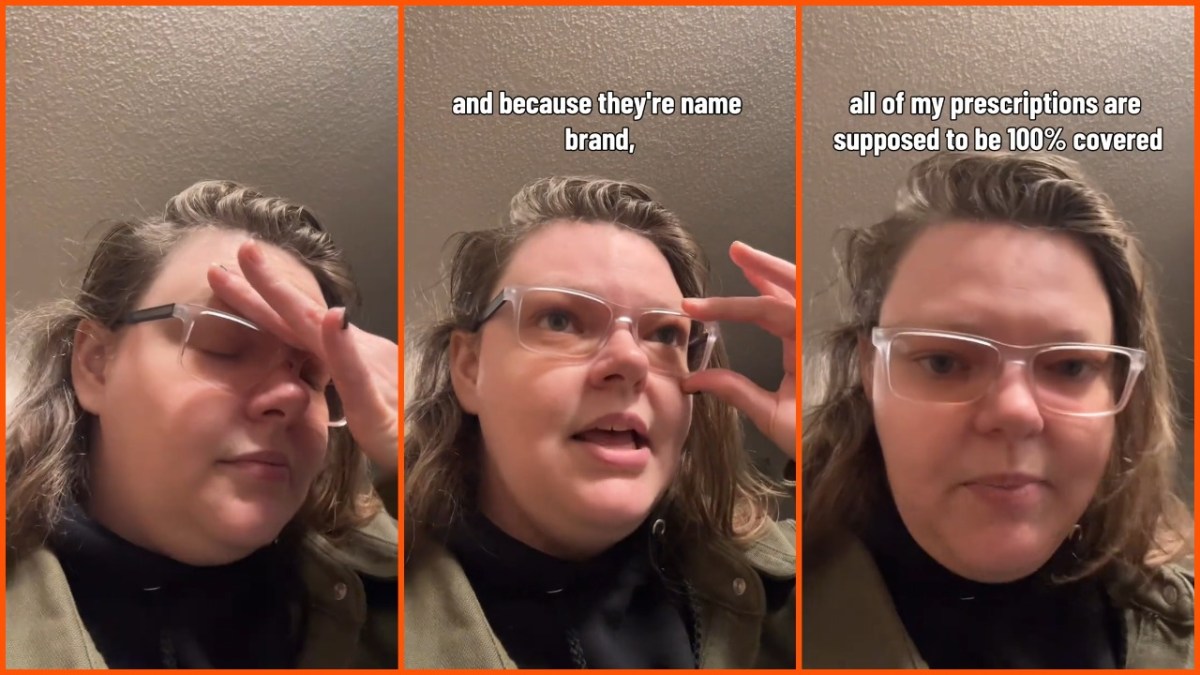

A woman claimed that she walked into a CVS expecting her medication to cost nothing after she had already reached her pharmacy out-of-pocket maximum. Instead, the price that appeared was $1,100 for a name-brand drug she had picked up before at no charge.
The creator, who posts as Saurus Becks, explained in a TikTok video that she takes several name-brand medications. Because those drugs are expensive, she stated that she had hit her out-of-pocket max for her pharmacy benefit. She said that, according to her plan description, this meant all of her prescriptions should have been fully covered for the rest of the year.
In the video, she described standing at the pharmacy counter and seeing the $1,100 figure. She told the pharmacy tech she was concerned about the price. The tech looked at the system and replied that it seemed wrong, noting that the same medication had been filled twice before and that she had paid $0 both times.
Manufacturer assistance programs can change the final price even when insurance rules limit coverage
She said she then checked her insurance portal and found that the plan would only cover a three-month supply of the medication. She explained that she had already used two courtesy fills of a one-month supply, so the next fill had to be for three months.
Becks said that she asked the pharmacy tech whether they could simply switch it to a three-month supply, and the tech told her she did not have enough remaining refills to do so. Insurance math can leave patients confused in other ways too, like one woman who was quoted more with insurance than without.
The creator explained that the logical next step would have been to contact her doctor and request a new prescription written for a three-month supply. She stated that it was already 5:30 on a Friday evening, so she could not reach her doctor. She added that she had already gone a full day without the medication and described the situation as urgent.
The pharmacy tech suggested she look up whether a patient assistance program existed for the drug. She said she was fairly confident one did because it was a name-brand medication with no generic available. Standing in the CVS line, she signed up for the program and handed her phone to the tech so the information could be entered.
Becks stated that her cost then dropped from $1,100 to zero. In the video, she asked, “How in the world?” She clarified that she was not complaining about receiving the medication at no cost, but she described the overall situation as “the most messed up system.” Her caption noted that the charge occurred even with an approved prior authorization. Unexpected charges like this have also caught patients who rely on medical equipment off guard, including a woman who was hit with a surprise BiPAP bill.
According to HealthCare.gov, an out-of-pocket maximum is the most a person has to pay for covered services in a plan year. After that amount is reached through deductibles, copayments, and coinsurance for in-network care, the plan pays 100 percent of the costs of covered benefits. The site states that the limit does not include monthly premiums, services the plan does not cover, out-of-network care, or amounts above the allowed charge.
HIV.gov explains that patient assistance programs, typically sponsored by pharmaceutical manufacturers, can provide free or low-cost medication to people who are uninsured or whose insurance does not cover a specific drug. Co-payment assistance programs, by contrast, help insured patients lower or eliminate their share of costs such as deductibles, copays, or coinsurance. Eligibility rules, including income limits or annual dollar caps, vary by manufacturer and medication.
According to GoodRx, patient assistance programs are a safety net offered mainly by drug companies for people who lack adequate coverage. The site notes that benefits and requirements differ widely, that applicants usually must prove residency and income status, and that a healthcare provider often has to complete part of the form. Once approved, the program may cover the medication itself but not provider visits or lab tests.
In the comments, one viewer wrote, “My new med has a $120,000+ monthly price tag. With their assistance program it is $5. I will never understand.” Another commenter, identifying as a pharmacy tech, said, “As a pharmacy tech, I’m so grateful you recognized that the insurance was the problem and didn’t get mad at the tech. We appreciate it.” A third wrote, “Thank you so much for understanding that it’s the system/insurance and not the pharmacy issue happy that you were able to get your medications.”








Published: Nov 10, 2026 06:30 pm