


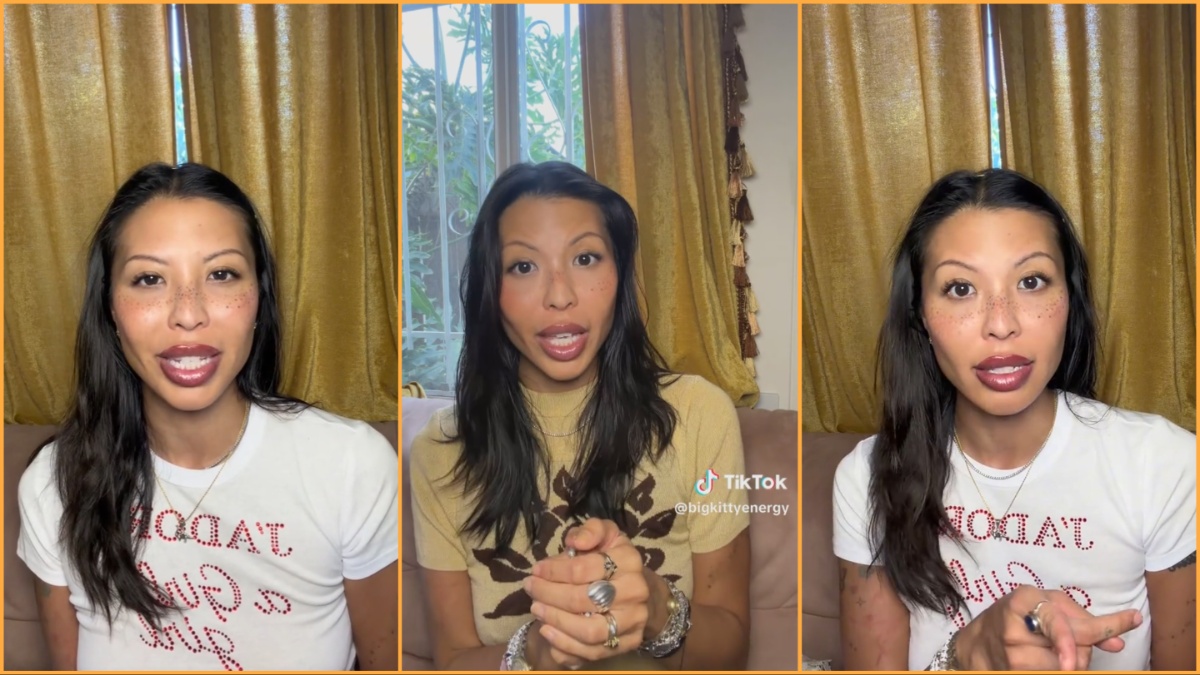

The internet is now producing its own kind of reality television, and a user on TikTok is turning her storytelling chops into everyone’s latest obsession with the “My Month with a Billionaire” series.
Cat Limket, better known by her handle @bigkittyenergy, calls herself a “storytime girls’ girl” with over 250K followers and videos that have racked up millions of views on the social media platform.
She has lately been narrating the story of her month living in the Los Angeles mansion of a man she calls “Daddy Harley,” a billionaire she met on elite dating app Raya. The saga has already churned out more than 70 long episodes on TikTok, and the story has all the structural integrity of a telenovela with none of the restraint.
As far as I’ve been able to figure it out, in Harley’s “twisted mansion of madness,” there’s a scheming personal assistant named Dana, a free spirit named Alana who gives unsolicited compliments about skin softness, and a freshly single chef named Drew who just got a “f—kboy haircut” and has been on our heroine’s radar as an alternate choice ever since. Yes, the cast of characters reads like a fever dream.
It gets really wild, folks, so if you find the premise compelling, strap in for one of TikTok’s most unhinged rides in recent memory.
In just one of the episodes, Limket finds herself navigating the mansion’s full circus. She talks about how men are basically toddlers who’ve taken a tumble and that if you panic, they panic. Harley, who has apparently been crying upstairs over her, comes downstairs radiating sad-boy energy and gets a breezy “good morning, how did you sleep?” in return. The day then segues into what it feels like to live inside someone else’s absurd wealth.
Is this what parasocial storytelling looks like now?
With some hindsight, “My Month with a Billionaire” reads as a near-perfect artifact of its moment. It’s a story that could only have been told this way and on this platform, and probably to this audience.
But hindsight also adds a layer of discomfort that’s hard to shake. The viewers who spent weeks invested in this story — and remember, we still can’t say for certain how much of it is fabricated — are feeding the algorithm and perhaps setting a precedence for something that really shouldn’t find a foothold in social media culture, already beleaguered by the slow collapse of the distinction between a person and a product.
At the end of the day, none of this may have any veritable root in reality, but we keep watching anyway.








Published: Apr 1, 2026 05:36 pm