


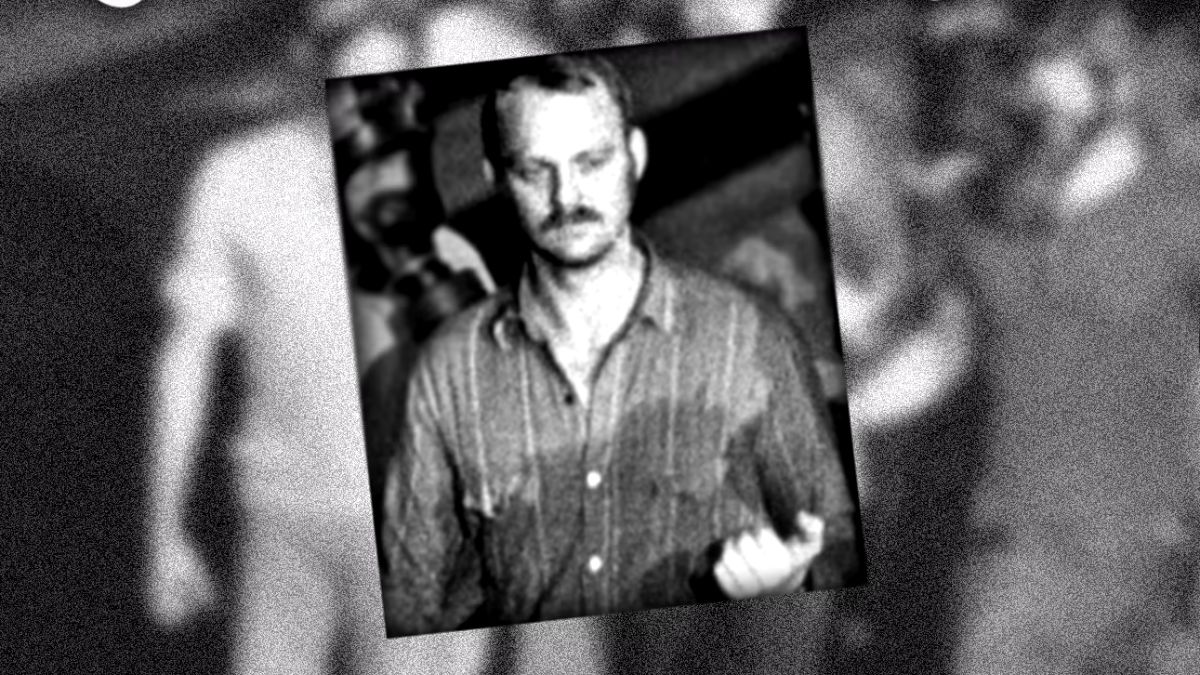

On August 23, 1973, Jan-Erik Olsson walked into the Sveriges Kreditbanken bank on Norrmalmstorg Square in Stockholm, Sweden, with a submachine gun hidden under a folded jacket. The 32-year-old convict had recently escaped from prison during a break.
He fired shots into the ceiling and shouted “The party has just begun!” He quickly took four bank workers hostage: Birgitta Lundblad, Elisabeth Oldgren, Kristin Enmark, and Sven Säfström.
Olsson made several demands to the Swedish authorities. He wanted 3 million Swedish kronor (around $710,000 at the time), two guns, bulletproof vests, helmets, and a blue Ford Mustang with a full tank of gas. He also wanted his former prison friend, Clark Olofsson, to be brought from prison to the bank. The Swedish government agreed to this, and Olofsson was allowed to help with talks between Olsson and police. The two convicts then locked themselves with the hostages inside the bank’s main vault.
Over the six-day standoff, something strange happened. The hostages started to trust their captors more than the police. One hostage, Kristin Enmark, told Swedish Prime Minister Olof Palme over the phone that she felt safe with the robbers but was afraid the police might use violence. She even asked Palme to let the robbers and hostages leave together. This odd emotional bond between the hostages and their captors would later give birth to Stockholm syndrome, a new psychological term named after the city.
How the 1973 bank robbery created Stockholm syndrome and changed psychology
The crisis ended on August 28 when police used tear gas to force Olsson and Olofsson to give up after an hour. None of the hostages were badly hurt. But what they did after shocked everyone. The hostages hugged and kissed their captors and thanked them. Later, they even defended the robbers in court.
A criminologist named Nils Bejerot watched how the hostages acted during and after they were held captive. He came up with the term “Stockholm syndrome” to explain this strange behavior. At first, it was called “Norrmalmstorgssyndromet” in Swedish, but it later became known worldwide as Stockholm syndrome. It describes what happens when hostages start to feel close to or care about the people holding them prisoner.
The robbery also became famous for another reason. It was the first crime in Sweden shown on live television. People around the world watched the drama unfold day by day. The public was so interested in the robbery that they cared more about it than King Gustav Adolf VI, who was dying at the Royal Palace at the same time.
Jan-Erik Olsson was sentenced to 10 years in prison for the robbery. Clark Olofsson was first found guilty but later had his conviction overturned. After getting out of prison, Olsson moved to Thailand with his family for 15 years before coming back to Sweden. He wrote a book about his life called Stockholmssyndromet in 2009. Since the robbery, he has not been convicted of any other crimes. The case has since inspired several kidnapping movies based on real-life crimes that explore the psychological bonds between captors and their hostages.







Published: Oct 7, 2025 02:35 pm