


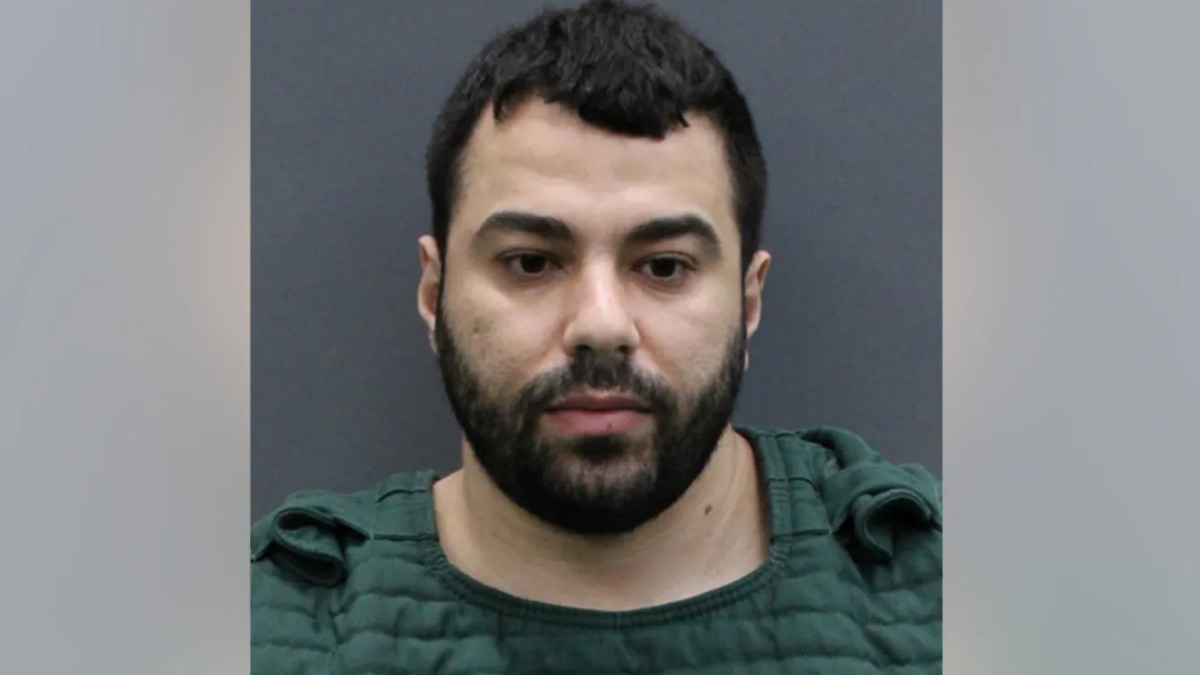

Prosecutors have revealed chilling details in the killing of Zamil Limon, a University of South Florida doctoral student whose body was discovered last week on the Howard Frankland Bridge in Tampa.
According to CNN, the investigation into the deaths of Limon and his girlfriend, fellow doctoral student Nahida Bristy, has uncovered that his roommate, Hisham Abugharbieh, allegedly used ChatGPT to plan the disposal of human remains.
Bristy is currently still considered missing. However, authorities are currently working to identify additional human remains recovered south of the bridge to determine if they belong to Bristy. Limon, a Bangladeshi student, had lived with Abugharbieh for only two months, who, according to his brother, Zubaer Ahmed, was unpleasant. Limon had reportedly filed a formal complaint against Abugharbieh with the apartment complex roughly two weeks before the tragedy.
The details regarding the suspect’s use of technology are particularly disturbing. Court documents reveal that in the days leading up to the disappearance of the two students, Abugharbieh allegedly asked ChatGPT a series of questions: “What happens if a human has a put (sic) in a black garbage bag and thrown in a dumpster.” When the chatbot responded that the action sounded dangerous, Abugharbieh reportedly asked, “How would they find out.”
What’s crazy is that we know so much, yet so little, since Abugharbieh isn’t talking
As the investigation progressed, the suspect’s digital trail continued. Two days later, he allegedly searched for information regarding the legality of keeping a gun at home and whether a car’s VIN could be changed. Following the date the students were last seen, the searches became even more specific.
On April 19, he queried whether someone could survive a sniper bullet to the head, if neighbors would hear a gunshot, and if there was a water temperature that could cause immediate burns. By April 23, he searched for the meaning of the term missing endangered adult.
The physical evidence gathered by investigators is extensive. A search of the apartment revealed a broad pattern of blood stretching from the entry foyer through the kitchen and into the hallway. In the suspect’s bedroom, investigators found two human-sized patterns on the carpet that appeared to be saturated with blood and showed signs of smearing and dragging.
Furthermore, items belonging to Limon, such as his student ID, credit cards, and eyeglasses, were recovered from a compactor dumpster at the apartment complex. Lab testing on these items, as well as a gray shirt and floor mat found in the trash, tested positive for blood and linked the profiles to the two victims.
Abugharbieh’s account of events shifted repeatedly during interviews with detectives. He initially denied seeing the pair on April 16 and claimed they had never been in his vehicle. When confronted with evidence regarding his vehicle’s location in Clearwater, he changed his story.
He claimed that Limon had asked for a ride to that city. During these interactions, detectives noted that the suspect had a bandaged pinky finger, a fresh laceration on his upper tricep, and additional cuts on his legs.
Per CNN, Limon and Bristy were both promising researchers. Limon was a dedicated student of geography, environmental science, and policy, focusing on using generative AI to monitor wetlands. Bristy was a chemical engineering doctoral student described by her professors as talented and self-driven.
The two had developed a close bond and were planning to marry. Their families, who are now dealing with an unimaginable loss, have issued a joint statement calling for the severest possible punishment under the law. They are also working to ensure that the remains of their loved ones are returned to Bangladesh for burial in accordance with Islamic traditions.
Abugharbieh is currently facing two counts of first-degree premeditated murder with a weapon, along with charges of tampering with evidence, false imprisonment, and battery. He is due in court for a status hearing on Tuesday.
As Sheriff Chad Chronister noted in a statement, this is a deeply disturbing case that has impacted the entire community. For now, investigators remain focused on the legal proceedings as they continue to process the evidence surrounding these tragic deaths.
In the meantime, people are buzzing about how AI chatbots are beginning to feature more in crimes. Abugharbieh used it to plan a cover-up. Some use it to create the crime, and some use it as their last conversational partner.


Published: Apr 28, 2026 07:11 am