


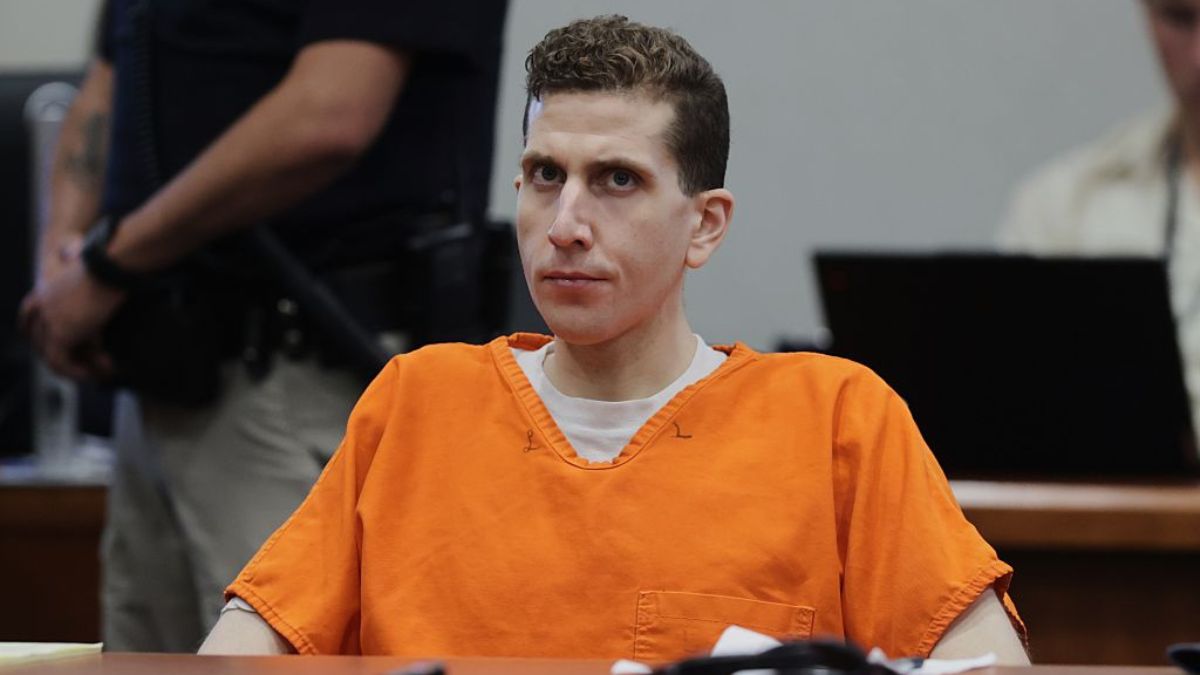

Bryan Kohberger, the man sentenced to life in prison for killing four University of Idaho students, revealed he was diagnosed with several mental health conditions before entering his guilty plea. The convicted killer disclosed his diagnoses in a handwritten court filing dated June 29, 2025, just days before he accepted a plea deal that spared him from the death penalty.
The 30-year-old former criminology student wrote in the document that he had been diagnosed with autism level 1, OCD, ADHD, and ARFID. All four diagnoses were made in February 2025 while Kohberger was in custody awaiting his murder trial. In the same filing, he also noted that he was taking levothyroxine, a medication typically prescribed for hypothyroidism.
According to TMZ, in the filing, Kohberger wrote “I Have Mental Health Disorders!!!” as he detailed his conditions. He stated that these mental health disorders and his medication would have no effect on his understanding of the court proceedings or what it meant to plead guilty to a crime. The document was submitted just three days before he formally pleaded guilty to the killings of Madison Mogen, Kaylee Goncalves, Xana Kernodle, and Ethan Chapin, as well as one count of burglary.
Mental health diagnoses explained in detail
Level 1 autism applies to individuals who experience the mildest symptoms of Autism Spectrum Disorder but may still struggle with communicating or engaging with others. People with obsessive-compulsive disorder typically experience recurring unwanted thoughts that lead to repetitive behaviors. Attention-deficit/hyperactivity disorder can cause difficulty controlling or directing one’s attention and may manifest differently from person to person.
ARFID, or avoidant/restrictive food intake disorder, causes individuals to limit the amount and type of foods they eat. Unlike other eating disorders, the selectivity is tied to factors such as a lack of interest in eating, sensitivity to taste or texture, and fear of consequences like choking or vomiting. This condition is most common in children and can result in malnutrition.
Kohberger’s defense attorneys had previously argued in court motions that his autism spectrum disorder reduced his culpability and that executing him would violate the Eighth Amendment’s prohibition on cruel and unusual punishment. They described how he “displays extremely rigid thinking, perseverates on specific topics, processes information on a piecemeal basis, struggles to plan ahead, and demonstrates little insight into his own behaviors and emotions.” The attorneys argued that due to his condition, Kohberger “simply cannot comport himself in a manner that aligns with societal expectations of normalcy.”
Earlier in the case, a judge ordered a mental health evaluation for Kohberger as prosecutors sought to confirm his autism, OCD, and ADHD diagnoses. The evaluation was conducted without his attorneys present, though the state was barred from administering a personality test.
On July 2, 2025, Kohberger appeared in court and confessed to killing the four University of Idaho students in their off-campus Moscow, Idaho home in November 2022. He received four consecutive life sentences without the possibility of parole, plus an additional 10 years for the burglary charge. His sentencing took place on July 23, where families of the victims were able to give impact statements. Throughout the proceedings, Kohberger’s case had been closely followed due to the brutal nature of the crimes and the lack of an apparent motive connecting him to the victims.









Published: Sep 4, 2025 10:49 am