


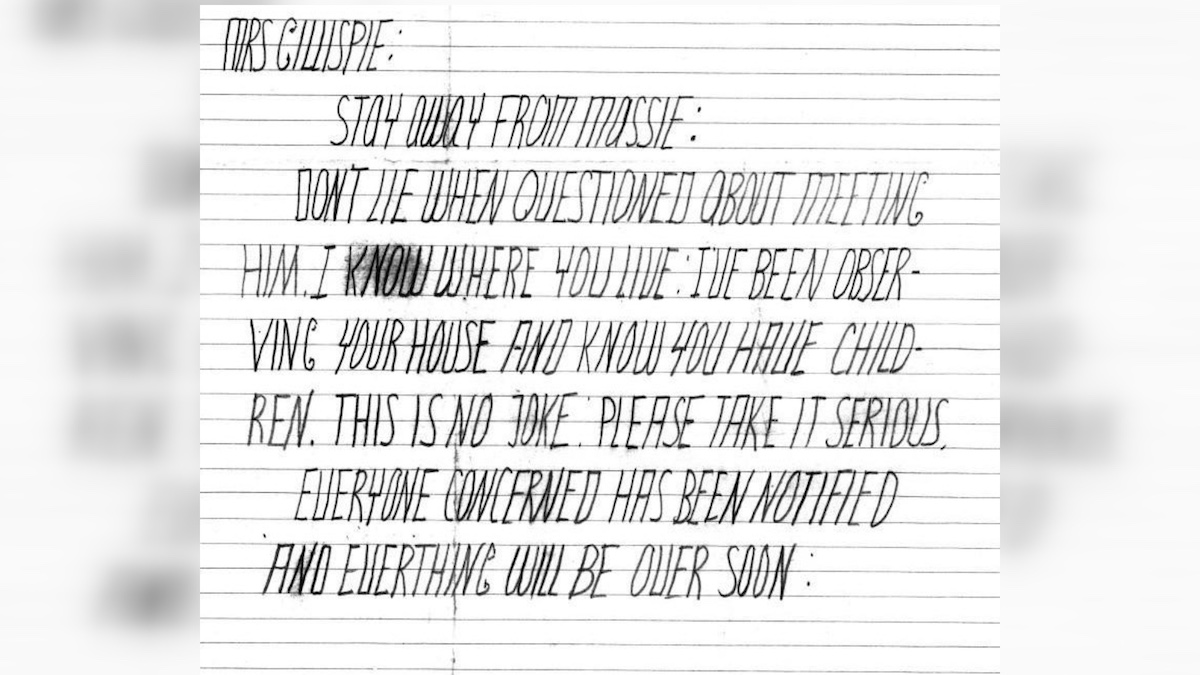

In the mid-1970s, the quiet town of Circleville, Ohio, became the setting for one of America’s most disturbing mysteries. At that time, residents began receiving anonymous letters filled with personal details, accusations, and threats. The so-called “Circleville Letters” terrified the community for nearly two decades, and even after a suspect was sent to prison, the letters kept coming.
It all began in 1976, when school bus driver Mary Gillispie received a letter accusing her of having an affair with Gordon Massie, the local school superintendent. The note claimed the writer was watching her home and warned her to end the relationship or face exposure.
Soon, similar letters appeared in the mailboxes of Mary’s husband, Ronald Gillispie, and other townspeople, spreading fear and suspicion across Circleville. The writer’s detailed knowledge of local affairs convinced residents that the culprit was someone in their midst.
Ronald Gillespie’s death
The strange case then took a dramatic turn in August 1977, when Ronald Gillispie was found dead in his truck after it crashed into a tree. Authorities ruled the death an accident, but there were doubts. Investigators discovered that Ronald had fired one shot from his gun before the crash, suggesting he might have confronted the mysterious letter writer before dying.
Moreover, the letters did not stop after his death, and the tone grew darker. Messages continued to accuse Mary and others of infidelity, corruption, and even murder. The case soon attracted national attention, with journalists and law enforcement baffled by how the writer knew so much about Circleville’s secrets.
The Circleville sign
Years later, in 1983, the terror escalated when Mary discovered a crude roadside sign about her daughter, attached to a box rigged as a booby trap. Inside was a loaded gun designed to fire if the sign was removed. Police traced the weapon to Paul Freshour, Mary’s former brother-in-law, who denied any involvement and claimed the gun had been stolen. He was convicted of attempted murder and sentenced to prison, though he was never formally charged with writing the letters. Handwriting experts at trial said the script matched the anonymous notes, but the evidence was largely circumstantial.
The most chilling twist came after Freshour’s imprisonment. Despite being held in isolation in a maximum-security facility, new letters continued to arrive in Circleville and Columbus, sometimes postmarked from cities far from the prison. Even Freshour himself received letters taunting him, insisting he was the true author.
Prison officials launched an investigation, restricting his mail and placing him under surveillance, yet the letters kept coming. In fact, administrators were so puzzled that they eventually moved Freshour to solitary confinement, where correspondence was impossible, but the messages didn’t stop.
When Freshour got out of prison in 1994, almost as abruptly as they began, the Circleville letters stopped. He maintained his innocence until he died in 2012. Decades later, CBS’s 48 Hours revisited the mystery, commissioning forensic document examiner Beverley East to study the handwriting. East concluded that Freshour had likely written at least some of the letters, but the evidence remains disputed, and law enforcement has never officially identified the author.
But no one knows for sure who wrote the Circleville Letters or why they continued even after the supposed culprit was behind bars. It’s a mystery that haunts Ohio’s most infamous small town to this day.





Published: Oct 16, 2025 05:06 am