


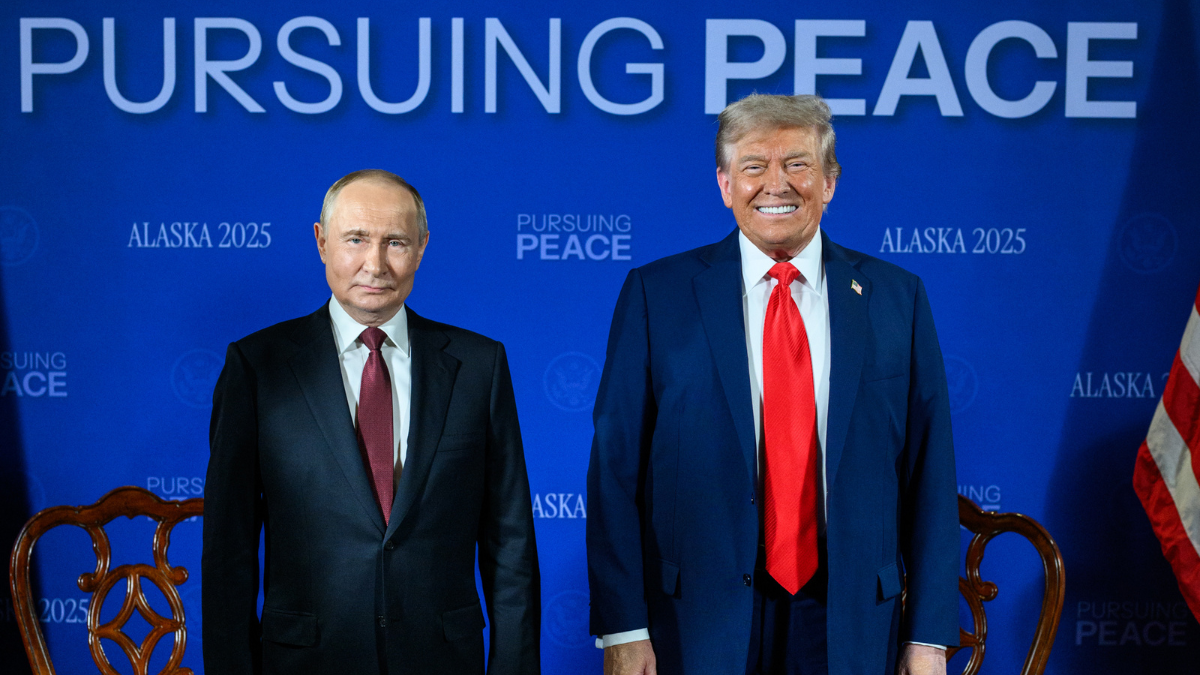

Russia and the United States have long been adversaries. Even during times of relative peace, the two nations have closely monitored each other, keeping track of the locations of warships, radar installations, and communication systems in case a direct conflict ever arose. Now, according to sources in Washington, Russia may be sharing some of that information with Iran — leaving President Donald Trump struggling to respond.
There’s a reason the United States and Israel have been so effective at intercepting Iranian missiles. The U.S. military relied on an AN/TPY-2 radar system used for THAAD missile defense, located at Muwaffaq Salti Air Base in Jordan. The system cost American taxpayers roughly $300 million. According to Bloomberg, Iranian forces destroyed it with a drone that cost approximately $30,000. Now the combined U.S.–Israeli defense effort will have to rely more heavily on Patriot missile systems, which are already in short supply.
The loss is significant. When the destroyed radar and the associated battery are factored in, the total cost of rebuilding the system could approach $1 billion. At this point, the war has moved far beyond budgets and rhetoric — it is now about intelligence.
Trump returned to power while extending diplomatic overtures to Russian president Vladimir Putin, frequently praising him while publicly clashing with Ukraine’s leadership. Critics now argue that the result is Russia assisting Iran in the conflict. Trump had long been warned by previous administrations that Putin would not hesitate to undermine the United States if the opportunity presented itself.
Correspondents covering the war are increasingly concerned about what this could mean as the conflict drags on, particularly amid reports that U.S. munitions may be running low. According to NBC, when a reporter asked Trump about reports of cooperation between Russia and Iran, the president dismissed the question as “stupid.”
Trump said, “That’s an easy problem compared to what we’re doing here.” He continued, “Somebody asked how I’d score this [war] from zero to ten. I said I’d give it a 12 to a 15. Their army is gone. Their navy is gone. Their communications are gone. Their leaders are gone — two sets of their leaders are gone. They’re down to their third set. Their air force is wiped out entirely. Think of it.”
Yet Trump’s messaging on the war has been inconsistent. Just yesterday he appealed directly to the Iranian people, urging them to end the war and promising that their economy would improve if they did. Today, he posted on Truth Social celebrating Iran’s announcement that it would no longer attack Gulf neighbors, while simultaneously warning of “hard hits” that would bring “complete destruction and certain death.”
BREAKING: Trump post about Iran pic.twitter.com/dpUwFuXO2X
— The Spectator Index (@spectatorindex) March 7, 2026
The president’s strategy appears to shift by the day. In the chaos, new alliances are forming abroad that the United States may eventually have to confront. At the same time, there has been little clarity about what a victory in this conflict would actually look like. At first, the war was framed as preventing nuclear escalation. Then it was described as a religious conflict. Now it is being portrayed as an economic war. The objectives remain unclear.
War is ultimately about life and death. Aggressive social media posts and political spin may work during Republican primary battles against figures like Ted Cruz or Ron DeSantis, but Putin is unlikely to be influenced by what airs on Fox News.
With nuclear powers now involved on both sides, the question becomes urgent: can someone within the administration begin charting a path toward de-escalation?



Published: Mar 7, 2026 04:42 pm