



There’s a brand of logic that runs through every military misadventure in American history, whether it’s the swamps of Vietnam or the rubble of Fallujah. If it isn’t working, do more of it.
Make it harder. Louder. With more bodies.
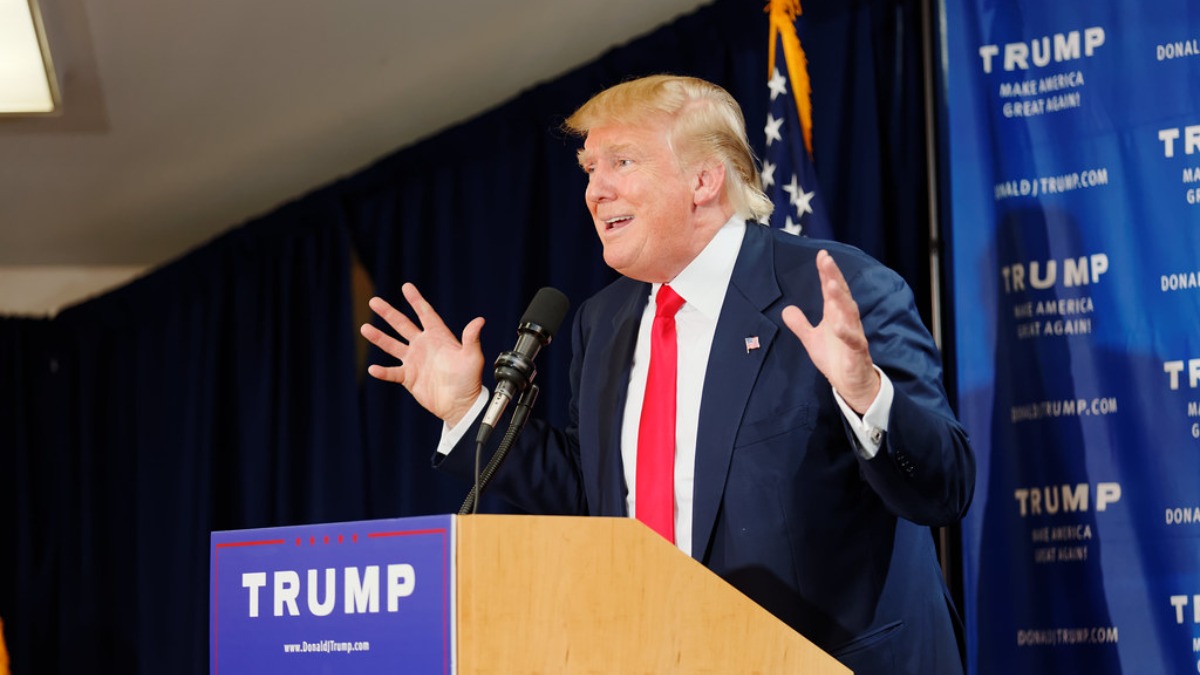
And Donald Trump, never one to be outdone by history’s biggest mistakes, appears to be reaching for that same playbook with Iran.
Two weeks into Operation Epic Fury, the U.S. and Israeli military campaign against the Middle Eastern country has left more than 1,500 civilians dead. The New York Times claims that 17 U.S. bases in the region have sustained varying degrees of damages, and with the recent downing of a KC-135 refueling aircraft, the number of deceased American servicemen has reached 13, with TIME reporting that at least 140 more are wounded, with 8 suffering severe injuries.
Trump can play this game with the best of them. He stood at Dover Air Force Base with the grieving families of the fallen and saluted their flag-draped cases, but at the same time, he doesn’t mind that this senseless war is putting economic pressure on dozens of ally countries around the world, and that more death and destruction is all but guaranteed if he doesn’t end it soon.
In fact, the Pentagon has just ordered a Marine Expeditionary Unit—a rapid response force of roughly 2,500 Marines and sailors—to deploy to the region, giving Iranian missiles, which, unlike what Trump claims, still keep coming in their droves, even more targets on the ground.
Administration officials insist there are no current plans for ground troops inside Iran. They have, however, also refused to rule it out. According to NBC News, Trump has privately expressed serious interest in deploying U.S. troops on Iranian soil, discussing the concept with aides and Republican officials as part of his vision for a post-war Iran aligned with American interests.
That’s fancy talk for getting the country’s oil, like he did with Venezuela. Except of course, China and Russia would never allow the United States to get such a vital chokehold on not just Iran’s natural resources but also the Strait of Hormuz, through which moves around 20% of the world’s oil and gas.
This is the very architecture of escalation. A war launched with no defined mission and a finish line that keeps moving. Trump’s rhetoric changes from unconditional surrender to regime change to securing nuclear stockpiles faster than a hypersonic missile flying over the region right now, and Iran, for their part, has already warned what would happen if more U.S. troops appeared in the region.
“We are waiting for them,” Iranian Foreign Minister Abbas Araghchi told NBC News when asked about a ground invasion. “That would be a big disaster for them.”
He may be right. But disasters have never been much of a deterrent for President Trump.








Published: Mar 14, 2026 03:27 pm