


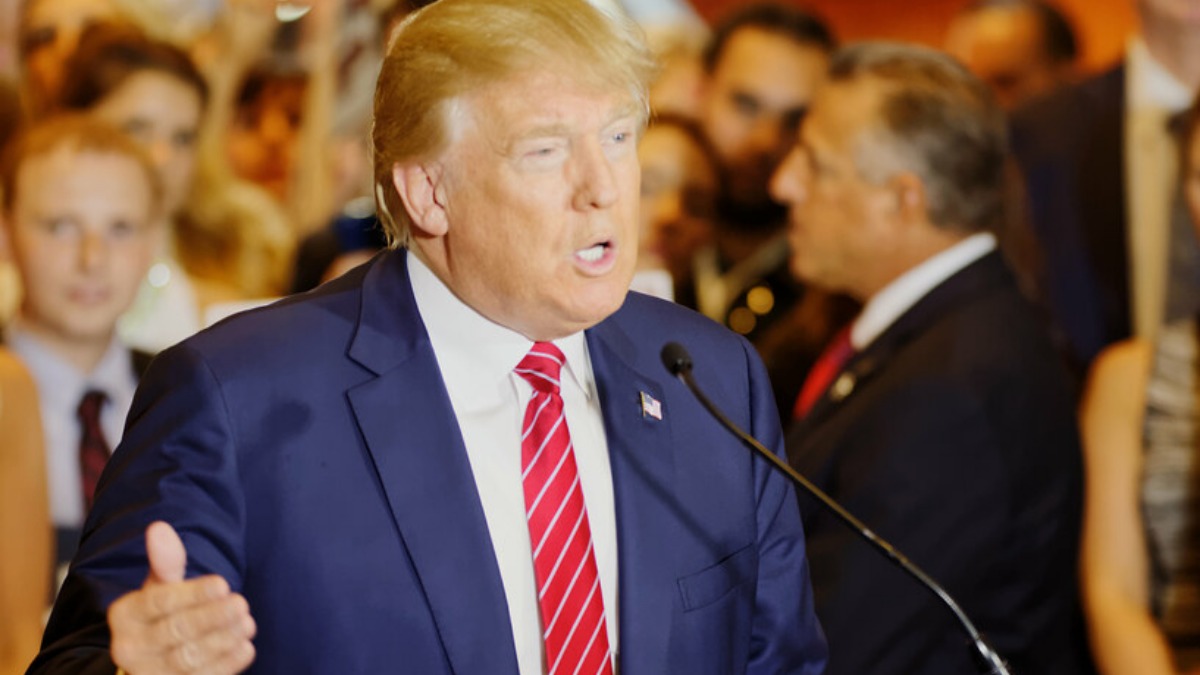

President Donald Trump wants Arab countries to pay for the cost of the ongoing war with Iran. White House press secretary Karoline Leavitt confirmed this, adding that talks with Tehran are moving forward well.
According to Reuters, when asked whether Arab countries would help fund the war, Leavitt made it clear the idea is firmly on Trump’s mind. “I think it’s something the President would be quite interested in calling them to do,” she said, adding, “It’s an idea that I know that he has and something that I think you’ll hear more from him on.”
This is not the first time the US has sought financial help from allies. During the Gulf War in 1990, regional states and coalition members like Germany and Japan raised $54 billion, equal to $134 billion today, to help cover US costs.
The financial burden of the Iran war is already enormous, and it keeps growing
This time, the US and Israel entered the war without a coalition-funding arrangement, leaving the financial burden mostly on the United States. The first six days cost $11.3 billion, rising to $16.5 billion by day 12. The White House is now seeking at least $200 billion in additional military spending from Congress. Trump has also floated seizing Iranian oil assets like Kharg Island to offset costs, though the military has warned it could become a quagmire.
Iran has retaliated with missile and drone attacks across the Middle East, hitting civilian sites including hotels, airports, and energy infrastructure in Gulf countries. The closure of the Strait of Hormuz has pushed US petrol prices to $3.99 per gallon, over a dollar higher than before the war.
Leavitt defended this, saying, “These are short-term actions and short-term price fluctuations for the long-term benefit of ending the threat that Iran poses to the United States of America, our troops and our allies in the region.”
Trump also warned on Monday that Iran’s energy plants and oil wells would be destroyed if it did not reopen the Strait of Hormuz. Despite public tensions, Leavitt has said private talks are going very well. “What is said publicly is, of course, much different than what’s being communicated to us privately,” she said, adding that Iran has privately agreed to some of Washington’s key points.
According to Al Jazeera, Trump also said that “regime change” has already happened in Iran. Secretary of State Marco Rubio was more cautious, saying the US had to “be prepared for the possibility, maybe even the probability, that that is not the case.”
The administration’s approach has drawn criticism from within the right, with some arguing Trump has betrayed his core MAGA base over his foreign policy. Leavitt warned that “the President has laid out the military consequences that the Iranian regime will see if they don’t hold true to the words that we are hearing privately behind the scenes.”
For the 31st consecutive day, explosions have rocked Iran, Israel, and several other countries in the Middle East after the United States and Israel launched attacks on Iran on February 28. In retaliation, Iran hit energy sites in Saudi Arabia, Qatar, Kuwait, and the UAE, sending oil and gas prices soaring.
Brent oil stayed close to $115 a barrel, while U.S. crude remained above $104, with both poised for their largest March gains ever. The war has sent oil prices climbing, with Iran effectively closing the Strait of Hormuz, a critical route for a fifth of the world’s oil and liquefied natural gas. U.S. drivers saw the impact at the pump, with the national gas average hitting $4 a gallon.







Published: Mar 31, 2026 10:51 am