


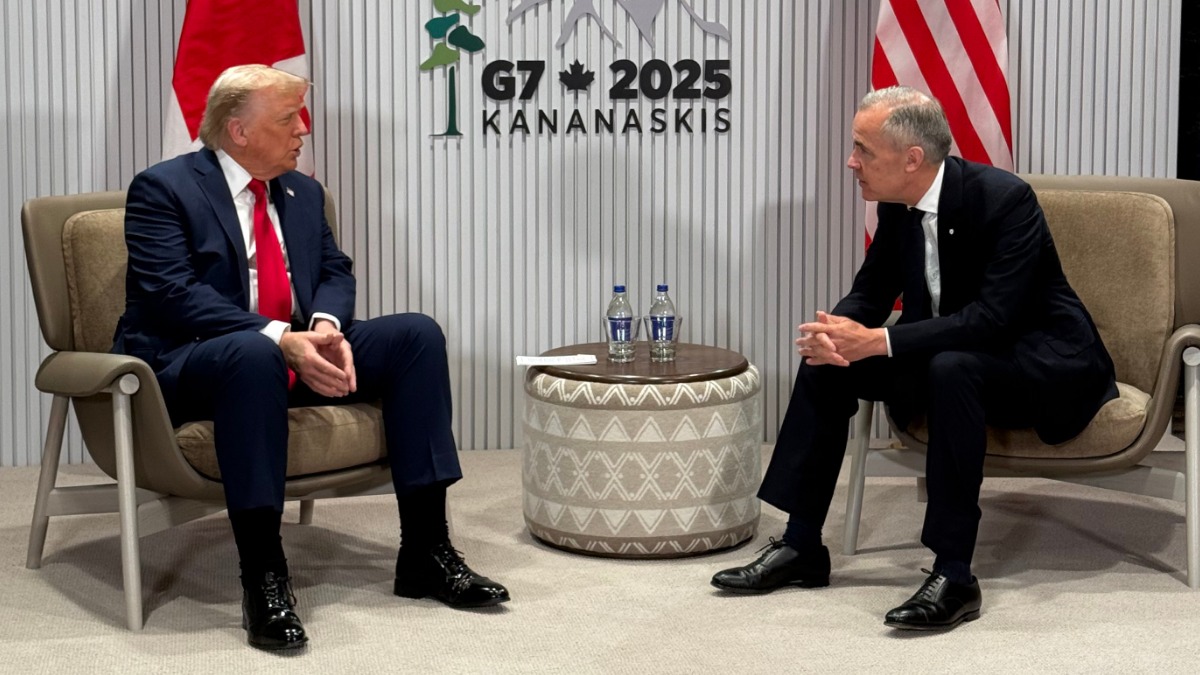

Canada is officially shifting its defense strategy in a move that signals the end of a long-standing alliance with the United States. Prime Minister Mark Carney announced at the Liberal Party’s national convention in Montreal that his government is moving to end the current model where 70 cents of every dollar spent on Canadian military capital goes directly to U.S. suppliers.
The bold statement drew a standing ovation from the delegates in attendance. Carney emphasized that “We are going to build Canada strong with Canadian steel, Canadian aluminium, Canadian lumber, Canadian workers.” By prioritizing local suppliers, the administration is betting that it can boost the economy while simultaneously securing the country’s defense infrastructure.
This decision didn’t happen in a vacuum. Trade tensions with Washington, specifically regarding tariffs introduced under Donald Trump, have clearly influenced the current political climate. Now, the long-term goal for the Canadian government is to protect the common good in an increasingly unpredictable global landscape.
Based on just the past few months, Carney isn’t wrong
Carney has been vocal about the fact that the old assumptions that guided Canadian security for decades are being upended. He noted in January that the traditional rules-based order that once benefited Canada is being eroded by major nations, including the United States.
The shift is backed by some pretty ambitious numbers. The government has laid out a strategy that aims to increase defense industry revenues by more than 240%. They are also targeting a 50% increase in defense exports and hope to create up to 125,000 new jobs.
Furthermore, there is a dedicated plan to boost investment in defense research and development by 85 per cent. It’s a comprehensive approach to modernizing the military, and it includes a pledge to meet the NATO target of 2 per cent of GDP for defense spending by the 2025–26 fiscal year, which is a faster timeline than previously anticipated.
The Arctic is also a major focus. Carney unveiled a C$35 billion plan specifically to bolster defenses in this vast, 4.4 million square kilometer region of their coastline. The environmental shift, as global temperatures rise, is creating new vulnerabilities that great powers are eager to exploit. Because the region is largely uninhabited and lacks infrastructure, Canada is taking full responsibility for its own sovereignty.
The plan involves significant upgrades to existing facilities. Canada currently operates four rudimentary Arctic airfields that can each support six fighters, along with a force of about 2,000 soldiers. The new investment will put C$32 billion toward expanding these airfields and constructing four operational support hubs.
They also intend to upgrade two commercial airports and fast-track the construction of two roads connecting the Arctic to southern regions. This is a massive logistical undertaking, but it is necessary if Canada wants to decrease its reliance on U.S. help for monitoring its northern borders.
The relationship between the two nations is currently strained. Beyond the trade disputes, Trump has made comments regarding the potential annexation of Canada and has expressed significant interest in the mineral potential of the Arctic.
Given that Canada’s portion of the Arctic contains roughly 25 per cent of the global total, these resources are becoming a hot commodity. While mining in such a cold, infrastructure-poor environment is notoriously complex and costly, it’s a vital part of the long-term economic and security puzzle.
Ultimately, this shift in policy reflects a broader trend of countries looking to secure their own supply chains after Trump proved to be an unreliable partner. By moving toward a Buy Canadian policy, the government is trying to strengthen local communities while shielding itself from external pressures.
For the current administration, it’s a necessary step toward building a more self-reliant and resilient military industry.









Published: Apr 13, 2026 05:20 am