



The United States military has started a blockade of Iranian ports. This high-stakes maneuver follows the breakdown of peace talks in Islamabad, where negotiations between the U.S. and Iran concluded over the weekend without a deal. While the tension is clearly ratcheting up, Iranian officials are choosing to respond with a mix of defiance and public taunts directed at the Trump administration regarding the potential economic fallout.
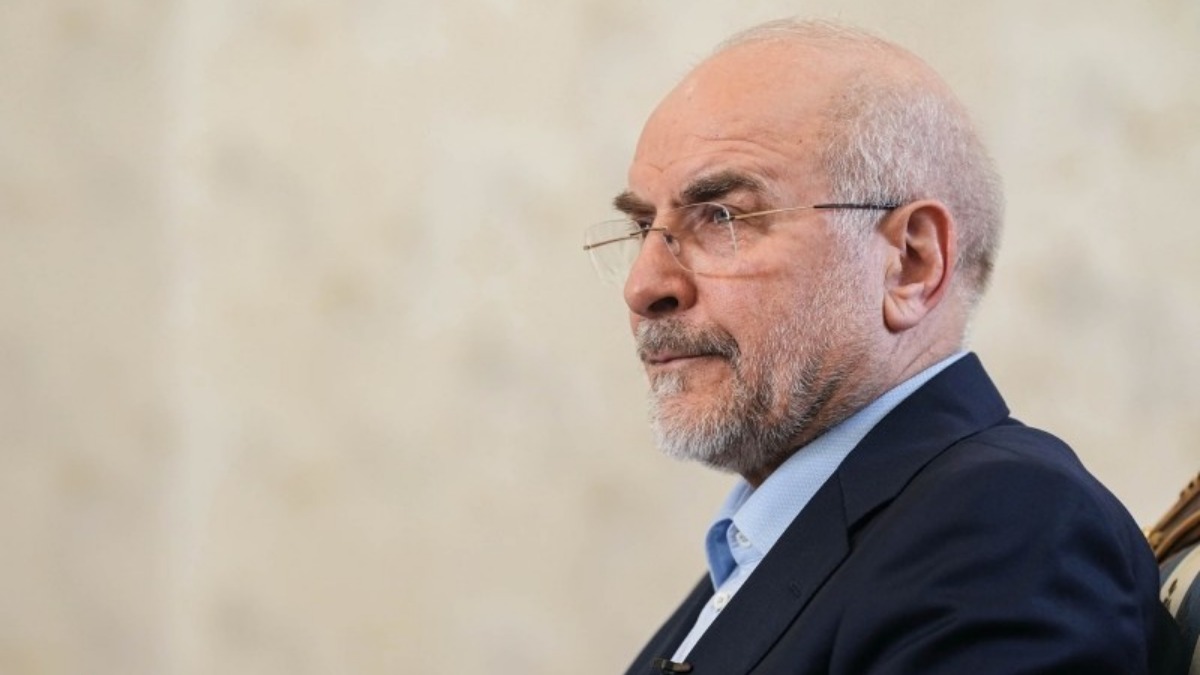
Per The Hill, Mohammad Bagher Qalibaf, the speaker of the Iranian parliament, took to X on Sunday afternoon to mock the prospect of rising fuel costs in the U.S. “Enjoy the current pump figures. With the so-called ‘blockade’, Soon you’ll be nostalgic for $4–$5 gas.” To drive the point home, he included a screenshot of a Google Maps search for gas stations near the White House, highlighting the already high prices he was referring to.
Then, in a really cheeky move, he added a math formula. It wasn’t just a message with math; it was a warning that pulled from his background as an engineer: “ΔO_BSOH>0 ⇒ f(f(O))>f(O).” He is hinting that we aren’t just going to be looking at a single spike in prices, but a cascading, exponential increase.
He is fighting Truth Social decisions with math
The blockade is a direct response to the failure of recent diplomatic efforts. According to AP News, the ceasefire talks in Islamabad lasted 21 hours but ended without an agreement. It has left the status of a two-week ceasefire, set to expire on April 22, in serious doubt.
Vice President JD Vance stated that Iran failed to provide an affirmative commitment regarding the abandonment of nuclear weapons programs. On the other side, Iranian Foreign Minister Abbas Araghchi claimed that Iran engaged in good faith but encountered what he described as maximalism and shifting goalposts.
NPR notes that nearly 20% of the global oil and gas supply passes through the Strait of Hormuz. Iran has largely restricted access to the strait since the beginning of joint U.S. and Israeli strikes, often demanding steep tolls from commercial vessels. President Trump stated that the U.S. Navy would seek and interdict every vessel in international waters that has paid the toll, and they wouldn’t have safe passage on the high seas.
The situation on the water is becoming increasingly volatile. The United Kingdom Maritime Trade Operations issued a notice confirming that maritime access restrictions are being enforced, affecting Iranian ports and coastal areas, including the Arabian Gulf, the Gulf of Oman, and the Arabian Sea east of the Strait of Hormuz.
Despite this, British Prime Minister Keir Starmer stated that the United Kingdom would not join the U.S. blockade. Instead, the British focus will remain on keeping the waterway open through diplomatic efforts and potential minesweeping, as he believes this is the only way to lower energy bills for U.K. citizens.
Meanwhile, French President Emmanuel Macron has proposed a separate, peaceful multinational mission to restore freedom of navigation in the strait. Macron noted on X that this mission would be strictly defensive and separate from the warring parties.
Iranian defense officials, however, are showing no signs of backing down. A spokesperson for Iran’s Revolutionary Guard, Ebrahim Zolfaghari, warned that warships nearing the Strait of Hormuz will be met with a strong and decisive response. Zolfaghari even threatened to block the Bab el-Mandeb Strait in retaliation for U.S. actions.
The rhetoric has only intensified since the blockade began. Trump took to social media on Monday to issue a stark warning, stating that any ships coming close to the U.S. blockade would be immediately eliminated. This follows his previous assertion that the U.S. has totally defeated Iran and his belief that the regime will eventually come to the table to give up its nuclear efforts.
While the world watches the Strait of Hormuz, the broader conflict continues to reverberate. Israeli airstrikes in Lebanon have resulted in significant casualties and property damage over the weekend, according to local reports. In the meantime, scores of people, including commentator Piers Morgan, have taken to the internet to mock the blockade.
Whether this blockade leads to a wider conflagration or remains a volatile period of signaling depends on how these nations navigate the coming days.







Published: Apr 13, 2026 02:31 pm