


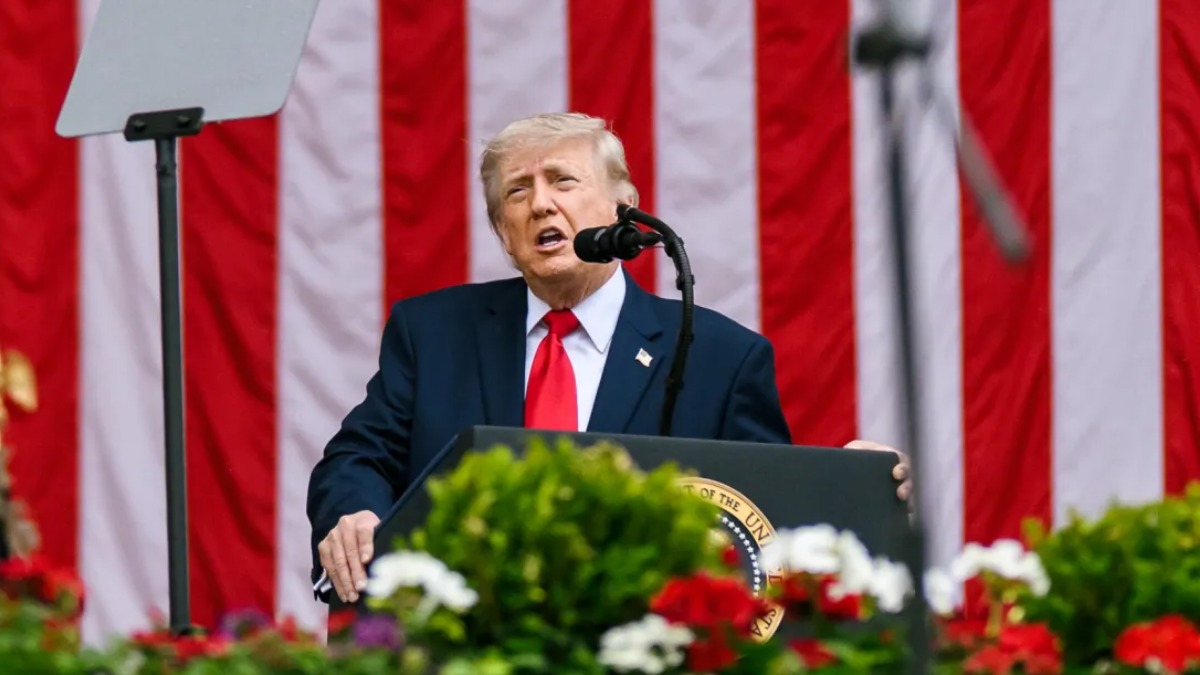

President Trump just signaled a clear and aggressive stance regarding the future of the Strait of Hormuz. It even came with a warning that Oman must adhere to international standards or risk military action. During a Cabinet meeting at the White House, the President was asked if he would potentially accept a short-term deal that would grant Oman control over the vital waterway alongside Iran.
Per The Hill, his response left little room for misinterpretation. He told reporters, “No, the strait’s got to be open to everybody; it’s international waters.” The President emphasized that the U.S. intends to maintain oversight, stating, “We’ll watch over it, but nobody’s going to control it. That’s part of the negotiation that we have.” However, this is when it might have become a bit too aggressive, considering that Oman is an ally and has maintained a neutral status.
He finished, stating, “They would like to control it; nobody’s going to control it. It’s international waters. And Oman will behave just like everybody else, or we’ll have to blow ’em up. They understand that. They’ll be fine.” The video of these remarks was then shared by the State Department’s official account on X to ensure the message reached a wider audience. The sudden aggressive statement took many by surprise and a response from Iran.
Iran’s response: Unequivocal support for Oman
The Iranian Foreign Ministry stepped in to support its neighbor, with spokesperson Esmail Baghaei stating that Iran would back the Gulf nation against U.S. threats. The Hill reported that Baghaei also took the opportunity to criticize the recent military strikes carried out by the U.S. in Bandar Abbas.
The geopolitical tension surrounding the Strait of Hormuz is significant because the waterway has been effectively closed for nearly three months. This closure has had a massive impact on the global energy market.
The strait serves as a primary pipeline for oil and natural gas shipments. Thus, the disruption has caused energy prices to climb rapidly. Previous attempts by Washington to secure the route, including a plan to have U.S. Navy ships escort vessels, were abandoned just two days after their announcement in early May.
While the United States does not maintain permanent military bases inside Oman, there is a strategic relationship between the nations. The U.S. holds access agreements that allow American forces to utilize various airfields and naval ports for logistics, refueling, and regional operations. The Port of Duqm has been particularly useful for the U.S. Navy, as it provides a deep-water facility outside of the Strait of Hormuz for essential maintenance and repair work.
The situation has become increasingly complex as the Trump administration pushes for a peace agreement, a quick off-ramp, to end the ongoing conflict, even while rejecting various demands from Tehran. However, this process has been volatile. At the same cabinet meeting, Trump warned that he might abandon potential peace efforts unless other Middle Eastern nations agree to sign the Abraham Accords.
The tension escalated further the same night when the U.S. military intercepted and destroyed four one-way attack drones launched by Iran. A Pentagon official confirmed that the military also struck a ground control station in the southern port city of Bandar Abbas.
What makes things more confusing is that the Iranian state media showcased a draft of a memorandum of understanding they had received. The White House, however, quickly dismissed it on X, stating, “This report from Iranian controlled media is not true and the MOU they ‘released’ is a complete fabrication. Nobody should believe what Iranian state media is putting out. FACTS MATTER.”
As it stands, the diplomatic landscape is incredibly fragile. While there were signs of a potential agreement last weekend, when the President confirmed discussions with various world leaders, the reality on the ground remains defined by military skirmishes and harsh rhetoric. A senior official had previously noted that a proposed agreement could provide the U.S. with 60 days to finalize a deal, which would supposedly commit Iran to giving up nuclear materials.
Iran International, of course, has reported that this MOU is neither finalized nor confirmed. As for Oman, per Reuters, Treasury Secretary Scott Bessent addressed Trump’s statements during a press briefing. He stated, “I had a call with the Omani ambassador this morning, and he assured me that there were no plans for tolling the strait.”







Published: May 29, 2026 07:42 am