



You might think you know what a disability looks like. Maybe you picture a wheelchair, a brace, or a guide dog. But the reality for millions of Americans is far more nuanced, and sometimes, that lack of visible evidence can lead to unpleasant experiences, even when people are simply trying to navigate daily life, like catching a flight.
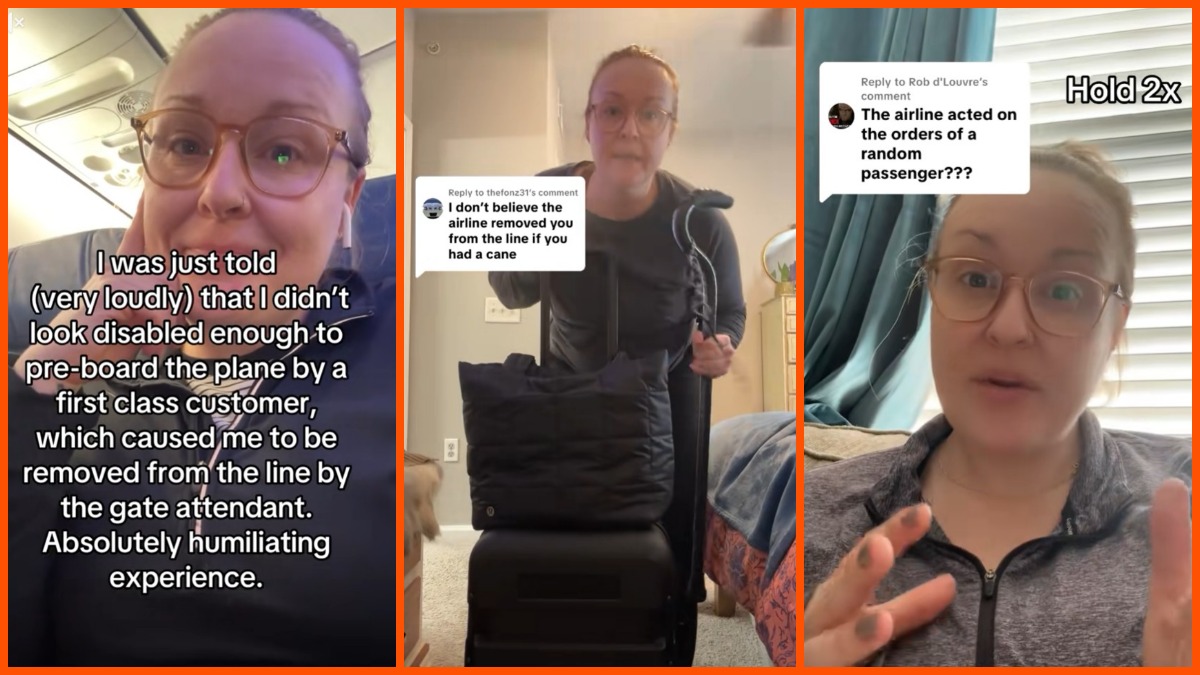
Kathryn Colvin (@flareups_and_floofs) found herself in the middle of an “absolutely humiliating experience.” Per Newsweek, she made a TikTok video, recounting how she was effectively told she “didn’t look disabled enough to preboard” by a fellow passenger. Colvin lives with active secondary progressive multiple sclerosis, a condition that impacts her mobility, balance, and cognition, and also causes significant fatigue.
To manage her condition, she often uses a cane. However, she tries to keep it out of sight, hoping to avoid probing questions from people who assume she is “too young” or “too healthy.” When flying, Colvin relies on pre-boarding options and, for longer distances between connecting flights, she requests mobility assistance like wheelchairs. Yet, on March 20, her efforts to use these services with Delta Airlines turned into a source of public embarrassment.
The system, unfortunately, is usually ableist
Her day at Hartsfield-Jackson Atlanta International Airport started with a snag when no wheelchair was provided, “I almost missed my connecting flight,” Colvin explained, reflecting on the initial challenge. “I was hopeful that my journey would be smoother after that. Sadly, I was mistaken.”
After finally reaching her connecting flight’s gate, walking with her cane, Colvin took her place in the pre-boarding line designated for passengers needing extra time to board. That is when a first-class passenger loudly interjected, “this line is for pre-boarding right now.” Colvin, realizing the comment was aimed squarely at her, simply smiled and maintained her position.
The situation escalated when the only gate attendant called for active duty service members to pre-board. The same passenger yelled again, declaring, “this line is for pre-boarding and active duty only.” The gate attendant, hearing this, then called out, without verifying, asking Colvin across the line: “Ma’am, please wait until it’s your turn to board.”
Feeling utterly mortified, Colvin stepped out of the line. However, an active duty service member, who had observed her using a cane, intervened, “yelling” to the gate attendant that Colvin was handicapped.
While Colvin appreciated the advocacy, she emphasized, “I am someone who does not like attention brought to my disability. Attention was brought to my disability, very loudly, in front of all passengers at the gate not once, but three times.” Even after the service member insisted she board ahead of him, the first-class passenger continued her commentary, remarking, “everyone can pre-board now, I guess,” as she proceeded to board.
Colvin’s experience highlights a common challenge faced by those with invisible disabilities. As invisibledisabilities.org explains, an invisible disability is any physical, mental, or neurological condition that is not outwardly visible but can significantly limit a person’s movements, senses, or activities. The unseen nature of these symptoms afflicts about 74% of those with severe disabilities and can lead to misunderstandings, false perceptions, and unfair judgments.
The Airline Passengers with Disabilities Bill of Rights outlines the fundamental protections for travelers with disabilities under the Air Carrier Access Act. This document, available on Delta Airlines’ website, clearly states that passengers have “The Right to Be Treated With Dignity and Respect.” Thus personnel must be trained to understand passengers, and cannot discriminate because of their disability or “resulting appearance or involuntary behavior.”
Another critical component is “The Right to Assistance at Airports.” This right ensures that passengers with disabilities receive prompt, timely, and appropriate enplaning and deplaning assistance from properly trained airline personnel. This includes access to ground wheelchairs, accessible motorized carts, and boarding wheelchairs.
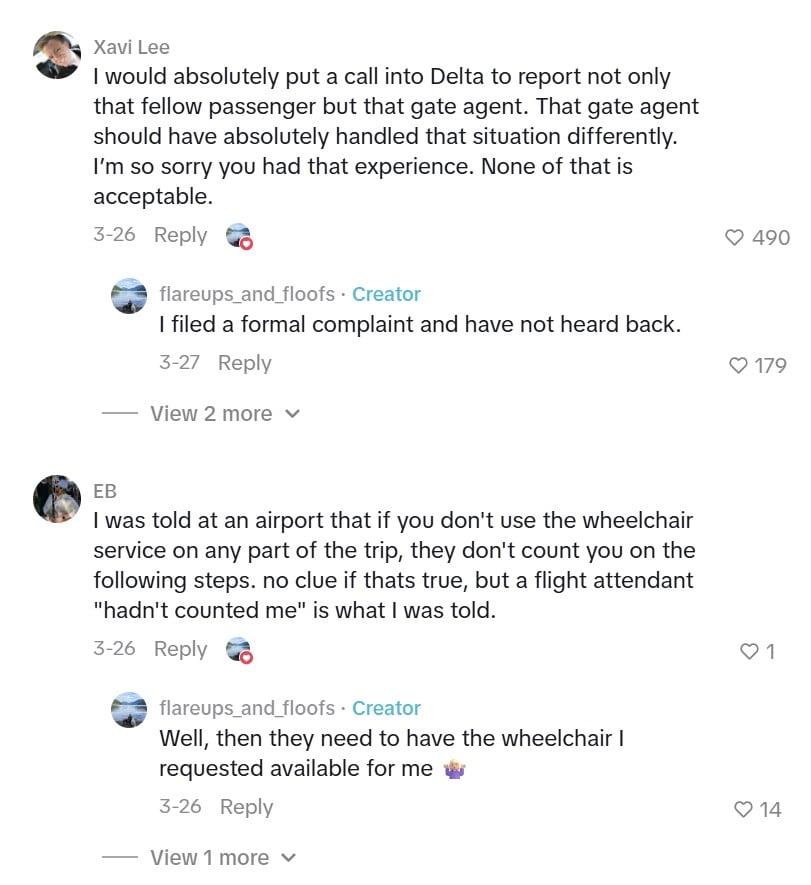
They should also be allowed additional time to board. The gate attendant’s instruction for Colvin to wait, influenced by another passenger’s judgment, directly contradicted this established right.
The video quickly went viral, racking up 2.4 million views. One user shared their story, describing how a gate agent refused pre-boarding and demanded to know their disability in front of other passengers. Another was told that traveling with a service dog, a cane, and a walking boot did not entitle them to pre-board.
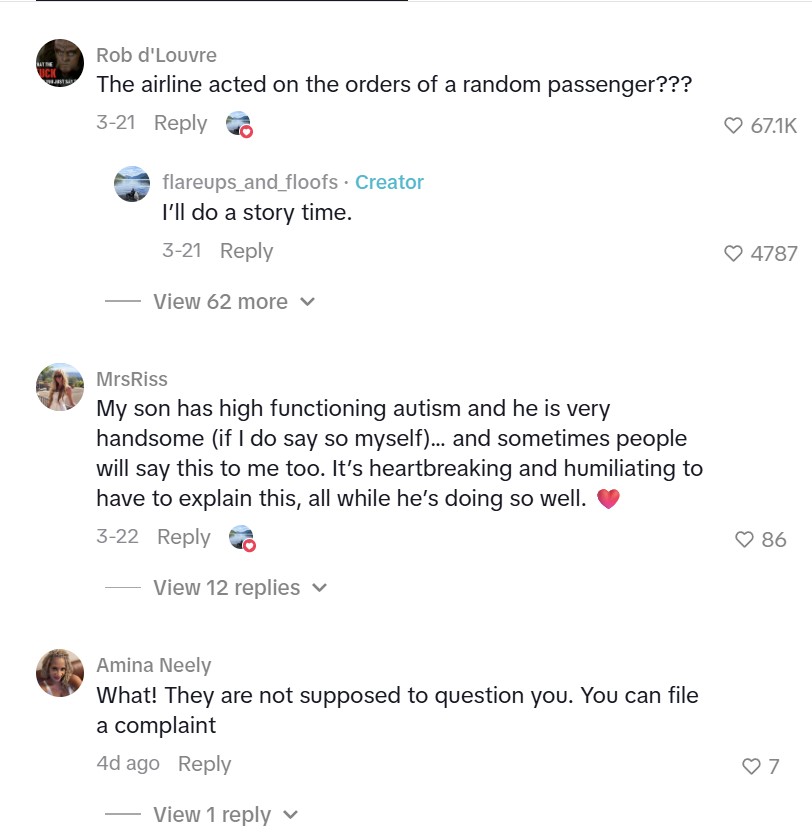
Colvin has since filed a complaint with Delta. She noted that, before this incident, the airline had generally been very accommodating with disability services. Till then, Colvin hopes her story will at least bring greater awareness to hidden disabilities and encourage everyone to pause and think before making assumptions.







Published: Apr 14, 2026 10:24 am