


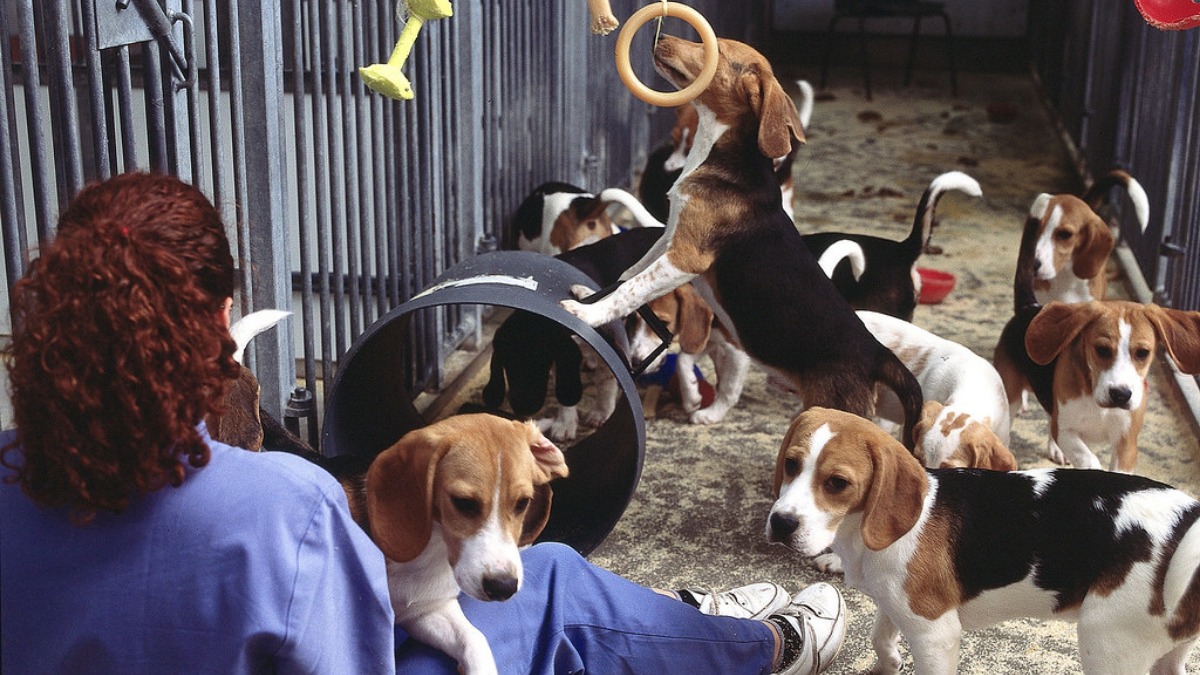

About 1,000 animal welfare activists converged on a beagle breeding and research facility in Blue Mounds, Wisconsin, only to be turned away by police using pepper spray and rubber bullets. The tense standoff at the Ridglan Farms facility, located about 25 miles southwest of Madison, marked the second major attempt by protesters in as many months to access the site and remove the animals held within.
Dane County Sheriff Kalvin Barrett stated, “This is not a peaceful protest.” He said that between 300 and 400 of the protesters were actively and violently trying to break into the property while assaulting officers on the scene. According to the sheriff’s department, protesters ignored designated areas for peaceful assembly and blocked critical roads, which prevented emergency vehicles from reaching the site.
Protesters attempted to bypass several barricades, including hay bales, a barbed-wire fence, and a trench filled with manure. They were ultimately unable to enter the facility itself, where an estimated 2,000 beagles are kept. The sheriff’s office also reported that one person was arrested after driving a pickup truck through the front gate of the property in a reckless manner, an action the department noted was a move toward preventing a potentially deadly outcome.
Dogs undergoing “devocalization” surgeries
The sheriff’s department confirmed that a significant number of people were arrested out of the total crowd of 1,000. Among those taken into custody was the leader of the group, Wayne Hsiung. The group, known as the Coalition to Save the Ridglan Dogs, had publicly shared plans to seize the dogs on Sunday but chose to launch their operation a day early.
Following the failed attempt to enter the facility, activists relocated to protest outside the jail in downtown Madison. One activist, Julie Vrzeski, told the Wisconsin State Journal that she felt defeated after the hours-long operation concluded without any dogs being successfully seized.
This is not the first time the facility has been targeted. In March, protesters successfully broke into the Ridglan Farms site and removed 30 dogs. Since then, the facility has agreed to give up its state breeding license as part of a settlement to avoid prosecution regarding animal mistreatment allegations. Ridglan Farms has consistently denied these claims, stating that no credible evidence of animal abuse, cruelty, or neglect at the facility has ever been substantiated.
The debate surrounding the use of dogs in research is complex. According to Understanding Animal Research, scientists often require healthy, well-raised animals that are free of genetic defects and accustomed to a controlled environment. Animals from the general pet population are often unsuitable due to unknown health histories and the stress of a laboratory setting. This led to the establishment of dedicated breeders.
Most research involving dogs falls under regulatory testing, which is required by law to ensure the safety of human and animal medicines, medical devices, and feedstuffs. These international standards typically follow a cascade system that prioritizes non-animal testing methods before resorting to animal models.
While the industry is actively working to develop and implement non-animal technologies, such as the “virtual dog” computer modeling and organs-on-a-chip, these alternatives are still undergoing development. Experts in the field emphasize that there are significant technical challenges to overcome before non-animal methods can fully replace live models without risking human, animal, or environmental safety.
For now, the situation in Blue Mounds remains a flashpoint for animal welfare advocates. As the legal processes for those arrested continue, the facility remains under the spotlight, and the ongoing tension between animal rights activists and the scientific research community shows no sign of slowing down.









Published: Apr 20, 2026 05:53 am