


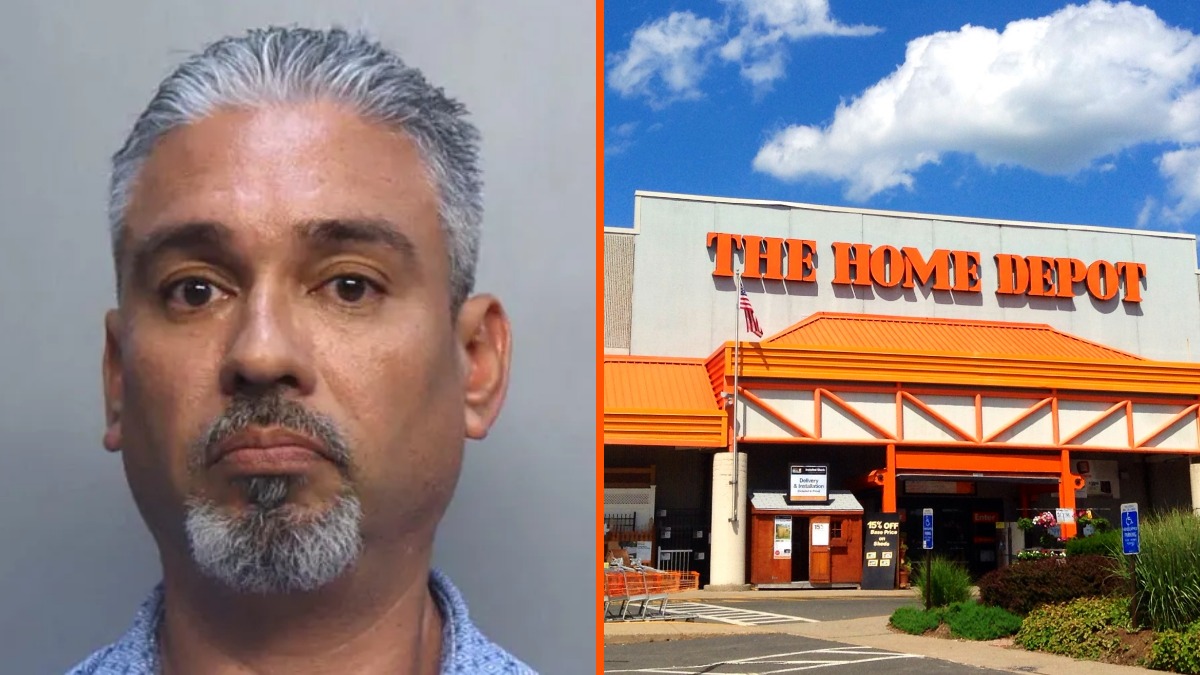

A former Home Depot manager in Florida is currently facing serious legal trouble after being arrested for allegedly orchestrating a massive, long-term discount scheme that cost the company over $4 million. Mauricio Jimenez was taken into custody by the Miami-Dade Sheriff’s Office on April 21. As reported by People, the accusations against him are quite extensive and involve a systematic approach to manipulating store pricing.
The core of the issue involves thousands of unauthorized transactions. According to court documents, Jimenez is accused of pushing through at least 4,500 separate orders with unauthorized markdowns. This activity reportedly occurred over 26-months, from December 2023 until April 2026. The total value of the merchandise involved is estimated at around $55 million, with the actual losses to the company reaching approximately $4.3 million.
During a court appearance, the details of how this scheme allegedly functioned came to light. A prosecutor explained that by issuing these deep discounts to specific core customers, Jimenez was able to inflate his store’s sales figures. Because his compensation package included bonuses tied to these higher sales numbers, the prosecutor argued that Jimenez directly benefited from the fraudulent activity.
I think everyone wants a bigger bonus with their paycheck
The prosecutor told the judge, “Those discounts cost the company over $4 million, and by increasing his sales using those discounts, he was compensated with larger bonuses. So I believe that there would be probable cause on both counts.”
Jimenez’s attorney, Melissa Ramos, offered a different perspective during the hearing. She maintained that her client did not personally receive kickbacks from the customers who received the discounts. “There’s nothing that says that he was receiving any kickbacks, like he was getting any benefit from this,” Ramos stated. “It just says that he was issuing discounts to different companies.”
Despite this defense, Judge Mindy Glazer found the evidence compelling enough to establish probable cause. The judge noted that the pattern of selling items at half off to specific clients for over two years was clearly systematic.
The scheme was eventually uncovered by the company’s internal monitoring systems. According to the arrest affidavit, the Home Depot Assurance & Advisory Management Program flagged a high-value order that featured a significant markdown. Further investigation revealed that Jimenez was the only person with the authorization to approve these types of transactions. Once these red flags appeared, the scope of the operation became clear to investigators.
The charges facing Jimenez are significant. He could face counts of organized fraud of $50,000 or more and first-degree grand theft. To understand the gravity of these accusations, it is helpful to look at how Florida law defines these crimes.
According to lawyer Roger P. Foley, Florida’s organized fraud statute is designed to prosecute individuals who engage in a systematic, ongoing course of conduct with the intent to defraud or obtain property through false pretenses. If the value of the property obtained is $50,000 or above, it is classified as a first-degree felony, which carries a potential sentence of up to 30 years in prison and a $10,000 fine.
Additionally, Cornell Law School notes that grand theft is a criminal offense involving the unlawful taking of property with the intent to permanently deprive the owner of its possession. In many jurisdictions, this charge is determined by the value of the stolen property, with higher values leading to more severe classifications and stricter sentencing. Since the state is alleging a multi-million dollar loss, the legal stakes for Jimenez are incredibly high.
Following his arrest, Jimenez was held at the Turner Guilford Knight Correctional Center. However, as of Friday, April 24, he had bonded out of custody. Judge Glazer set his bond at $15,000 and specifically ordered him to stay away from the Home Depot location on 7899 West Flagler Street in Miami.
While the legal process is still in its early stages, the investigation highlights just how much damage a single person with the right system access can do when they decide to bypass company policy for years on end. Additionally, it is interesting to see a case of white-collar fraud.
Normally, we hear stories of insurance fraud, like hospices working toward a medicaid payout, or like the insane recent case about people dressing up as bears.









Published: Apr 27, 2026 01:15 pm