




In 2025, a man digging a hole for a swimming pool in his garden uncovered a massive gold treasure worth $800,000. This incredible discovery happened in the eastern French town of Neuville-sur-Saone.
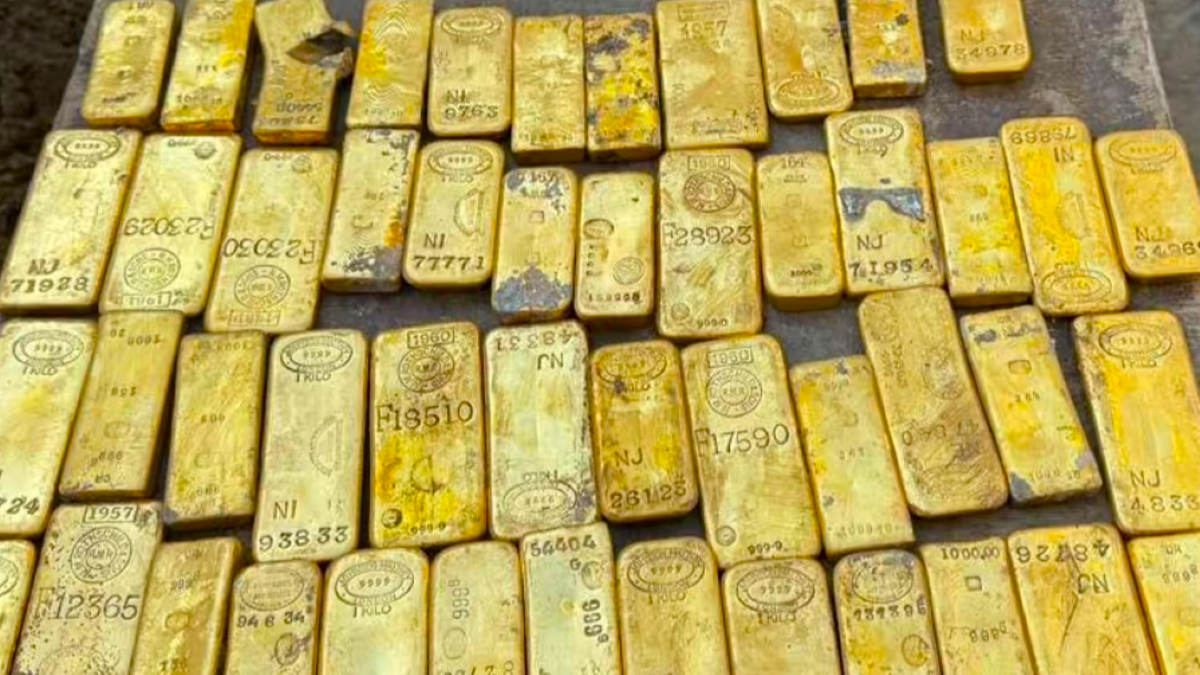
The subterreanean stash included five gold bars and many coins. After making the discovery in May, the man did the right thing and immediately informed local authorities. The local council later confirmed that he was allowed to keep the gold because it did not originate from an archaeological site.
It is honestly a dream scenario for any homeowner. Police investigated the find and determined that the gold had been acquired legally. They believe it was melted down at a nearby refinery roughly 15 or 20 years ago. Because the gold bars featured unique numbers that police could trace, they were able to verify that the items had not been stolen.
So it was just a random find, not even part of an inheritance
It remains a complete mystery how the gold ended up in the garden, as the previous owner of the property has already passed away. France has a very specific civil code from the 19th century that defines treasure as any hidden or buried thing over which no one can prove ownership and which is discovered purely by chance.
The code explicitly states that ownership of a treasure belongs to whoever finds it on their own property. With gold currently priced at $4,516.60 per ounce according to Metals Daily, this man essentially hit the lottery while simply trying to improve his backyard.
Of course, not every ‘gold treasure’ story has such a happy ending for the finder. A 52-year-old farmer named Michel Dupont from Auvergne found out the hard way that French law treats raw mineral deposits very differently from buried gold bars. Per Diario AS, Dupont discovered a gold deposit on his land that was valued at 4 billion Dollars after he noticed a strange shimmer in a stream on his farm.
Unfortunately for him, the government stepped in and told him that everything found beneath his garden legally belongs to the state. In France, the subsoil is state property, meaning Dupont could not start mining operations himself. Officials even suspended all activities on the site to conduct environmental impact studies.
If you are curious about how other countries handle these kinds of finds, the rules can vary wildly. According to LADBible, the approach in Britain is quite different. In 2019, two detectorists named Lisa Grace and Adam Staples found the largest hoard of coins ever discovered in the UK while they were training friends to use metal detectors.
This find in Chew Valley, Somerset, consisted of 2,584 silver pennies that were roughly 950 years old. These coins featured images of kings like Edward the Confessor, Harold Godwinson, and William the Conqueror.
Because the find qualified as treasure under British law, it had to be reported. The coins were later valued at £4.3 million, and the law requires that the financial gains from such a discovery be split 50/50 between the people who found the items and the landowner who granted permission for the search.
In 2024, the South West Heritage Trust purchased the hoard, resulting in a massive payout for both the detectorists and the landowner. Historians believe the coins were buried around 1068, likely to keep them safe during the chaotic and violent Norman Conquest. The owner of those coins never returned to retrieve them, leaving them to sit in the dirt for nearly a millennium.
Treasure, as a concept, is something that often sparks a lot of joy and interest in all of us. One researcher, who found the largest shipwreck treasure, even went to jail to over some of the missing coins. Others often just stumble across ancient treasures at thrift stores. This man in Neuville-sur-Saone, however, walked away with a life-changing reward for his backyard labor.







Published: May 5, 2026 05:12 am