



The Trump administration just finalized the dismissal of nearly 250 foreign service officers, marking a significant escalation in the ongoing reorganization of the State Department. When you consider the fact that the United States is navigating complex foreign policy crises, including the war in Iran and the conflict in Ukraine, you can’t help but wonder who thought it was a good time to let go of so many diplomats.
The notification of these departures was delivered through a brief, impersonal email. It stated, “Your reduction in force separation will be effective today,” followed by, “Thank you again for your service to the Department.”
As reported by CNN, these reductions, which were initiated last July, also impacted more than 1,000 civil service officers. The process resulted in the firing of entire staff teams in offices that officials argue were essential for guiding the war in Iran. However, Trump’s State Department maintains that these reductions were necessary to eliminate redundancies and that work on key issues was successfully moved to other offices.
Somehow, I doubt that
Beyond the formal firings, a large number of experienced foreign service officers with decades of service have chosen to retire. The simple reason is that the administration has limited the availability of upward assignments and promotions, effectively removing options for career diplomats.
David Kostelancik, who retired after 36 years in the foreign service, noted, “It was just unprecedented numbers of people choosing to leave.” The American Foreign Service Association estimates that roughly 2,000 officers left the department last year.
Meanwhile, more than 100 ambassador posts remain vacant, including key positions in the Middle East, Russia, and Ukraine. This leaves the United States at a disadvantage compared to adversaries like China.
Instead, sensitive diplomatic negotiations are being led by family members and business associates of Donald Trump. These negotiations are then conducted without the support of experienced diplomats with regional expertise.
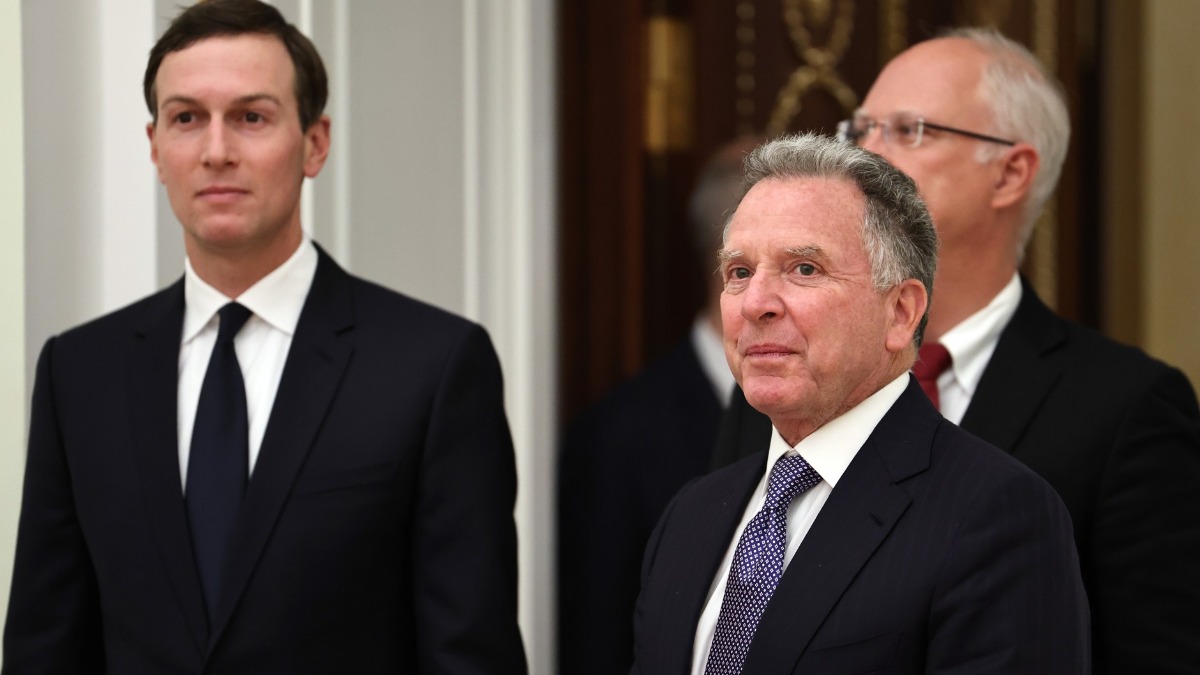
The administration has instead increasingly relied on real estate investor Steve Witkoff and the president’s son-in-law, Jared Kushner, for high-stakes diplomacy. They have been operating without formal titles or the backing of traditional diplomatic structures. While supporters view their transactional, deal-oriented approach as a strength, critics point to potential conflicts of interest.
For example, Kushner has raised billions of dollars from overseas investors, including government wealth funds in countries he previously interacted with as a White House adviser. Similarly, Witkoff’s son is the chief executive of a cryptocurrency company that received significant investment from a firm tied to the United Arab Emirates.
Former career ambassador John Bass described the current state of affairs as a systematic hollowing out of the State Department. He stated, “I think historians will look back on this period as one of the great unforced errors that the United States imposes on itself.”
Secretary of State Marco Rubio had pledged to empower the agency on his first day. Many former officials, however, argue that the loss of institutional knowledge will have long-term consequences for the nation’s ability to project power.
State Department spokesperson Tommy Pigott has pushed back against these claims, labeling them false and baseless. He stated, “In fact, we have been able to respond quicker and more effectively, which was the entire point of the reorg – to empower personnel in the field while allowing us to move at the ‘speed of relevancy.’”
One notable loss was the shuttering of the Bureau of Energy Resources. That team had been actively working to limit Iran’s ability to deliver crude oil and was “using all the policy tools we could to try to help deal with Iran and weaken the regime.” The staff could have provided critical insights into managing the chokepoint in Hormuz.
The administration’s shift toward prioritizing fealty over experience has also impacted the internal evaluation system. Multiple officials reported that reviews now include a tenet for fidelity to administration policies. The department has also limited the number of high rankings, forcing many high-performing individuals into mid-ranked categories.
The administration continues to defend its reorganization as a necessary step toward an America First foreign policy. However, the departure of seasoned experts remains a point of contention. Ryan Gliha, who spent 23 years in the foreign service, stated, “The Foreign Service is an apprenticeship profession. You can’t just drop someone in from the outside. Diplomacy requires skills that are built over years, in the field.”








Published: May 18, 2026 07:24 am